
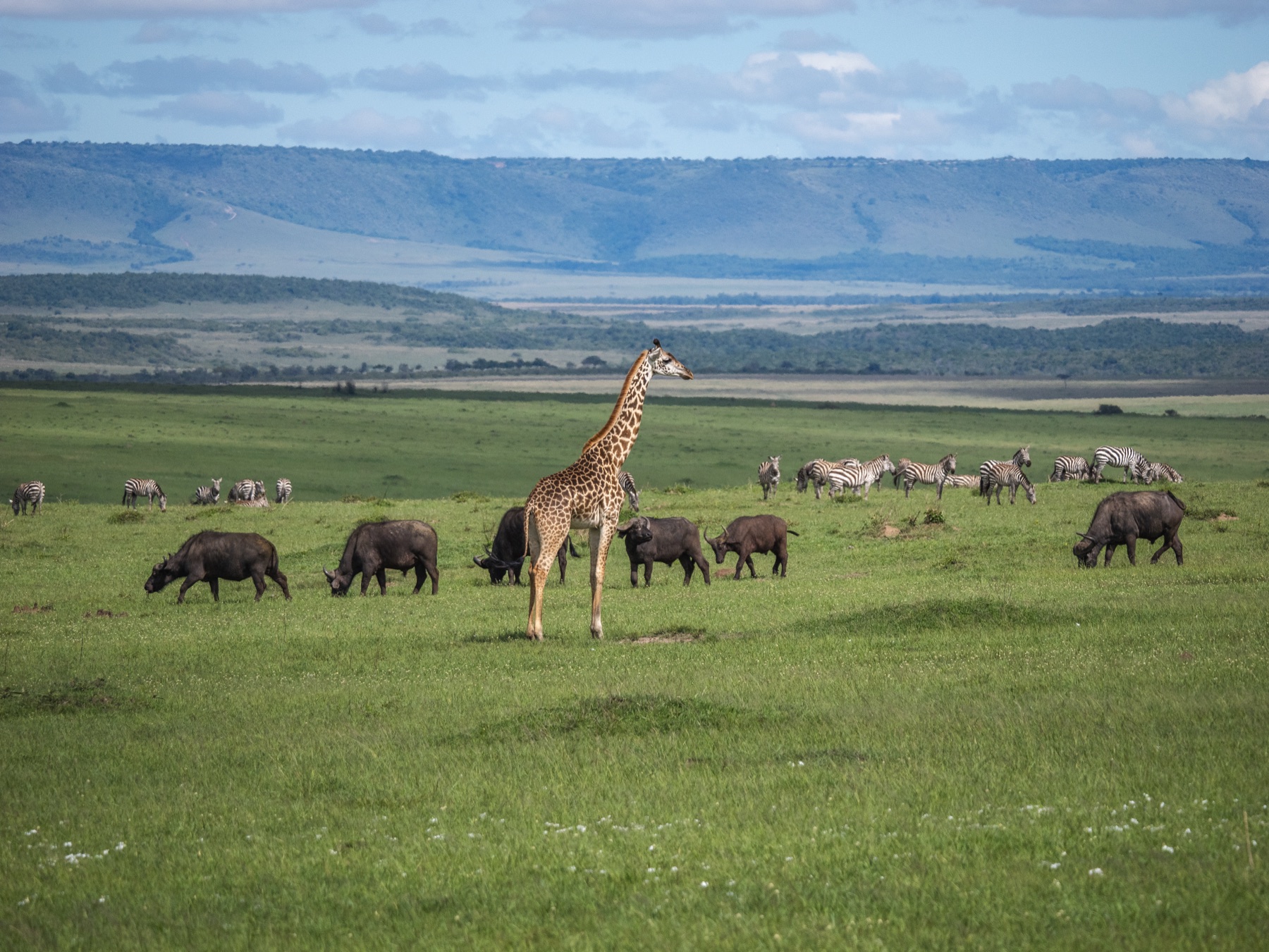
The Maasai Mara in Kenya is one of the most popular safari destinations in the world, and with good reason. It’s home to the sought-after Big Five (lion, leopard, buffalo, elephant and rhino) as well as one of the most dramatic and spectacular natural events on the planet, the great wildebeest migration!
After first visiting in 2023, as part of a combined Kenya and Tanzania safari, the reserve has become one of my favorite safari destinations in the world, and I’ve been back several times since. I just can’t get enough of it!
I’ve written this guide to help you with planning a safari in the Maasai Mara to maximize wildlife viewing and help you avoid many of the mistakes I’ve made.
I’ll provide advice on key decisions such as which time of year you visit, whether to stay inside or outside the reserve and whether to visit the main reserve or the conservancies which surround it. These decisions will have a big impact on your experience.
How to Get to the Maasai Mara
Nestled in the southwestern corner of Kenya, the Maasai Mara National Reserve borders Tanzania’s famed Serengeti National Park and forms part of the wider Serengeti Ecosystem.
The Mara is situated west of Nairobi, about a six-hour drive from the capital. I thoroughly enjoy the journey, which takes you through the Great Rift Valley and treats you to some incredible scenery along the way. The views of the escarpment and the valley floor in particular are stunning.
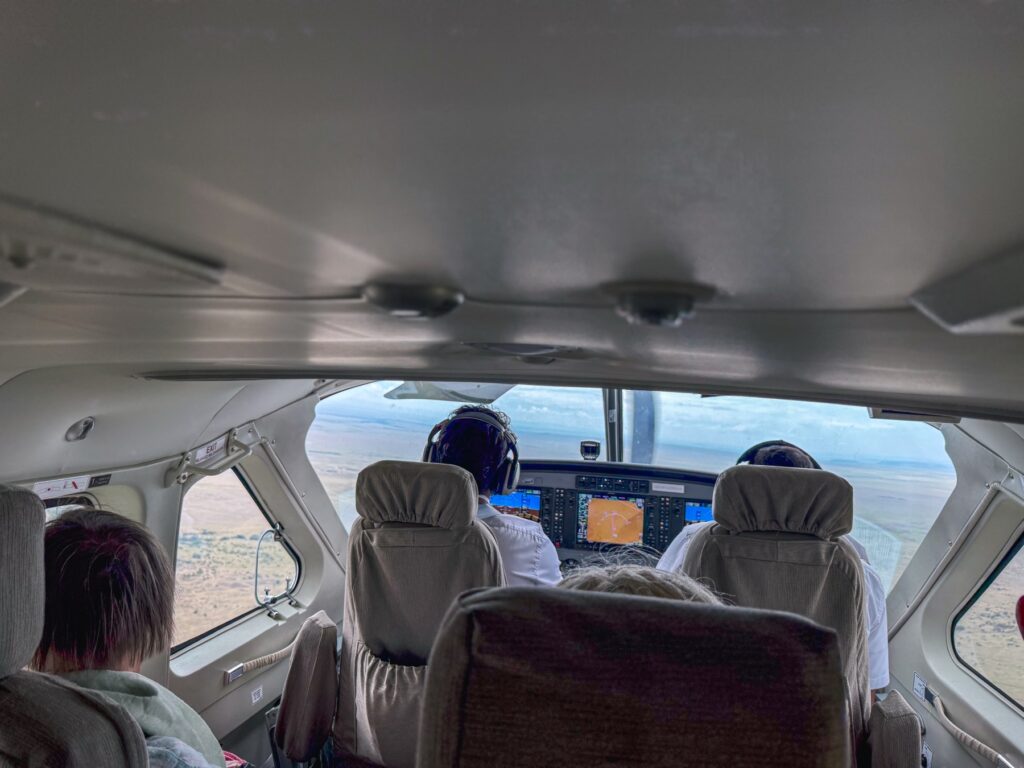
If you prefer, though, you can also fly in for your safari on a small scheduled propeller plane. Flights to the Maasai Mara depart from Nairobi’s Wilson Airport rather than the international airport, and the flight takes roughly an hour. In terms of my preference, I sometimes drive and sometimes fly depending on whereabouts in the Mara I’m staying. For example, it’s more convenient to fly to the Maasai Mara Conservancies than drive.
The Maasai Mara is one of the most accessible safari destinations on the continent. Not only is it relatively close to Kenya’s main international airport (Nairobi / NBO), but Kenya itself is extremely accessible, with many airlines flying to Nairobi. It’s possible to fly directly from many hubs, including Amsterdam, London, Dubai and Doha.
🛩️ Search flights into NBO here –
Combined Kenya and Tanzania safaris are also popular. Visitors to the region typically link the two countries together by visiting the Maasai Mara and then Serengeti or vice versa. This isn’t as straightforward as you may think, as there isn’t a border post between the two parks. You instead have to journey out and around the protected areas and cross the border at a town called Isibania. The journey took me 10 hours to complete by road, which is typical.
Next time, I think I’d probably fly instead, as it’s just two 30-minute flights, linked by a 30-minute drive!
Where to Stay in the Maasai Mara
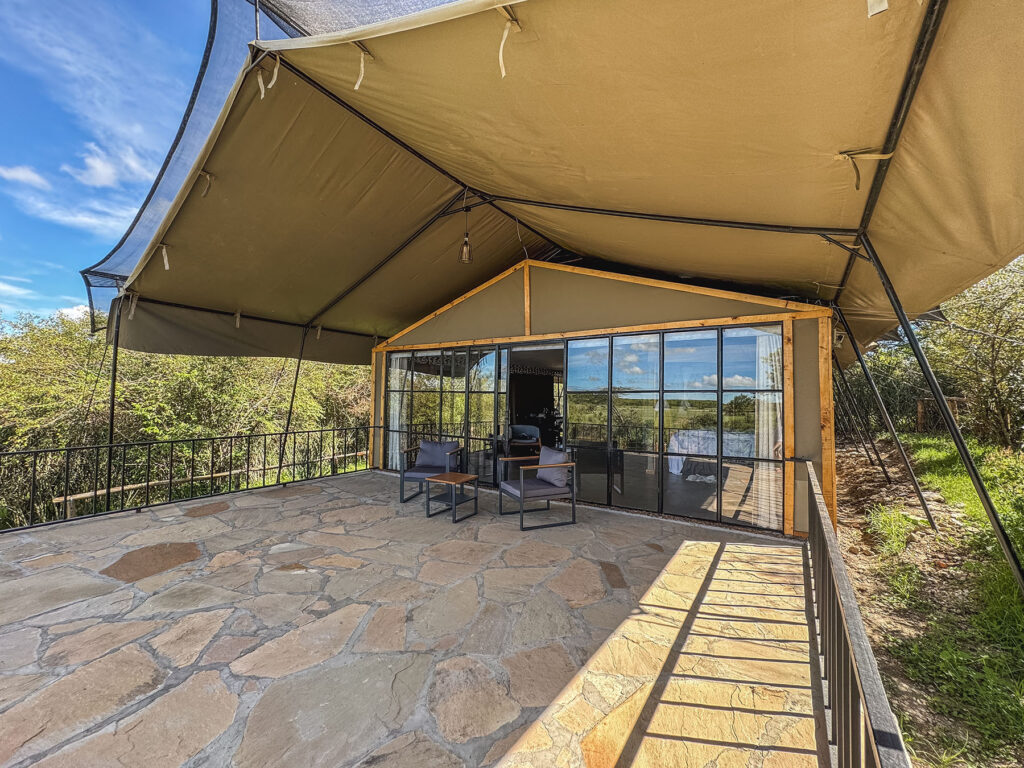
Compared to the vast Serengeti, the Maasai Mara is actually relatively compact, so you don’t really need to stay within the park to make sure you can access prime game-viewing areas.
There are some great options located near the reserve, just a short drive from the key sites inside, and accommodation is usually cheaper outside than inside.
One of my favorites is Little Zebra River Camp, situated on the banks of the Talek River. Although it’s outside the reserve, its excellent location right on the boundary means guests are treated to spectacular views of the Maasai Mara. What’s more, wildlife is plentiful – I saw zebras, baboons and banded mongooses from the comfort of my room!
That said, my preference these days is to stay inside the park. While this is usually a bit pricier, it offers some benefits that external accommodation cannot. First and foremost, it means you can head back to your lodge for a hot lunch and some downtime during the hotter midday period. Since the park fee is single-entry, you need to pay again to re-enter the park if you leave for lunch, so returning to your accommodation in the middle of the day isn’t practical if you’re staying outside.
Secondly, staying inside the park means no queuing at the gates for access in the morning, saving precious time and ensuring you can head out earlier on your morning game drives. As this is often prime viewing time for big cat action, I really value every additional minute I can get!
If budget isn’t an issue and you’re seeking a higher-end, more exclusive experience, I’d recommend staying in one of the private conservancies bordering the park itself. Naboisho, Mara North and Olare Motorogi are particularly popular, but you can expect a high standard no matter which you choose.
And if you’re wondering what the difference is – private conservancies offer the same wildlife encounters but without the crowds. Sightings are strictly limited to 5 vehicles maximum, and there are other added benefits such as off-road driving to get the best views, and you can enjoy night game drives too.
🗺️ Map of hotels (with prices) in the Maasai Mara –
What Can You Expect to See on Safari in the Maasai Mara?
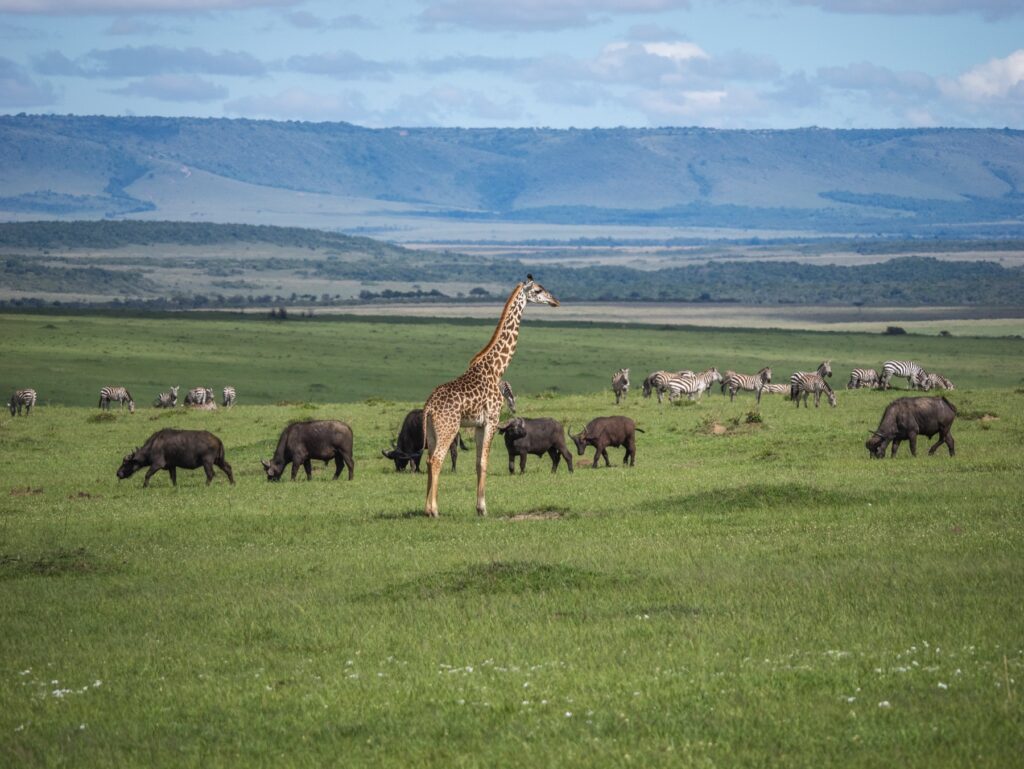
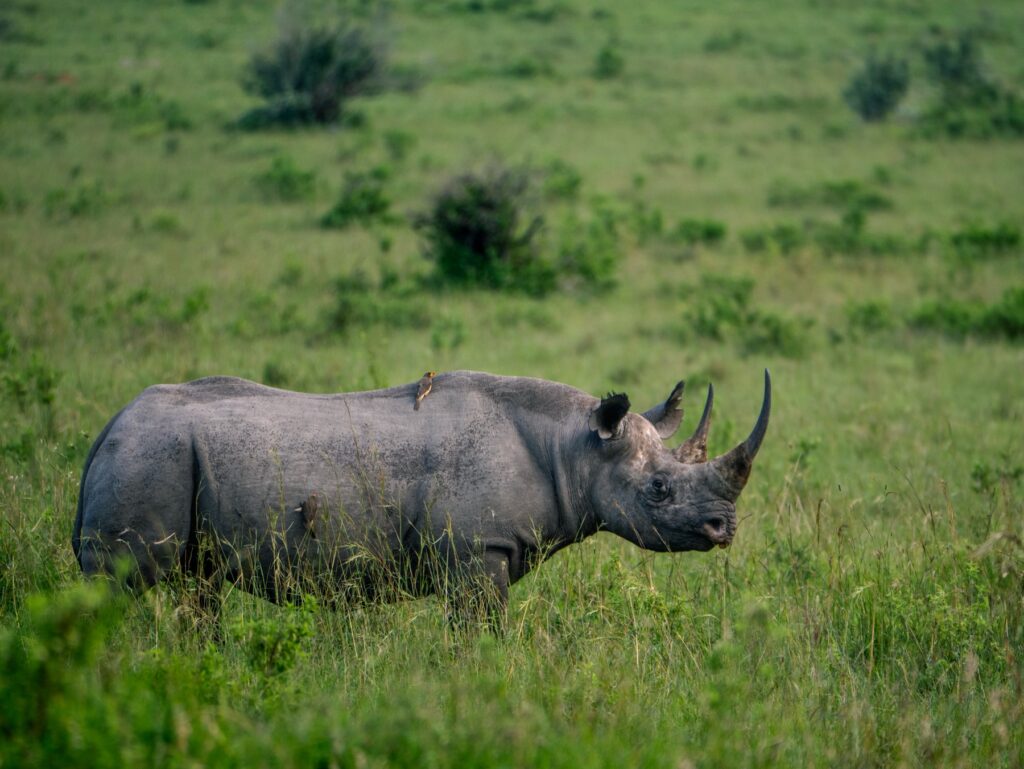
The Maasai Mara is home to all of the Big Five, and I’ve actually been lucky enough to see all five of them in the reserve within a single day! That definitely isn’t the norm, however, and I’d recommend spending at least 3 nights there to have a decent chance of spotting them all.
The best time for sightings is in the mornings and evenings when big cats are more active than in the heat of the day, and you’re virtually guaranteed to see a lion on most days.
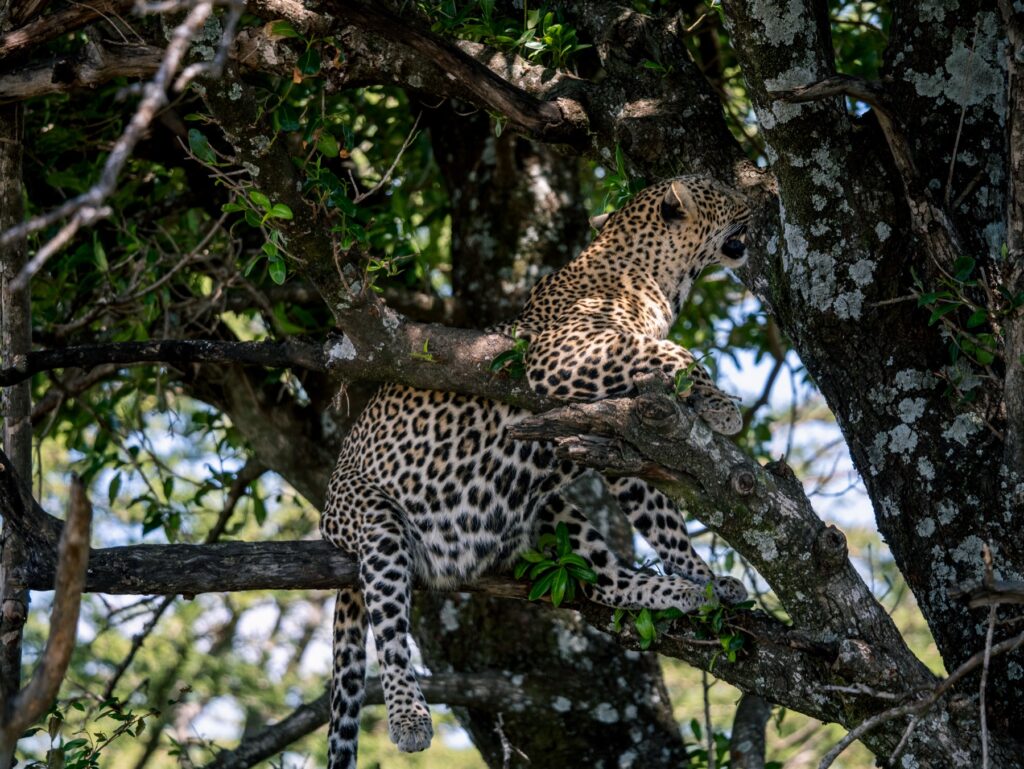
While lions, buffalo and elephants are a common sight, leopards are rather elusive, tending to hunt at night and spend the daytime resting in the perfect camouflage of the trees. Nevertheless, the Maasai Mara is still one of the best locations in Kenya for leopard sightings.
With fewer than 30 individuals present, the park’s critically endangered rhinos are the hardest of the Big Five to find. Solitary and shy by nature, they’re usually spotted on their own or perhaps with a calf by their side, grazing away from other animals. The best time to see them is during the long rains, when the lush, long grass draws them out into the open to feed. We saw a black rhino on three of the four days we spent in the Mara – the same individual each time!
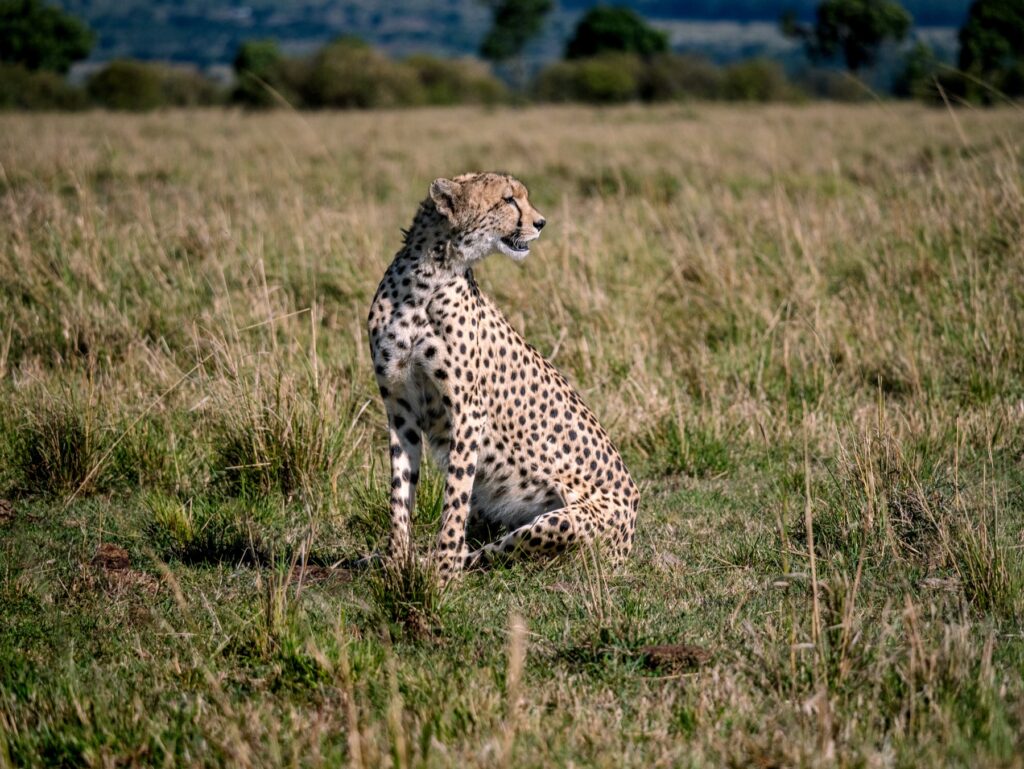
As well as the Big Five, the Maasai Mara is one of the best places in Africa to see cheetahs. I’ll never forget seeing a mother cheetah with four adorable little cubs on my very first day exploring the reserve’s huge savannah.
One other thing that sets the Maasai Mara apart from other safari destinations is the Great Wildebeest Migration. Although you can only witness one part of this amazing annual phenomenon in the Mara, it’s arguably the most dramatic one – the Mara River crossing, when two million wildebeest leap down the steep banks of the Mara River, swimming across the river, trying to dodge the ravenous crocodiles who’ve been waiting up to 6 months for a meal.
If you’re staying in one of the private conservancies such as Mara North, which is one of my favorites, you can also go on nighttime game drives and see an entirely new side of the Mara. Plus, you’ll have the chance to spot rarely-seen nocturnal species such as servals and other small cats, aardvarks, aardwolves, bat-eared foxes, honey badgers, and several owl species.
When Is the Best Time to Visit the Maasai Mara?
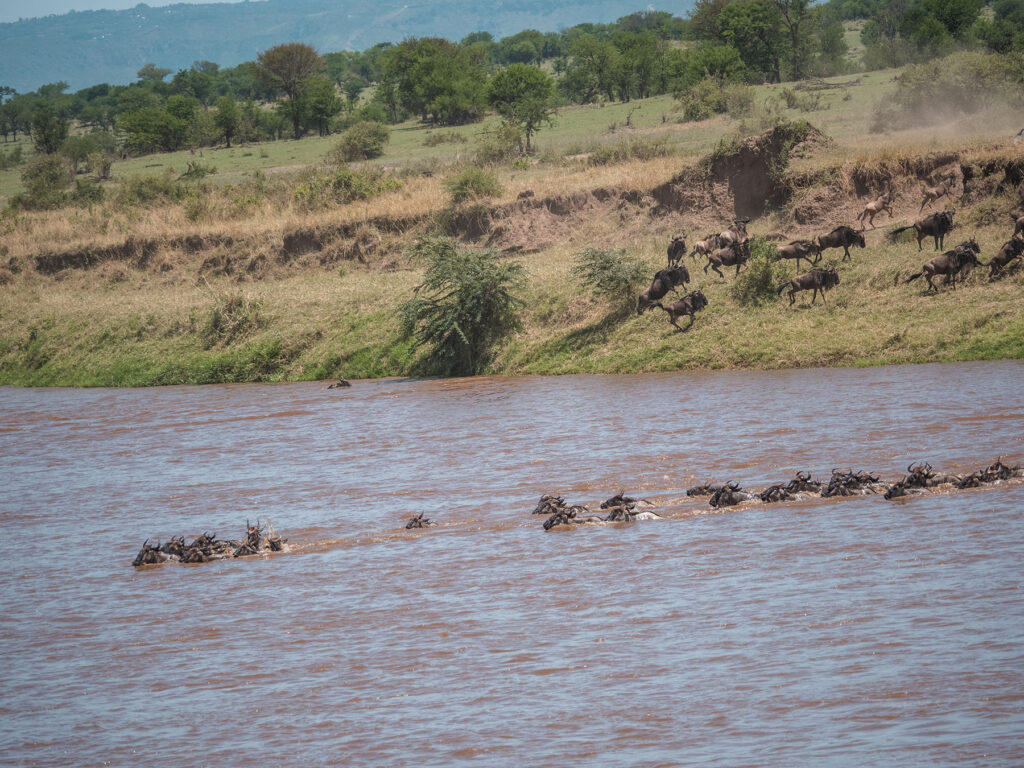
The general consensus is that the very best time to visit the Maasai Mara is between mid-July and late October, when the spectacular Mara River crossings take place. The event makes for breathtaking viewing, as hordes of wildebeest make the treacherous journey across the crocodile-infested waters of the Mara River.
However, this is also peak season, when park fees and accommodation are at their most expensive, and the reserve is at its busiest.
I actually prefer to go during the shoulder seasons (October/November and January/February) to avoid the crowds. Wildlife viewing is still excellent at these times, and sightings are more enjoyable because they aren’t as busy.
December is a particularly good time to visit Kenya if you’re eager to spot baby animals as well as migratory birds in their exquisite breeding plumage.
On the other hand, if you go in January or February, you can benefit from the reduced park fee rate ($100 USD per adult from 1 January to 30 June compared to $200 USD from 1 July to December 31). There are still lots of baby animals to see during this time, as well as the predator action they attract. For me, January or February offers the best value hands down.
I’ve visited the Maasai Mara at various times of year, and in my experience, there really is no bad time to go other than perhaps the long rainy season (mid-March to mid-May). Conditions are at their wettest during this period, with game viewing not ideal and occasional flooding that can really impact your safari.
That said, the long rainy season does offer significant discounts on accommodation, with savings of up to 40% to be had on luxury lodges. I’d just avoid staying at lodges and camps at the side of rivers in the long rains, as the possibility of flooding cannot be ruled out.
Another plus of this time of year is that the fresh, long grass on the plains draws black rhinos out into the open to graze, making them easier to spot during this period. In fact, I actually enjoyed my best-ever black rhino sighting while visiting the Mara during the long rains!
How Many Days Do You Need in the Maasai Mara?
The ideal length of time to spend in the Maasai Mara is between 2 and 5 days.
While you could be lucky and spend one full day there and see all of the Big Five, I’d recommend allowing a couple more days to get the most out of your visit to Kenya’s premier safari park. This will allow you to see most of the reserve and enjoy ample wildlife encounters, with a fair chance at seeing even the more elusive residents, such as leopards.
Leopards are notoriously reclusive, and their excellent camouflage makes it even harder to pick them out among the trees, while black rhinos also tend to avoid the limelight. This, combined with their small numbers, means that seeing them is often a real stroke of luck.
If you’ll be visiting during the great migration and wish to see river crossings, I’d advise allowing at least 3 days, possibly more to boost your chances of seeing the river crossing in action. The timing can vary year on year depending on weather patterns and other factors, and it would be such a shame to miss out on witnessing this incredible phenomenon in its full splendor by a few days.
When planning your itinerary, it’s important to factor in the travel times as well. The drive from Nairobi to the Maasai Mara takes between five and six hours to complete, so if you’re traveling by road, this will impact your game drive time, as you’ll arrive too late for a morning drive.
How Much Does a Maasai Mara Safari Cost?
For a private safari in the Maasai Mara, you can expect to pay about $450 USD per person per day. If you’re including the Mara in a wider Kenya safari, the cost is a little lower, starting from $300 USD per person per day, as prices are generally lower in other reserves.
If you go during peak season, you’ll also be hit with the higher park fee of $200 USD per person vs $100 USD in low season.
In terms of accommodation, there is a huge range to choose from, with prices starting from $100 USD per person per night. There are ample decent budget options if you want to keep costs down, plus a number of incredible luxury lodges for an extra-special stay. I’ve stayed at a luxury tented camp in the Mara North Conservancy and had a fantastic experience, but it definitely did not come cheap! Prices in these high-end lodges can be anywhere from $700 to $1,000 USD per person per night, or even more.
Rates are usually full board, meaning all your meals are included. Note, however, that the rates the safari companies quote typically don’t include tips. In Kenya, I’d usually tip my driver guide $10 USD per person per day. Another thing to be aware of is that solo travelers will end up paying more per person because the cost of the vehicle and guide is not shared.
The park fee in the Maasai Mara is a single-entry fee and as such will only cover you from the time you enter the reserve until the time you exit. So if you leave to go back to your lodge outside the park for lunch, for example, you’ll need to pay at the gate again to get back in. If staying outside the reserve, you might consider bringing a packed lunch with you so you don’t get stung with a double entry fee!
🚙 Well-rated tour packages to Maasai Mara (3 days – our recommended duration) –
Is the Maasai Mara Worth Visiting?
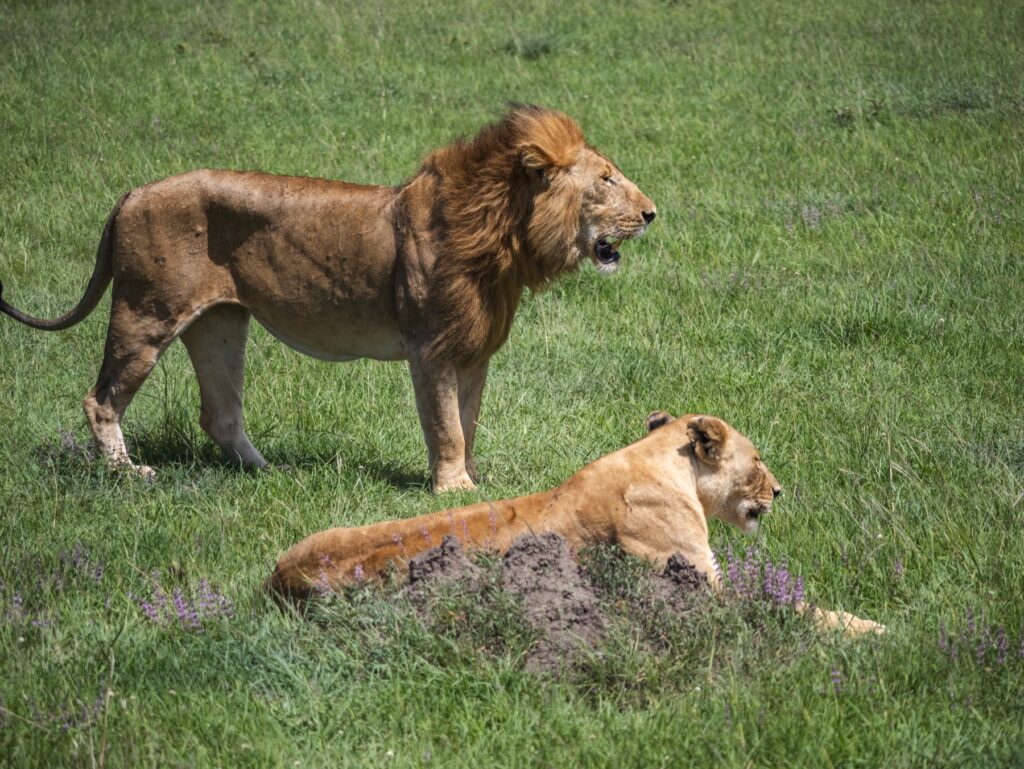
Boasting one of the highest lion concentrations on the continent and all of the Big Five among its rich variety of resident wildlife, the Maasai Mara thoroughly deserves its flagship status, and it’s absolutely worth a visit.
As well as being the only place other than the Serengeti where you can observe the stunning great wildebeest migration, it has gifted me some unforgettable big cat encounters, including a pinch-yourself moment with a leopard that leapt down from the tree she was feeding in to continue her meal right beside my vehicle!
Every visit to this wonderful reserve is its own unique and unforgettable experience, filled with incredible sightings. And that’s why I keep on coming back!
Thanks for reading!

A safari in Maasai Mara truly is unforgettable, and for many it’s a once in a lifetime experience. I really hope my guide to visiting the Maasai Mara has answered some of your questions.
I’ve also written heaps more guides about our time in Africa, like:
- Our Top Tips for Planning a Honeymoon in Africa
- 7-Day Zanzibar Travel Guide
- Our Honest Review of The Rock Restaurant in Zanzibar
- Is Gorilla Trekking in Uganda Worth It?
- My Top Tips for Planning a Safari in Amboseli National Park in Kenya
- Our Top Tips for Visiting Hell’s Gate National Park in Kenya
Last Updated on October 21, 2026 by snaphappytravel