
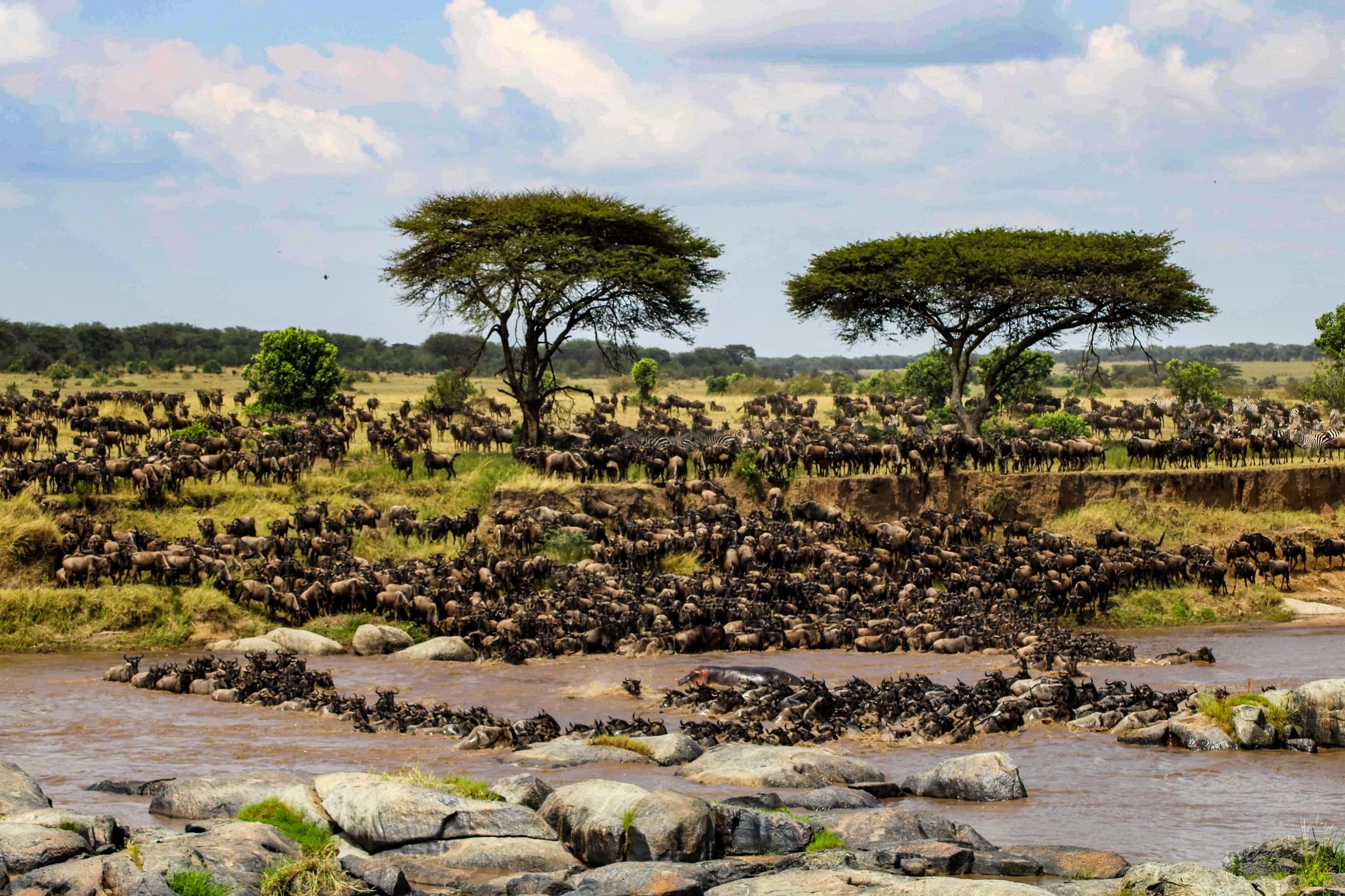
Of all the incredible safari experiences that draw visitors to East Africa, none is quite as amazing as the Great Migration. This astounding spectacle sees more than a million animals, namely wildebeests, gazelles, and zebras, traverse the expansive savannas of Kenya’s Maasai Mara Reserve and Tanzania’s Serengeti National Park.
For many, witnessing the Great Migration is the pinnacle of any safari. In fact, countless travelers plan their entire excursion around it! That said, as is the case with any nature-based encounter, there’s no guarantee you’ll catch a glimpse of this phenomenon during your trip. However, if you plan accordingly, it will certainly increase the likelihood of you witnessing it.
To give you the best chance of seeing this fascinating mass movement with your own eyes, take a look at this comprehensive guide to the Great Migration in Kenya and Tanzania.
What Is the Great Migration?
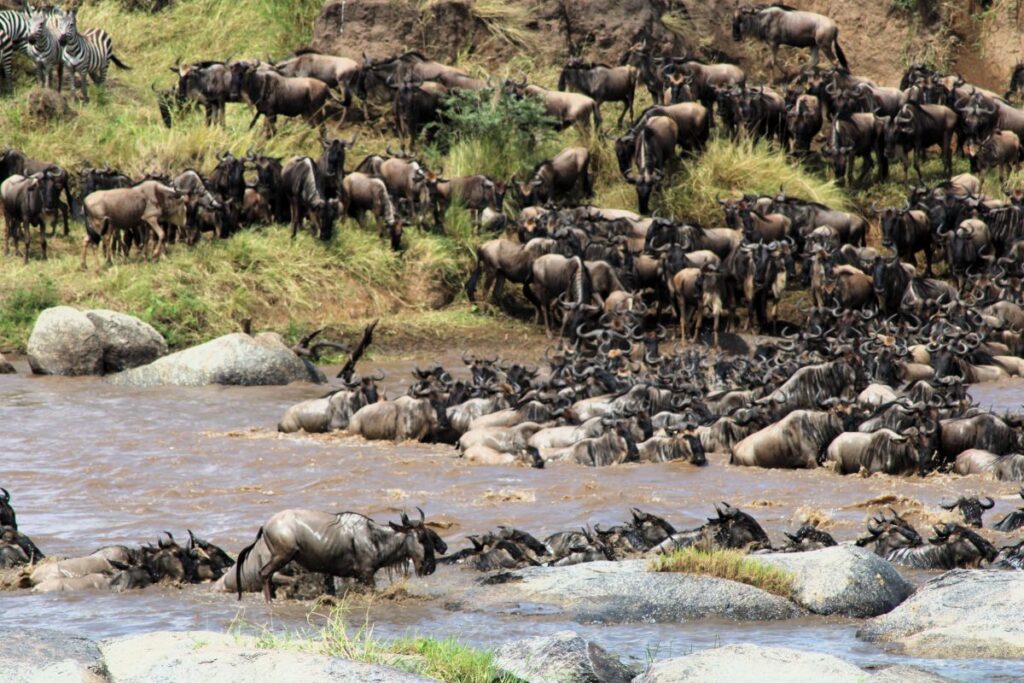
You’ve likely heard all about the Great Migration if you’ve begun planning a Kenya and Tanzania safari, but what exactly does this wildlife event entail?
In essence, the Great Migration is an endless circular movement of animals in search of food and water. While often considered an annual occurrence, it’s actually a continuous, yearlong cycle driven by weather and seasonal changes. The total length of this movement is over 1,000 miles in total.
Animals from all over the world move between habitats to secure the resources they need, but the immense scale of the Great Migration sets it apart from similar events. With over a million animals in the herd, this stampede is the largest mass movement of mammals on Earth.
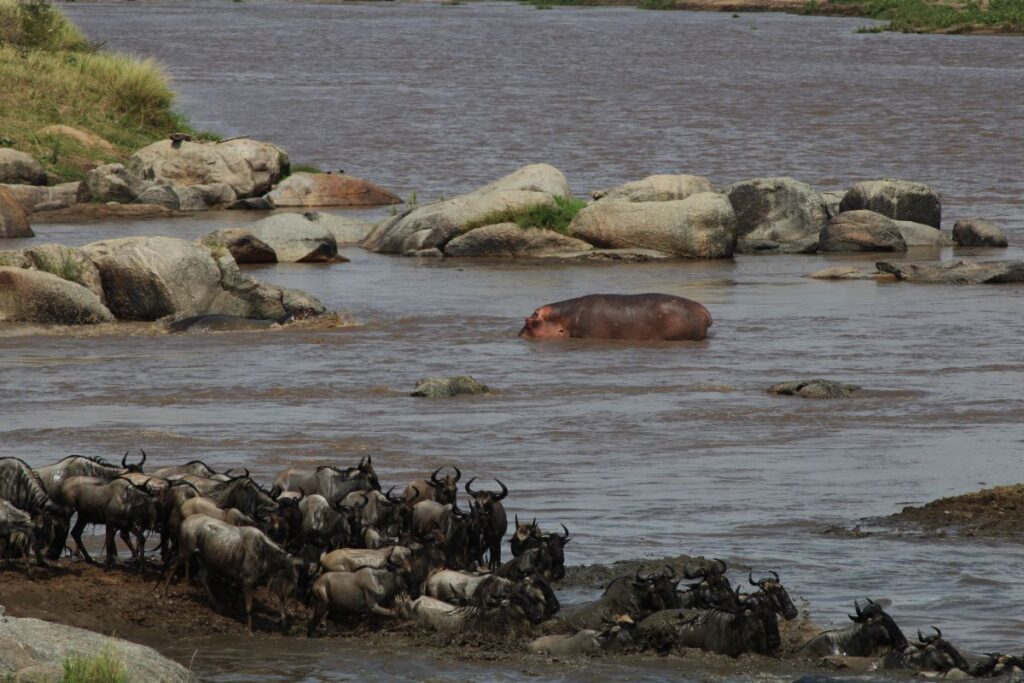
Although it’s evident that the animals move in response to the weather to follow the rain, it’s still somewhat unclear just how they know where to go. The ability of these mammals to detect rainfall is another reason why the Great Migration is such a remarkable phenomenon.
Beyond being a jaw-dropping display of nature at work, the Great Migration is an essential event for the overall health of the region’s ecosystem. Without it, overgrazing, less fertile soils, and wildfires would result.
What Animals Can You See During the Great Migration?

When visiting Tanzania or Kenya, the wildlife is bound to take center stage. While most travelers are eager to spot the likes of rhinos and elephants during their safari adventure, you can expect to see a whole other line-up of mammals during the Great Migration.
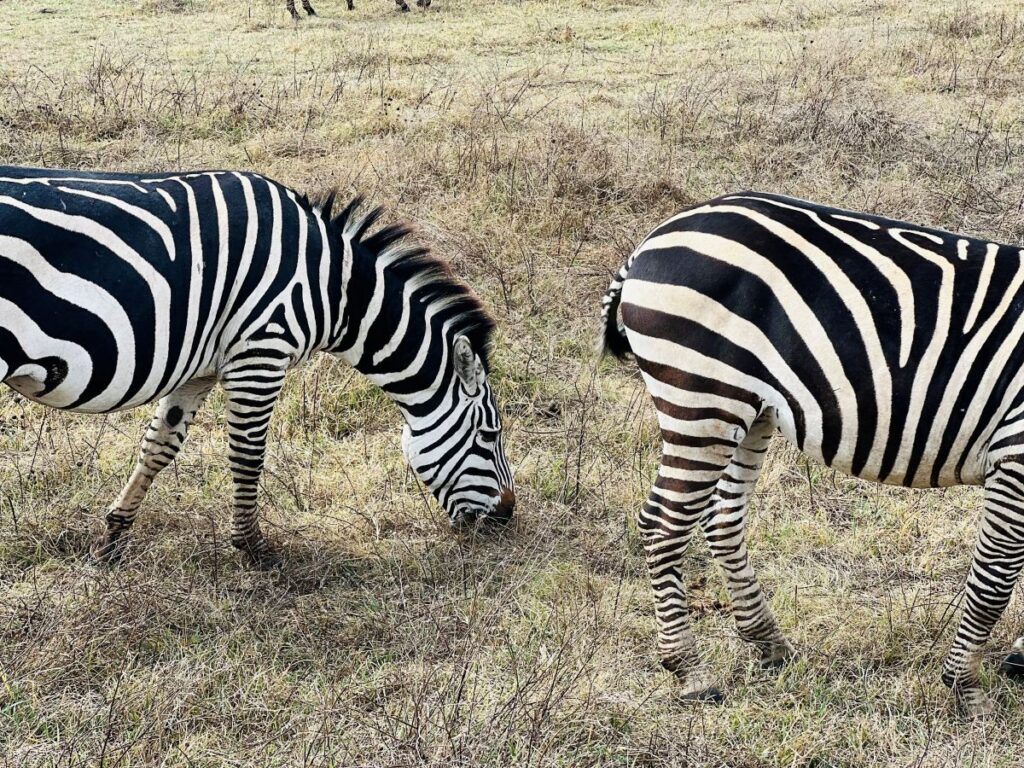
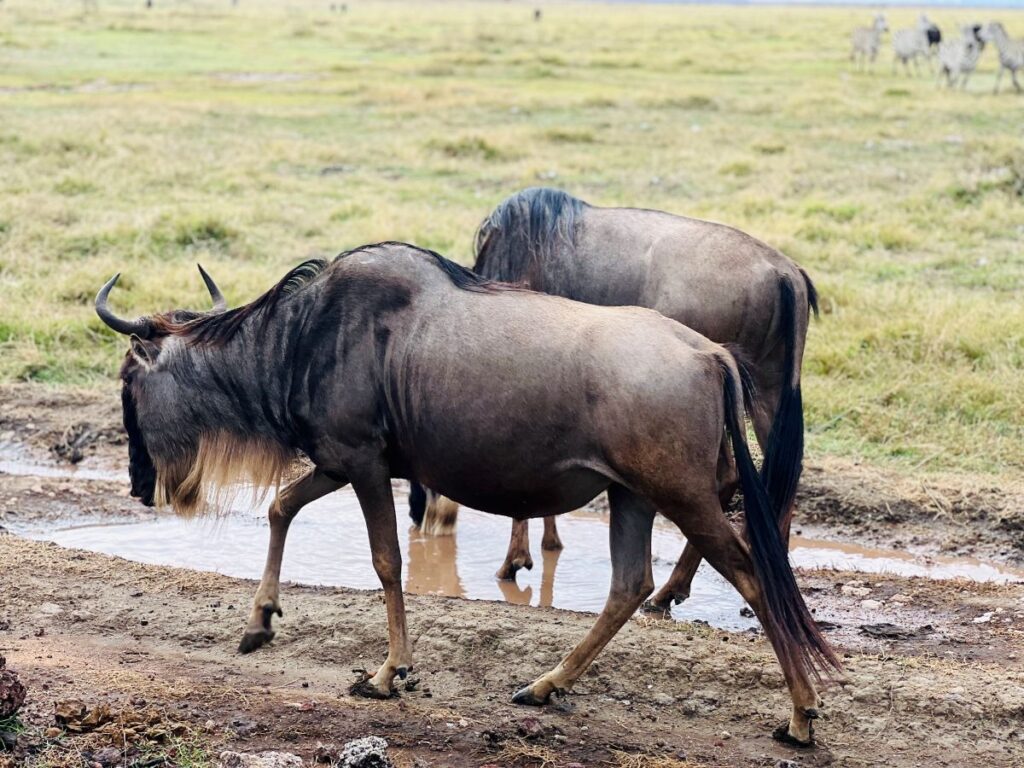
Wildebeests make up the majority of the fast-moving herd, so they are undoubtedly the stars of the show, though each species plays an important ecological role. The remaining group of animals comprises zebras and gazelles, along with a small cluster of antelopes called elands.
Zebras are typically at the front of the herd, as their excellent memories and sharp senses help them to easily identify water sources and suitable grazing lands. In addition to serving as natural leaders, they also consume tall, tough grass that other animals have difficulty digesting, leaving the shorter, more tender varieties for the wildebeests behind them.
Following the zebras are the wildebeests. As the core species of the group, they tend to dictate the pace and scale of the migration. Not only are they vital grazers, but their hooves can break up the soil, and their waste acts as a natural fertilizer. Trailing behind these creatures are gazelles, who are another group of important grazers.
While the migrating animals are the focal point of the Great Migration, you may still be in with a shot of spotting some other animals along the way. Many predators track the herd and pounce when the opportunity strikes. With a bit of luck, you may also observe lions, leopards, crocodiles, and spotted hyenas in action.
What Is the Great Migration Route?
Due to the cyclical nature of the Great Migration, there are no specific start and end points. Instead, the animals follow a clockwise path that takes roughly one year to complete.

The early months of the year align with the calving season. At this time, the grass on Tanzania’s southern Serengeti plains is plentiful and rich in nutrients, thanks to the abundant rainfall in the months prior. As a result, it’s the ideal place for the hundreds of thousands of newborn wildebeest calves to graze.
By the time the dry season sets in, usually around April, the animals move northwards to the central and western pockets of the Serengeti. After several months of grazing, food becomes increasingly scarce, and the animals must head north again.
When the summer months roll around, the herd faces some of the most challenging parts of the route. Between June and September, the animals are tasked with crossing the Grumeti and Mara Rivers as they move toward the Kenyan border. Here, the herd encounters everything from hungry predators to steep riverbanks.
Those that survive continue toward the Maasai Mara in Kenya. After spending several months here, the animals start to move south when the grasses dry up. They steadily journey back through the eastern edges of the Serengeti before stopping in the south, just in time for the next calving season. From here, the cycle begins once again.
The Best Months to See the Great Migration

There’s a high chance of seeing the Great Migration in action as long as you visit the areas where it is expected during your trip.
Calving season is among the most popular times for visitors. By planning your trip between January and March, you’ll be right on time to see wildebeest, zebras, and gazelles taking their first steps, with some of the most gorgeous mountains in Tanzania standing in the distance.
The presence of these newborns attracts many large predators, meaning you may also get a chance to observe lions, leopards, and hyenas hunting.
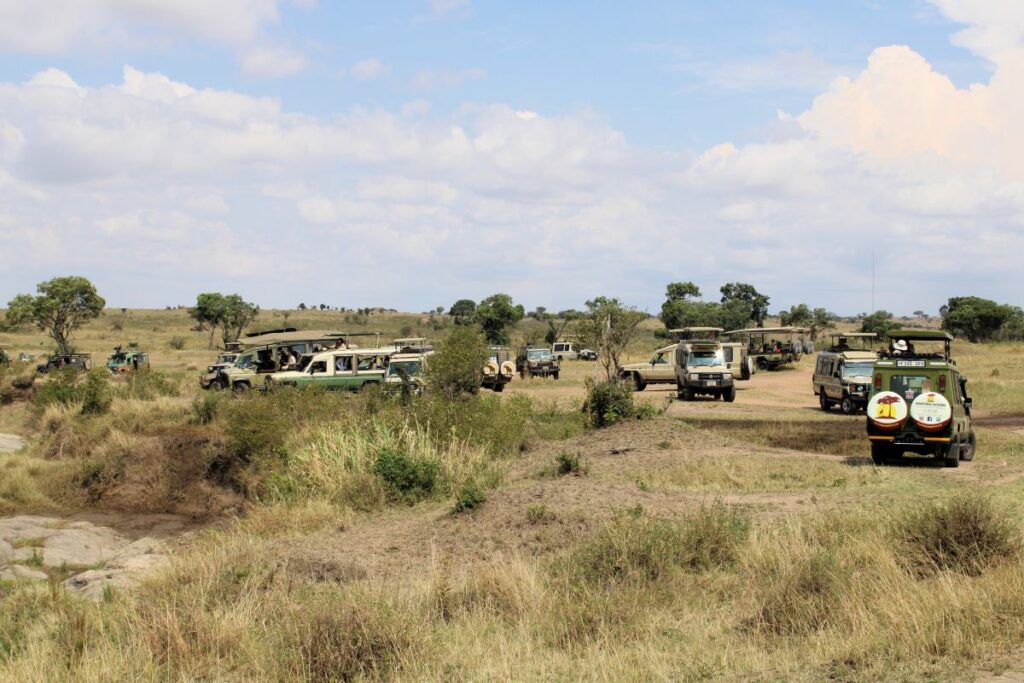
While the calving season is always a fantastic time to visit, it comes second to the summer months. Like many other travelers, you’re likely eager to witness the mesmerizing river crossings that have become symbols of this iconic migration. In that case, your best option is to visit between June and October, with August and September being especially popular.
During other times of the year, you’ll likely still be able to see the animals migrating, though the herd may be more spread out and moving at a slower pace. However, you can often secure better prices during these quieter months!
💡Copy our Serengeti itinerary! 💡
🦁 This is the 3 day safari tour of Serengeti that we did!
🏨 We stayed 2 nights at Lobo Wildlife Lodge and 1 night at Ngorongoro Wildlife Lodge.
What Are the Highlights of the Great Migration in Kenya and Tanzania?
Tanzania

The vast majority of the Great Migration route is in Tanzania, so many of the highlights of this legendary trek are found here. Some of the stand-outs include calving season in the southern section of the renowned Serengeti National Park between January and March, and the intense Grumeti River crossing in the north of the country in June and July.
Kenya
Although it makes up only a small part of the Great Migration route, Kenya still offers plenty of extraordinary experiences. Among them is, of course, the Mara River crossing, which is easily the main attraction of the entire migration. The herd usually crosses here in August or September. Kenya is also home to the Maasai Mara National Reserve, where large herds of animals gather after crossing the Mara River.
Tips for Visiting the Great Migration in Kenya and Tanzania
- Packing: There can be significant temperature differences between day and night, so pack a mix of warm and lightweight clothing. Other key items to pack include sunscreen, insect repellent, a wide-brimmed hat, sunglasses with UV protection, and comfortable footwear (these Acrus boots from ArcTeryx are brilliant).
- Colors: Stick to neutral, earthy tones, such as beige, khaki, and light brown, to minimize insect bites, reduce dust, and avoid startling the animals.
- Advance booking: Unsurprisingly, huge numbers of travelers flock to Tanzania and Kenya to see the Great Migration. For this reason, it’s advisable to book your safari, accommodations, and guides well ahead of time. If you’re hoping to visit during the busy summer season, it’s worth making reservations 12 months in advance.
- Budget accordingly: In addition to paying for guides, lodgings, and flights, you’ll also need to consider park fees. Though these entry fees tend to remain the same throughout the year, other costs can vary depending on the season.
- Manage your expectations: While your trip to Tanzania or Kenya will no doubt be a memorable one, it’s essential to remember that animal spotting can be unpredictable, and you may not see all of the parts of the Great Migration that you had hoped. This is why choosing a reputable safari operator is essential, as it increases the likelihood of seeing the animals you want to see.
Thanks for Reading!
When you combine the sheer number of animals on the move with dramatic river crossings and vast, endless grasslands, it’s easy to understand why the Great Migration in Kenya and Tanzania is considered one of nature’s greatest spectacles. It’s an experience that stays with you long after you return home.
You may also enjoy reading my other Africa blog posts, like –
Our Top Tips for Visiting Hell’s Gate National Park in Kenya
Which Gorilla Trekking Tour Should I Choose?
A Look at Some of the Best Places to Go on Safari in Africa
My Top Tips for Planning a Safari in Amboseli National Park in Kenya
Last Updated on October 21, 2026 by snaphappytravel