
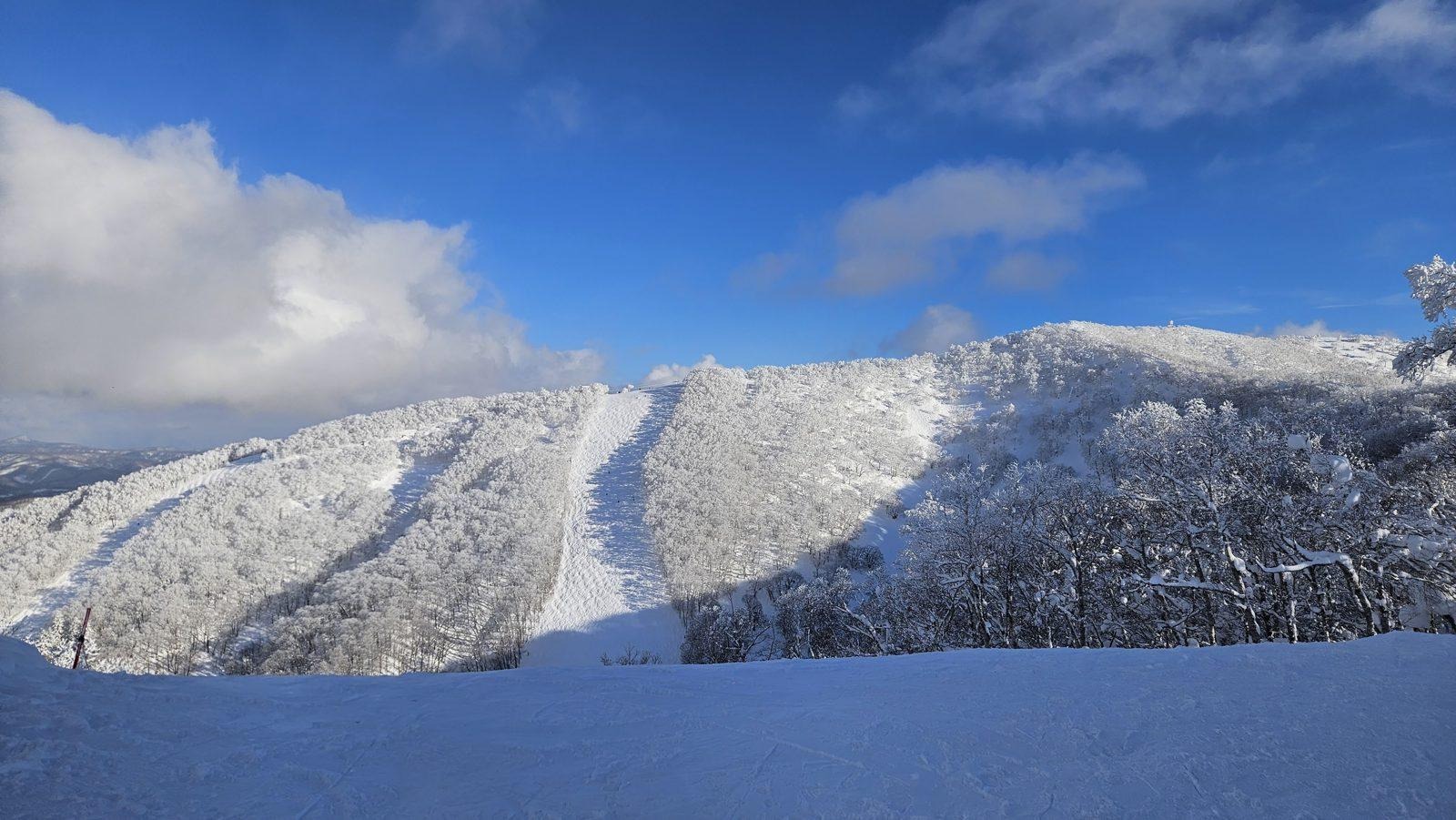
Most people picture Japan in spring, with cherry blossoms over Kyoto temples. I lived in Tokyo for three years, and some of my favourite trips in Japan were in the opposite season: snow castles in Sapporo, a snowy canal in Otaru and the famous powder snow of Niseko.
Hokkaido, Japan’s northernmost island, turns into a different world every winter. In this guide, I share how I would combine its three winter highlights into one trip: the Sapporo Snow Festival, a day in the old port town of Otaru, and a few days of skiing in Niseko. Everything here comes from my own trips, including the mistakes.
Hokkaido in winter at a glance
- Best time: early February for the Snow Festival and the Otaru Snow Light Path. For skiing, mid-January to the end of February has the most reliable powder.
- Closest Airport: New Chitose Airport near Sapporo.
- Temperatures: around -1°C during the day and -7°C at night in Sapporo in February.
- How long to allow: one week is enough for Sapporo, Otaru and a few ski days.
- Must-eats: miso ramen, jingisukan lamb barbecue, soup curry and seafood bowls.
Sapporo: Snow Castles, Lamb Barbecue and Miso Ramen
Sapporo is the capital of Hokkaido and one of my favourite cities in Japan. It has wide streets, a relaxed feel and some of the best food in the country. It is also the perfect base for the rest of the island, with Otaru, onsen towns and ski resorts all within reach. In winter, it hosts one of the biggest snow events in the world.
We stayed at ONSEN RYOKAN Yuen Sapporo – it’s stylish and centrally located.
The Sapporo Snow Festival
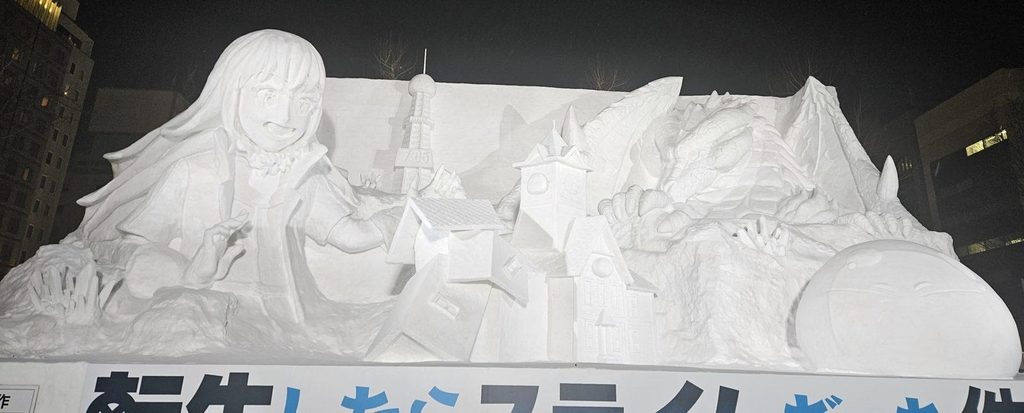
The festival started small. In 1950, a group of local high school students built a few snow statues in Odori Park. The idea caught on, a few years later the Japan Self-Defense Forces started helping to build much larger sculptures, and in 1974 an international snow sculpture contest was added. Today, around two million people visit every February.
We visited in February and spent our days walking between snow castles, anime characters made of snow and ice sculptures lit up in every colour. The festival runs for about a week in early February, and entry is free at all three sites:
The three sites are:
- Odori Park is the main site. The park stretches for about 1.5 kilometres through the city centre and is filled with sculptures of every size, from small works by local teams to giant ones several storeys high that take weeks to build. The sculptures are lit up until 10 pm, and some of the big ones become the stage for projection mapping shows and concerts.
- Susukino, the nightlife district, is one subway stop south, or a 10 to 15 minute walk. Its main street turns into a gallery of around 100 ice sculptures carved from crystal-clear blocks, lit up until 11 pm. Walking through it at night felt like wandering through a frozen dream, and it was my favourite part of the whole festival.
- Tsudome is the family site at the Sapporo Community Dome in the northeast of the city, with snow slides, snow rafting, tubing and a snow maze. Take the Toho subway line to Sakaemachi Station and then the shuttle bus or a 15 minute walk.
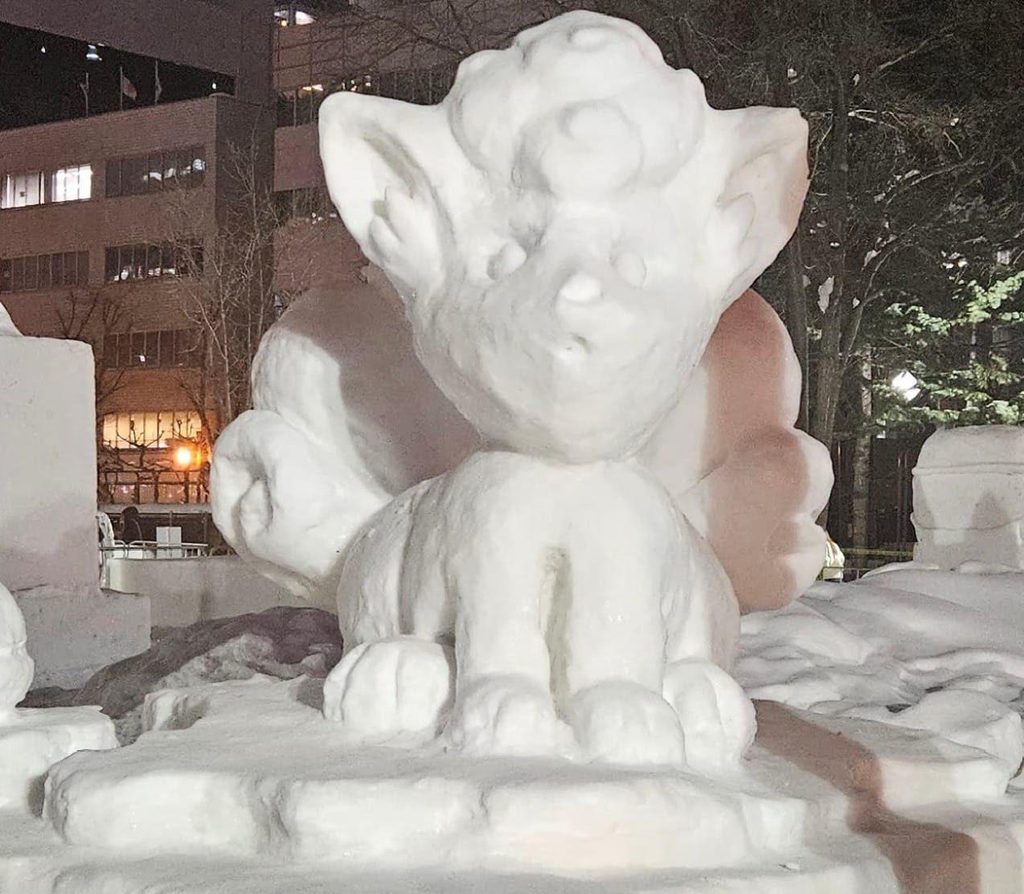
One of the highlights for us was the collection of anime-themed sculptures made by amateur snow sculptors. Pokémon, Doraemon, Studio Ghibli: they captured beloved characters with so much detail that it felt like stepping into an animated world made of snow, so take your time with the smaller sculptures too.
My tips for the festival
- Go early in the week. The sculptures are finished on the first day and slowly lose their sharp edges as the week goes on. Weekdays are also noticeably calmer than the weekend.
- Visit Odori Park twice. Once in the morning, when it is quieter and the light is good for photos, and once in the evening for the illumination.
- Save Susukino for after dark, when the coloured light shines through the ice.
- See it from above. The Sapporo TV Tower at the east end of Odori Park has an observation deck with a view over the whole park, which is especially beautiful at night.
- Use the underground. A long underground shopping street connects Sapporo Station, Odori and Susukino, which is the warmest way to move between the sites.
- Keep your phone in an inside pocket. Batteries drain quickly in the cold. Bring some cash for the food stalls, too.
- Book your hotel months ahead. Festival week is the busiest time of the year in Sapporo. Odori is the most convenient area, Susukino has the most choice at different prices, and the area around Sapporo Station is best for day trips by train.
I cover the dates, the sites and where to stay in more detail in my full Sapporo Snow Festival guide.
Warm up with jingisukan
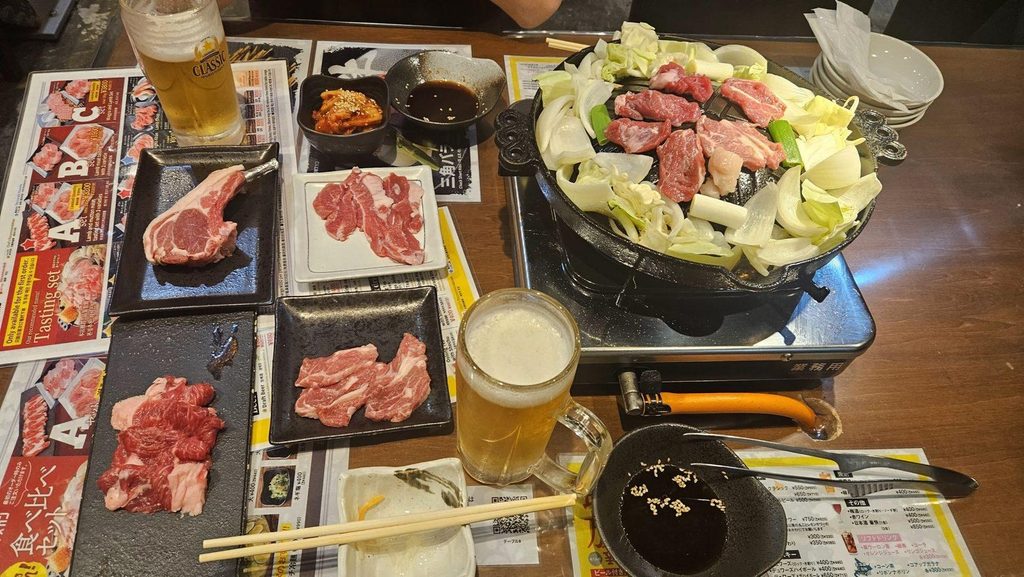
Before heading out to the festival in the evening, we warmed up with jingisukan, Hokkaido’s lamb barbecue. The name is the Japanese pronunciation of Genghis Khan, but it is not a Mongolian dish. It is a Japanese invention, inspired by grilled mutton from northeastern China, and its roots are surprisingly practical: in 1918, Japan set up sheep farms to produce wool for uniforms, and the farms in Hokkaido were the ones that succeeded. With all those sheep around, people started grilling the meat.
The dish is cooked on a dome-shaped iron grill that is said to look like a warrior’s helmet. The meat goes on the hot top of the dome, the vegetables around the edge, and the juices run down and flavour the vegetables as everything cooks.
In Sapporo, the meat is usually grilled plain and then dipped in a sauce, while in Takikawa, in central Hokkaido, it is marinated before grilling. Many restaurants let you choose between tender, mild lamb and mutton, which has a stronger taste.
We went to Hiratsuka Genghis Khan, where every table has its own grill and the staff quickly showed us how to grill properly, which is very welcome the first time. Expect to pay around 3,000 to 4,000 yen per person with drinks. If you want the most famous name in town, Daruma in Susukino has been serving lamb since the 1950s, but expect a line in the evening.
One warning from experience: your clothes will smell of barbecue afterwards. Many restaurants give you an apron and a plastic bag for your jacket, so use them.
More places to eat in Sapporo:
Miso ramen was born in Sapporo, and the tiny shops of Ramen Yokocho in Susukino are the classic place to try it. Soup curry, a spicy curry broth with big pieces of vegetables and meat, is the other local favourite. For breakfast, have a kaisendon seafood bowl at Nijo Market.
And if you have a few spare hours, the Shiroi Koibito Park chocolate factory, home of Hokkaido’s most famous souvenir biscuit, has its own winter illumination.
Getting there and dressing for the cold:
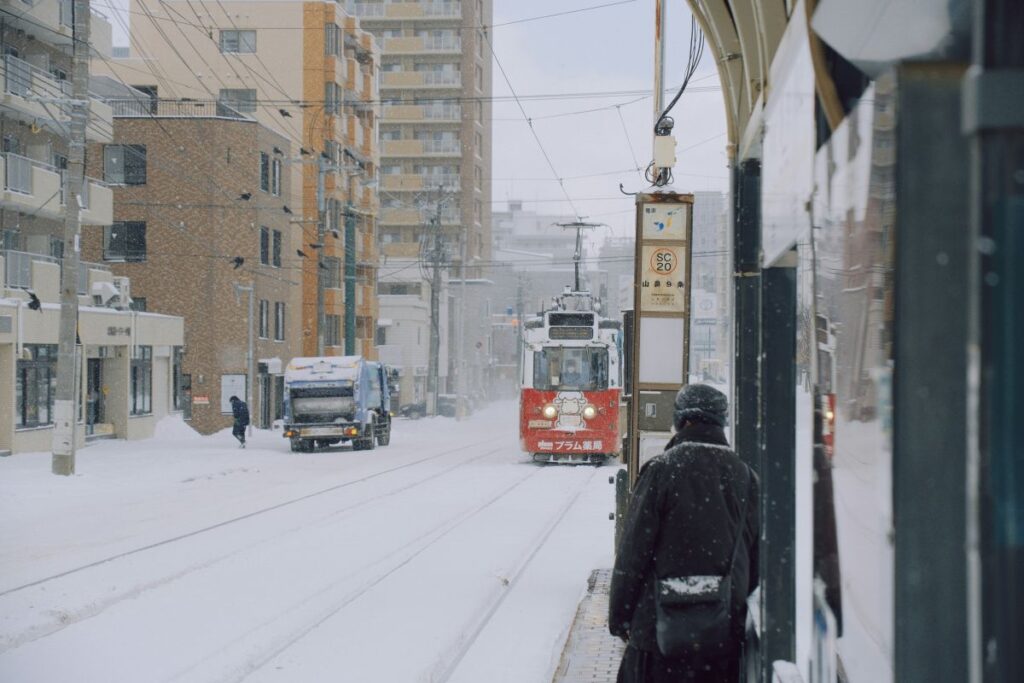
Most visitors fly into New Chitose Airport. From there, the JR rapid airport train reaches Sapporo Station in about 37 minutes for around 1,150 yen, and Odori Park is a short walk or one subway stop away. Inside the city, the three subway lines cover the centre, and IC cards like Suica work.
Sapporo in February is properly cold, often with snow and wind, and you will spend hours outside. What made the difference for us was packing these winter items:
- Several warm layers, ideally thermal underwear, a fleece and a down jacket.
- Waterproof winter boots with good grip, because the pavements are covered in packed snow and ice. If you forget them, slip-on shoe spikes are sold cheaply in Sapporo.
- A hat, a scarf and gloves that still let you use your phone.
- Disposable heat packs (kairo) from any convenience store.
Otaru: A Canal Town in the Snow
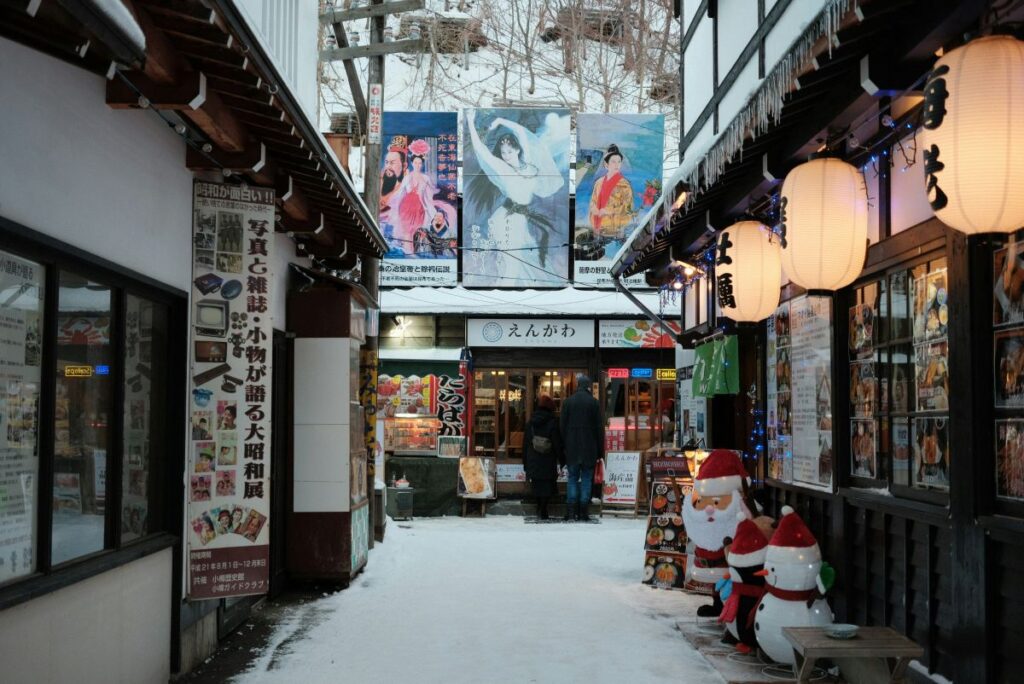
Otaru is only about 30 minutes from Sapporo by JR rapid train, and it makes the perfect day trip during the festival. Where Sapporo is busy and bright, Otaru feels quiet and nostalgic: snow on the old stone warehouses, the canal, and steam rising from seafood restaurants.
Getting there:
Take the JR Hakodate Main Line from Sapporo Station. Rapid trains take about 30 minutes, local trains around 45, and the one-way fare is well under 1,000 yen. You do not need to book; just tap in with an IC card.
Sit on the right side of the train when leaving Sapporo: for part of the ride, the tracks run right along the coast of Ishikari Bay, and in winter the snowy shoreline and dark sea make it one of the prettiest short train rides in Hokkaido. From Otaru Station, the canal is about a 10-minute walk downhill.
Some rapid airport trains from New Chitose continue past Sapporo all the way to Otaru in roughly 70 to 75 minutes, which makes Otaru an easy first or last stop on a Hokkaido trip.
Where to stay:
We really like Otaru Geihinkan that overlooks the sea and most rooms have a balcony. It’s very well rated (over 9/10).
Stroll along the canal and Sakaimachi Street
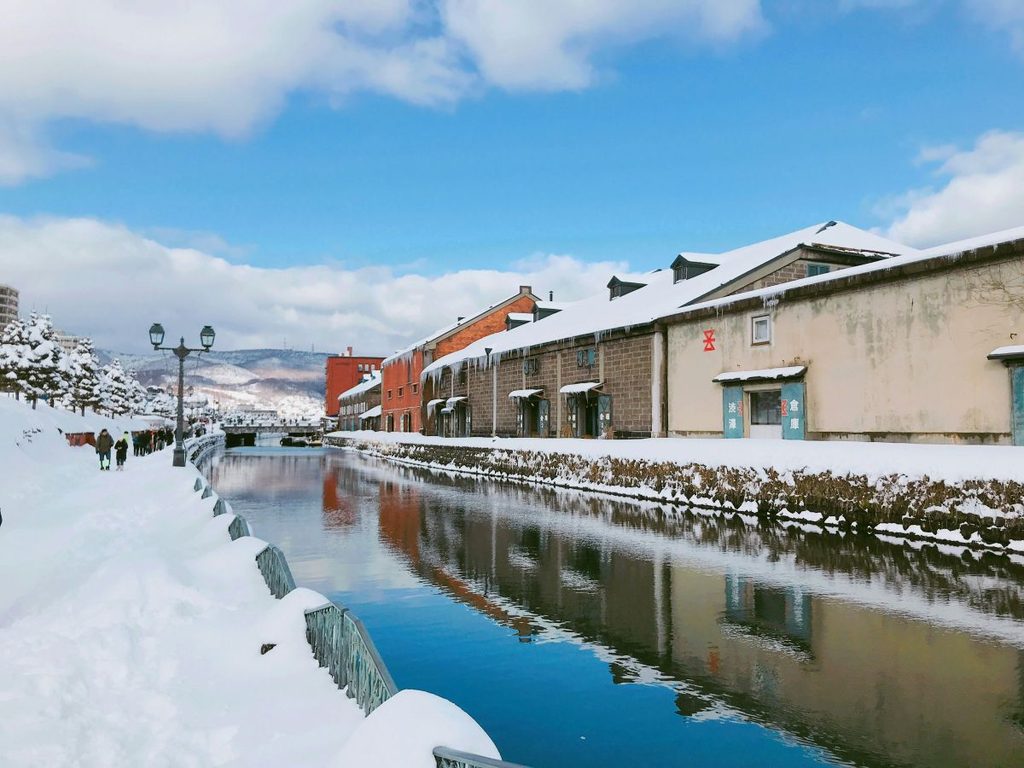
The Otaru Canal was built for the city’s busy port, when goods moved between ships and the warehouses along the water. Today, those stone warehouses are restaurants, cafes, museums and shops. The canal is at its prettiest in the late afternoon and evening, when the gas lamps reflect on the water and the crowds thin out.
From the canal, we wandered along Sakaimachi Street, which is lined with glass workshops and music box shops. I spent more time admiring the craftsmanship than shopping. One of the highlights was a freshly made ichigo daifuku, sweet mochi with red bean paste and a whole strawberry inside, from a local vendor.
Otaru is also good for personalised souvenirs. A friend of ours ordered custom chopsticks engraved with a Japanese phrase that was, on purpose, grammatically wrong. The shop owner pointed out the mistake right away, and it took some explaining before he understood it was an inside joke. He made them exactly as requested, and we still laugh about it.
Eat seafood and get a lesson in honesty
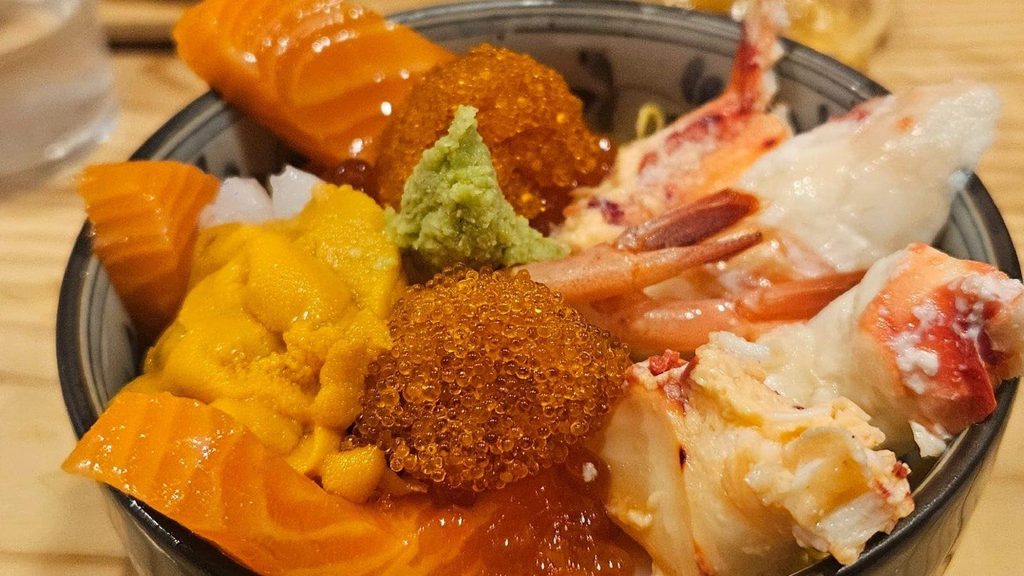
And you have to eat seafood here. The area around Otaru’s Sushi Street has many restaurants, from sushi courses to big seafood rice bowls. We had a kaisendon piled high with fresh fish and shellfish from local waters and finished with edible gold leaf. Ours cost around 4,000 yen, and it was one of the highlights of the day.
Otaru also showed us Japan’s famous honesty firsthand. We accidentally left our phone in a public restroom and only noticed later. We contacted the local tourism office, and the staff not only found the phone but arranged for it to be sent to our next hotel. What could have been a travel disaster became one of the most memorable experiences of our trip.
There was a personal moment, too. My girlfriend had visited Otaru eight years earlier with friends, on her first trip to Hokkaido, and she recreated a photo in exactly the same spot. It reminded us why people keep coming back to the same places.
Stay for the Snow Light Path
If you visit in February, try to stay until after dark. For about ten days every February, Otaru holds the Snow Light Path (Yuki Akari no Michi), when the canal and the streets are lit by thousands of candles and snow lanterns, many of them made by local volunteers.
Candles float on the canal in glass buoys, and the old Temiya railway line from the 1880s is lined with small lanterns. The lights usually shine from around 5 pm to 9 pm, entry is free, and the dates usually overlap with the last days of the Sapporo Snow Festival.
Half a day covers the canal, Sakaimachi Street and a seafood lunch. A full day adds the music box museum and the glass shops and lets you see the canal at sunset. In winter, plan more time than you think: walking on icy streets is slow, and we regularly saw both locals and tourists taking small, careful steps around the canal.
Niseko: The Powder Everyone Talks About
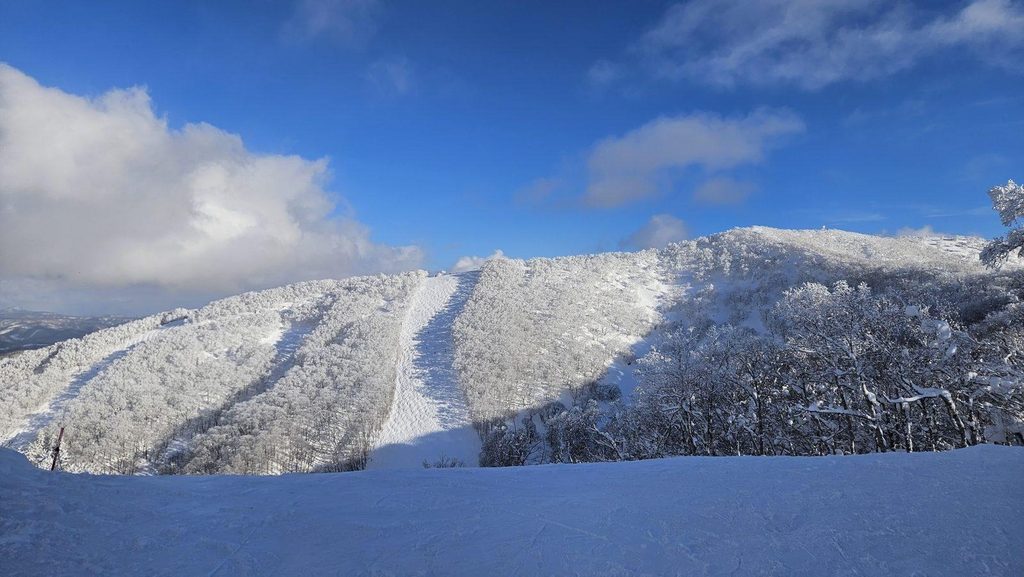
Otaru sits on the way from Sapporo to Niseko, so it is easy to continue from there. Niseko’s famous “Japow” is a weather pattern, not marketing: in winter, freezing dry air from Siberia crosses the relatively mild Sea of Japan, picks up moisture over hundreds of kilometres of open water and drops it as light, dry snow when it hits the mountains of Hokkaido.
I went to Niseko with my girlfriend and a group of five Swiss friends who have skied in the Alps for many years. They were sceptical about the low elevation before the trip. After the first powder morning, nobody mentioned it again.
The trade-off is visibility. Snowfall often means flat light and grey skies, and blue-sky powder days are a gift rather than the rule. On those grey days, the tree runs are your friend, because the trees give you contrast when the open slopes disappear into white.
My tips for skiing in Niseko:
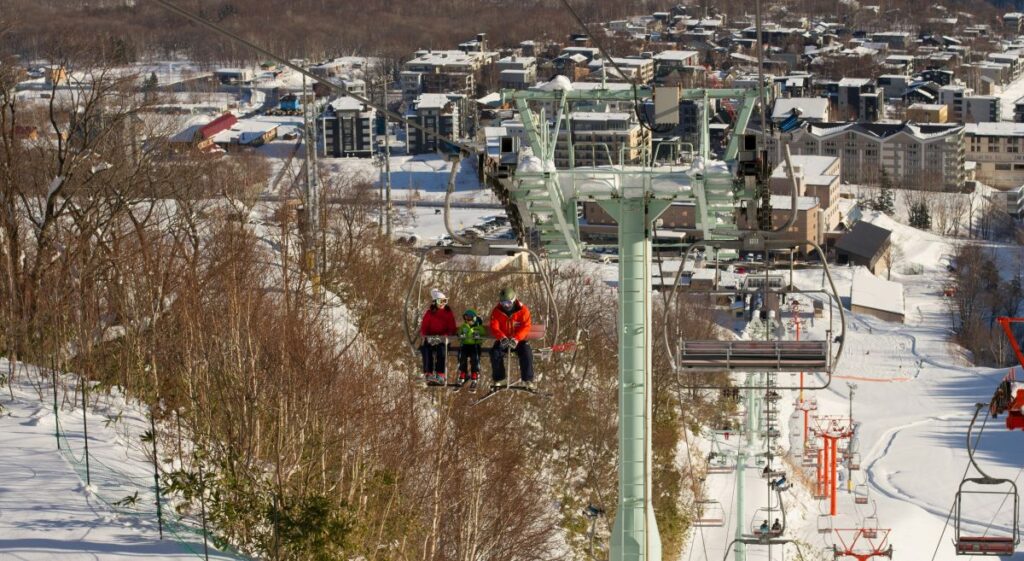
- Buy the Niseko United pass. It covers four connected areas on one mountain: Grand Hirafu, Hanazono, Niseko Village and Annupuri, with around 70 runs and a free shuttle bus between them. Most mornings we started in Grand Hirafu and moved to another side of the mountain when the wind changed or one area got crowded. If the snow is wind-blown on one side, the other side is often perfect.
- Stay in Kutchan. We based ourselves in the town down the road – Kutchan, which is noticeably cheaper than Hirafu village and has good restaurants and convenience stores. We like the Nikko Style Niseko Hanazono hotel here. A 24-hour taxi service runs to the slopes, but it is not cheap: around 4,500 yen one way, so split it with friends.
- Eat in Kutchan, too. Many restaurants in Hirafu village cater to international visitors, and it is easy to pay a premium for simple meals. In Kutchan, we found generous portions at friendlier prices, and a konbini stop before or after skiing saved us time and money more than once.
- Rent gear in Hirafu. We used Rhythm. It was not the cheapest, but the gear was clean and tuned, and most of the staff were Australian, which made the fitting easy for our group.
- Compare ski schools before you book. Prices for English-speaking lessons varied hugely. At the gondola base, we found offers that cost around six times more than the same kind of lesson at Ace Gondola. My girlfriend, on only her second ski trip, booked a private local guide, and it made a huge difference to her confidence.
- Try the “pizza box” lift, if you like heights. This small, slightly exposed lift is a Niseko classic. I am not very comfortable with heights, so one ride was enough for me, while the braver members of our group went up several times for the views.
- Enjoy the après-ski. Niseko is the only place in Hokkaido with a real après-ski scene. We had great nights at Freddies, Wild Bills and the cosy Blo Blo Bar. Everywhere else, evenings are quiet: you eat, soak in an onsen and go to bed.
One extra tip:
If you have time for one more resort, go to Rusutsu, a short drive from Niseko. It spreads over three mountains, and the gaps between the trees on its side slopes are legendary after fresh snow. On our day there, the sky cleared completely, and the views across the snowy forests were some of the best of the whole trip. I compare every ski area on the island, with lift prices and access, in my guide to the best ski resorts in Hokkaido.
How I would plan a week in Hokkaido in winter
- Days 1 to 3: Sapporo. One full day for the Snow Festival (Odori by morning and night, Susukino after dark), plus time for jingisukan, miso ramen and the city.
- Day 4: Otaru. A day trip by train for the canal, Sakaimachi Street and seafood. Stay into the evening if the Snow Light Path is on.
- Days 5 to 7: Niseko. Three days on the Niseko United pass, or two days plus one in Rusutsu.
The best-rated Hokkaido guided tours, here –
Thanks for reading!
If you want even more snow on the same trip, the snow monkeys of Nagano are another classic Japanese winter sight. Wild macaques bathe in a hot spring surrounded by snow, and they are easy to combine with a stay in a traditional onsen town. I explain how to visit in my snow monkey onsen guide.
Hokkaido in winter is cold, and you will need good boots. But walking through Susukino between glowing ice sculptures, or riding a lift above Niseko’s powder, is something you will not forget.
Max is a Swiss travel writer who lived in Tokyo for three years and studied at Waseda University. He writes about Japan, Korea and Switzerland at Max on the Move.
You may also like to read some of my other winter guides:
- The Best Queenstown in Winter Itinerary (Written By a Local!)
- Epic Winter Activities In Whistler: Insider Tips From A Local
- Things to Do in Whistler in Winter (For Non-Skiers)
Last Updated on November 19, 2026 by snaphappytravel