
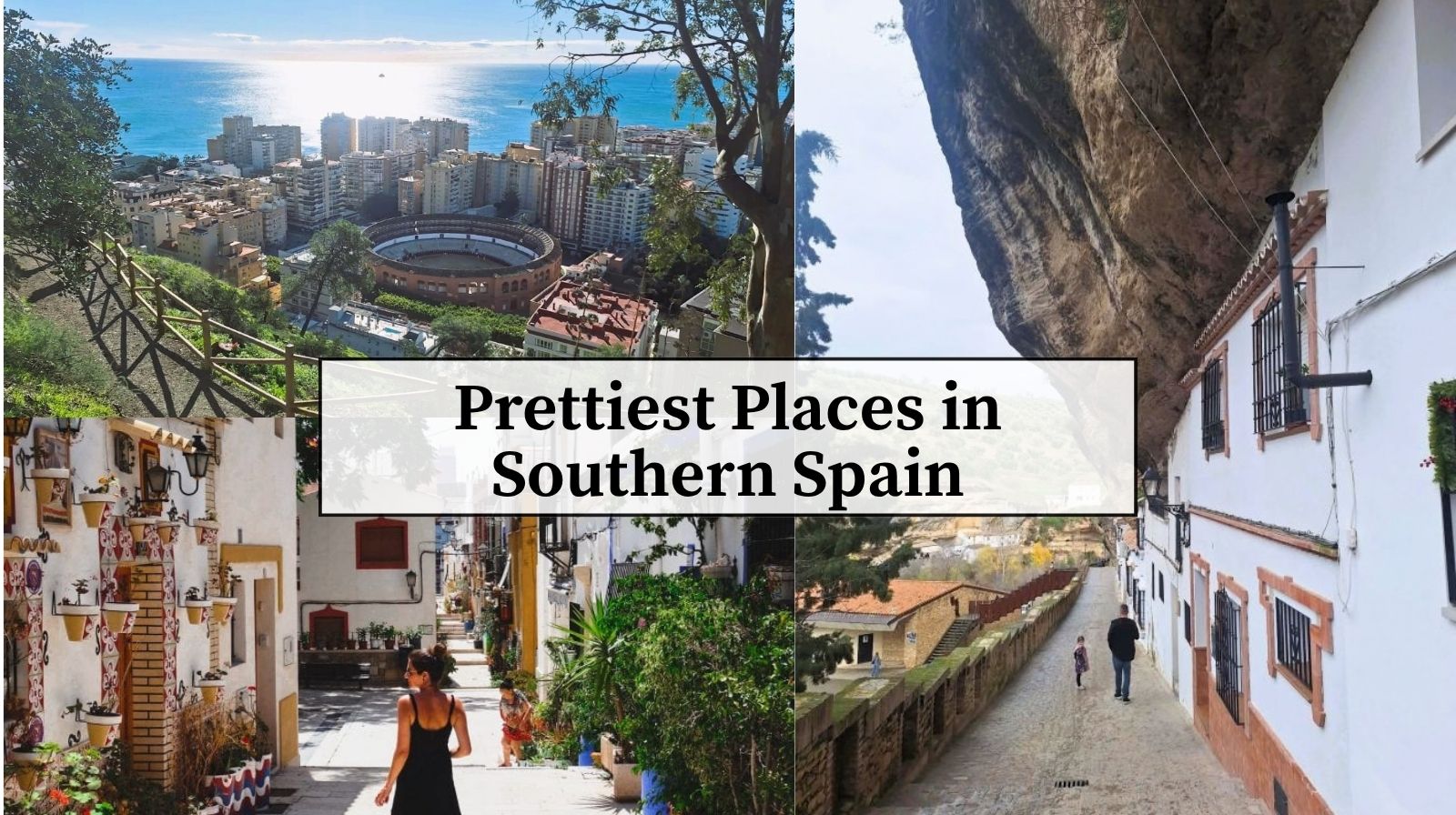
Southern Spain is one of the most popular tourist destinations in Europe and for good reason – this gorgeous region is renowned for its stunning landscapes, from the sun-drenched beaches of the Costa del Sol to the picturesque white villages nestled in the hills of Andalusia.
So, here I am to tell you all about the prettiest cities and towns we’ve had the pleasure of exploring in Southern Spain. It features a village built underneath a huge rock (Setenil de las Bodegas), a mountain village that’s painted entirely blue, and not forgetting one of my favorite cities in Spain – Malaga.
We have a home near Alicante (on the Orihuela Costa) and so have visited this region heaps, probably close to 20 times (or even more!) Yes, lucky us – we’ve spent a lot of time in beautiful Southern Spain over the years.
1. Malaga, Andalusia
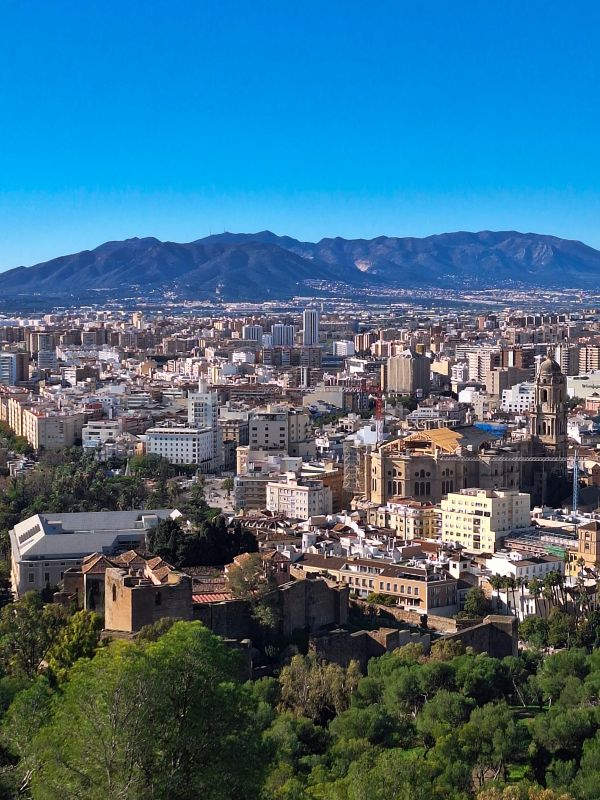
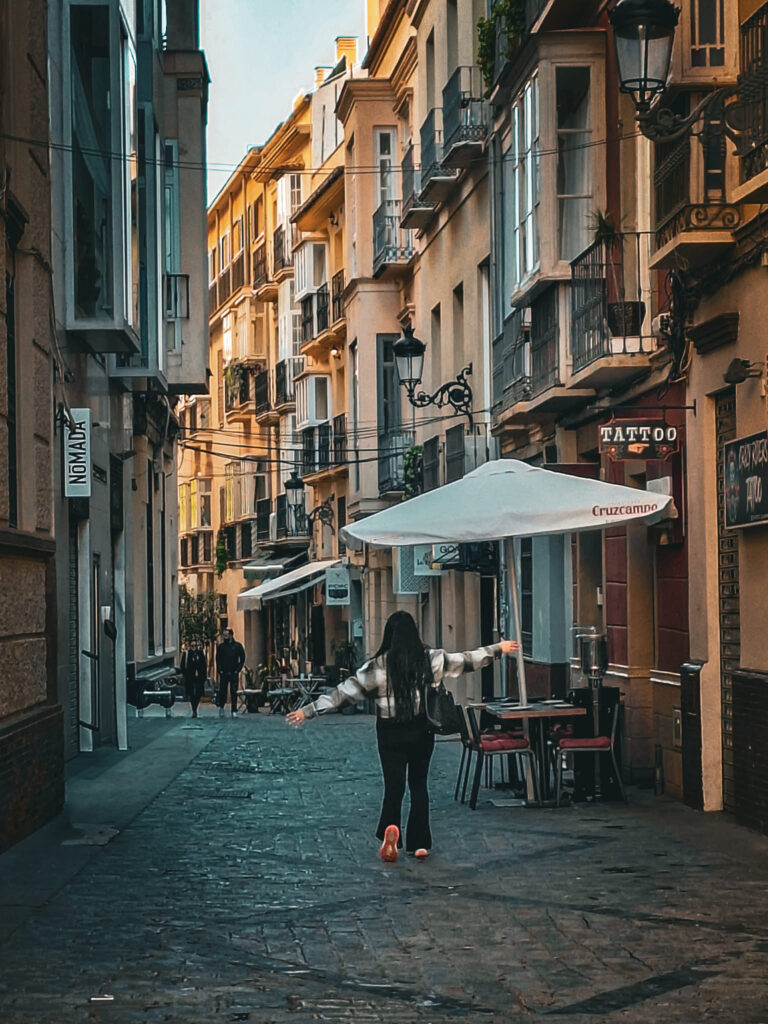
Many tourists skip Malaga in favor of the many beach resorts dotted along the nearby Costa del Sol, which is a real shame. Because Malaga turned out to be one of our favorite Spanish cities. It’s known as one of the oldest cities in Europe, rich in history and culture. Interestingly, Malaga was ruled by the Phoenicians, the Romans, and the Moors – and these influences can be seen throughout the city. Malaga sure has a unique mix of architectural styles, to say the least.

In Malaga, you can find the stunning Malaga Cathedral, explore world-famous museums like the Picasso Museum, and take in beautiful views from the Alcazaba and Gibralfaro. And even though Malaga is one of the largest cities in Spain, it still retains an almost small-town friendly vibe, and handily, all of its top attractions are close to one another.
And that’s why I love it. In fact, not only are there loads to do in Malaga itself, but there are loads of cool day trips from Malaga too (we particularly rate Setenil de las Bodegas and Ronda – which you can read about below).
🛏️ Where to stay in Malaga: We stayed at a gorgeous boutique hotel in the Old Town called Well and Come Hotel. The interiors are so stylish (I’d love my home to look like this) and there’s a fabulous spa with sauna, hot pool, etc, for adults-only that’s included in the rate. There’s also a gorgeous rooftop bar with awesome views of the city.
2. Setenil de las Bodegas, Andalusia
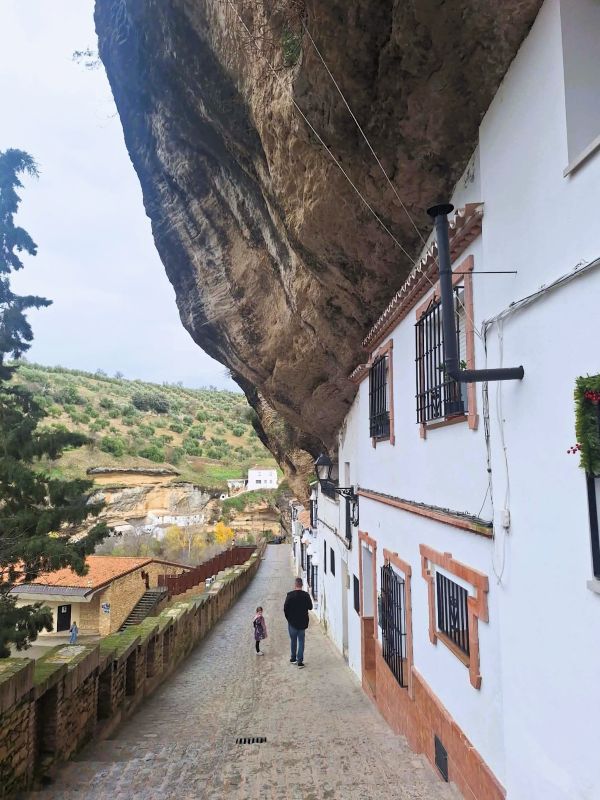
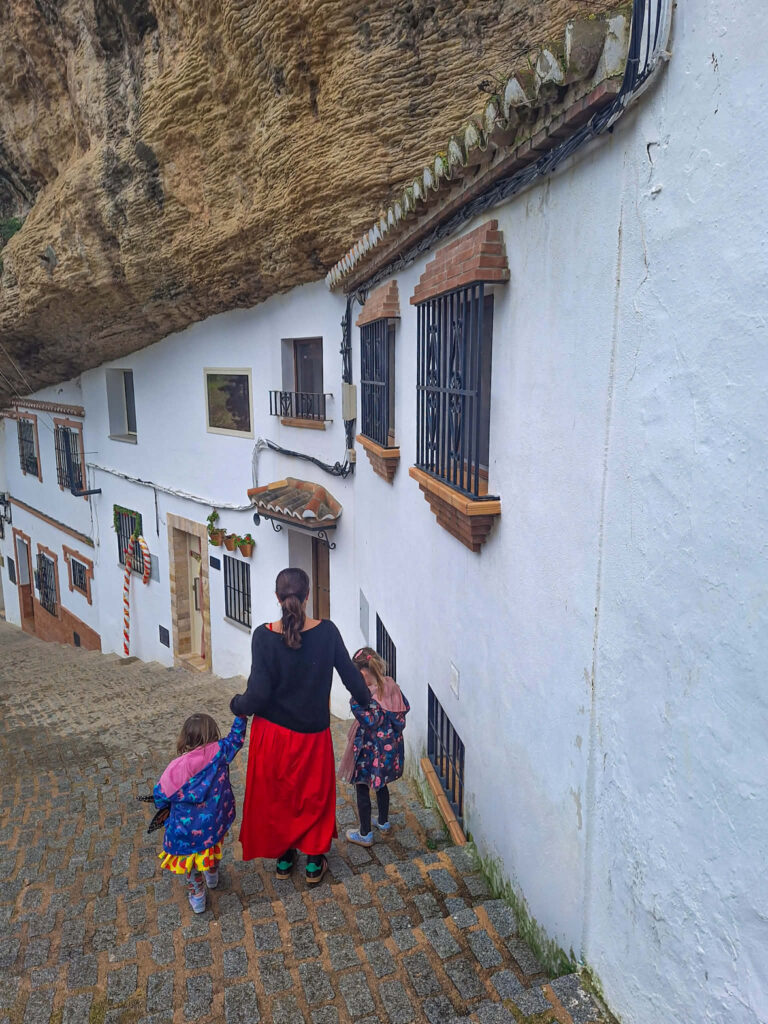
Around an hour and 20-minute drive from Malaga is this super-unique town. What sets this town apart is the way its whitewashed houses are built into and beneath large canyon rock overhangs.
We loved wandering its maze of narrow, winding streets and snapping lots of photos of the dramatic rocky overhangs over the white-washed townhouses known as “abrigos bajo las rocas,” which translates to “shelters beneath the rocks.”
In Setenil de las Bodegas, people quite literally live under a rock, and it’s truly amazing to see in person.
My must-sees here include Calle Herrería, aka the oldest street in town.
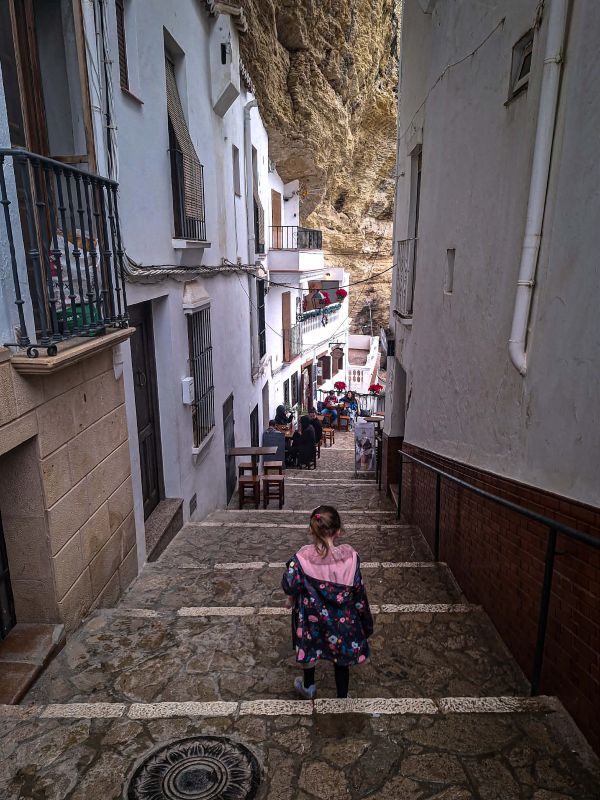
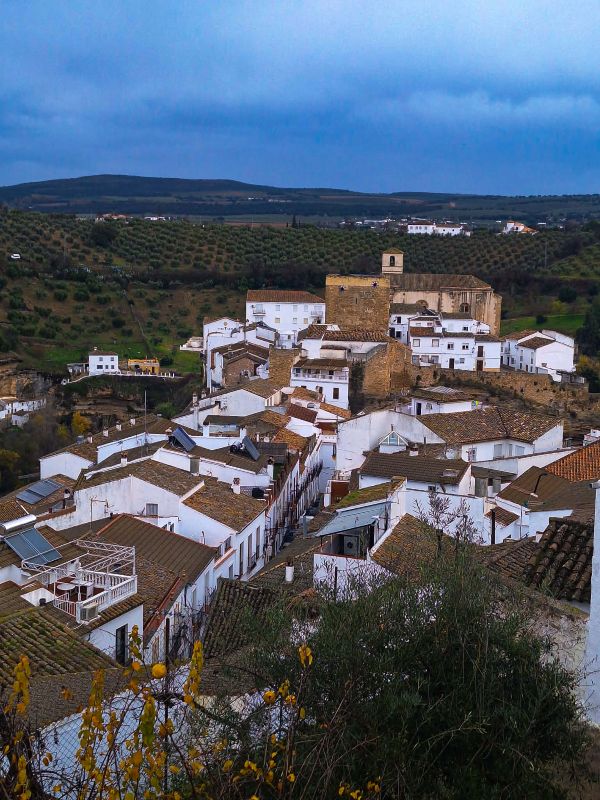
Next, head over to Cuevas del Sol – this is the town’s most famous street, as it pretty much has a rock canyon roof. Yep, here the rocky overhang extends between the buildings on both sides of the street. As you can guess, it can get pretty crowded here – and this is where tour groups get dropped off to explore the town. So, if you can try to visit here either before 11 am or after 4 pm.
3. Alicante

Alicante is one of the most underrated cities in Spain; I’ve visited this coastal city many times over the years because we have a holiday home here. And I must admit it’s one of my favorite small cities in Europe!
Not only is the city easy to navigate, but Alicante is full to the brim of awesome things to do and places to eat!
As you may know, Alicante is home to the famed Castillo de Santa Barbara, which offers some of the best views of the city; there’s also the vibrant Central Market and a stunning harbor where you can catch a boat to a secluded off-shore island (called Tabarca Island).


But one of my favorite parts of Alicante is Barrio de Santa Cruz, nestled at the foot of Benacantil Hill. You’ll feel as though you’ve stepped back in time as you climb this neighborhood’s narrow streets to Castillo de Santa Barbara Castle. At night, the atmosphere is lively as locals head to the Barrio’s many tavernas for tapas and drinks. It’s predominantly a residential area, so you’re likely to see locals chatting on their doorstep or tending to their plants.
🛏️ Where to stay in Alicante: We love Suites del Mar by Melia as it’s located right on the main beach in Alicante & boasts spectacular views. It also has a rooftop pool!
4. Juzcar, Andalusia
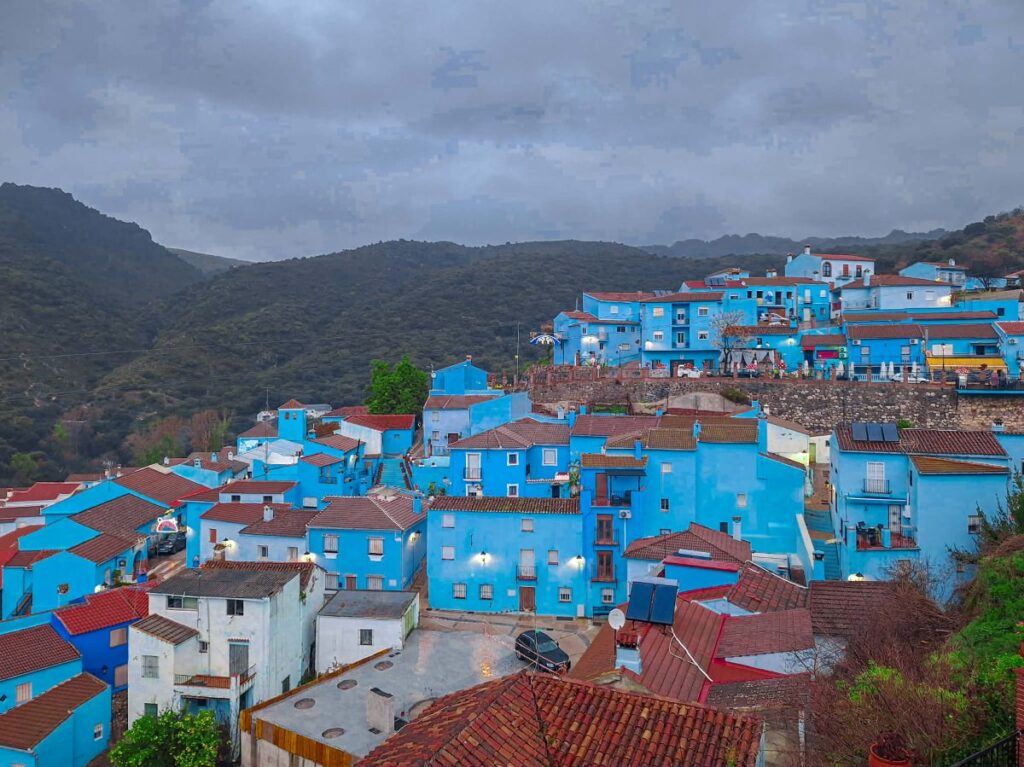
This small mountain village is known for a unique feature: the village’s houses and buildings are painted a gorgeous shade of blue. Why? Well, in 2011, Sony Pictures decided to paint the town blue as a promotional event for “The Smurfs” movie. Although it was initially a temporary measure, the locals decided to keep it blue due to a significant increase in tourism.
We visited on a rainy evening in January, and most of the restaurants and hotels were closed. But, we still had a lovely hour or so here, wandering the streets in search of the many Smurfs characters that are painted on the buildings. I would imagine it can get pretty busy here in peak tourist season (June to September), and I’m sure that the blue buildings would really pop on a sunny day.
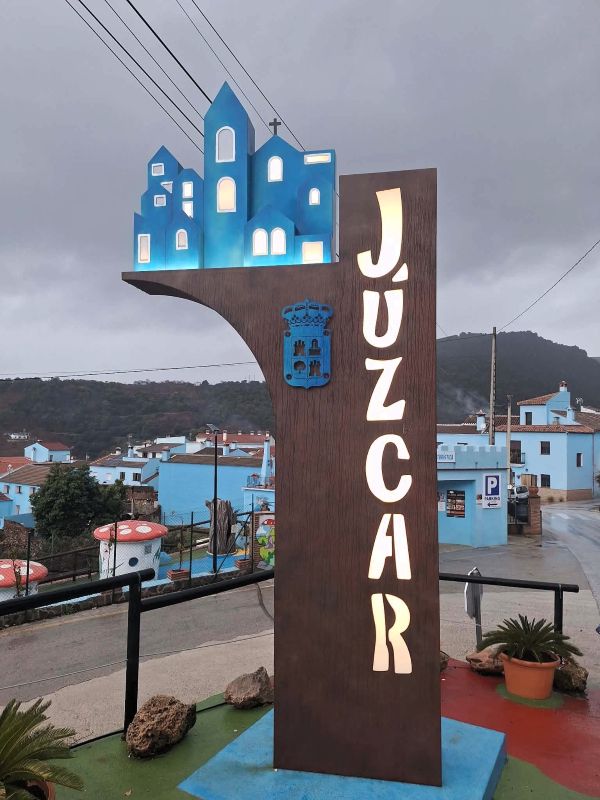
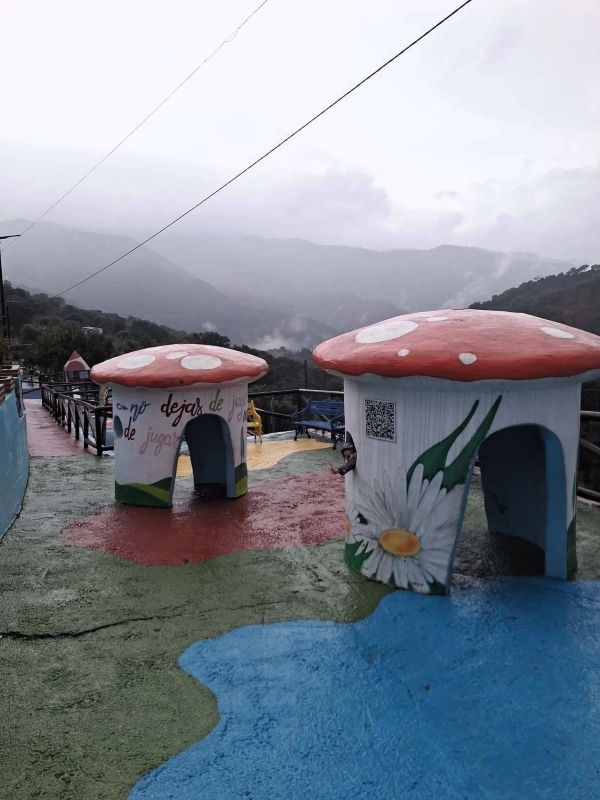
Juzcar is located in the scenic Valle del Genal in the Serrania de Ronda, around an hour and 45 minutes’ drive from Malaga. Although it’s just 25 km from Ronda (listed below), and so many tourists combine the two on a day trip from Malaga. This is what we did, although keep in mind it’s a steep, winding mountain road between Ronda and Juzcar.
5. Ronda, Andalusia
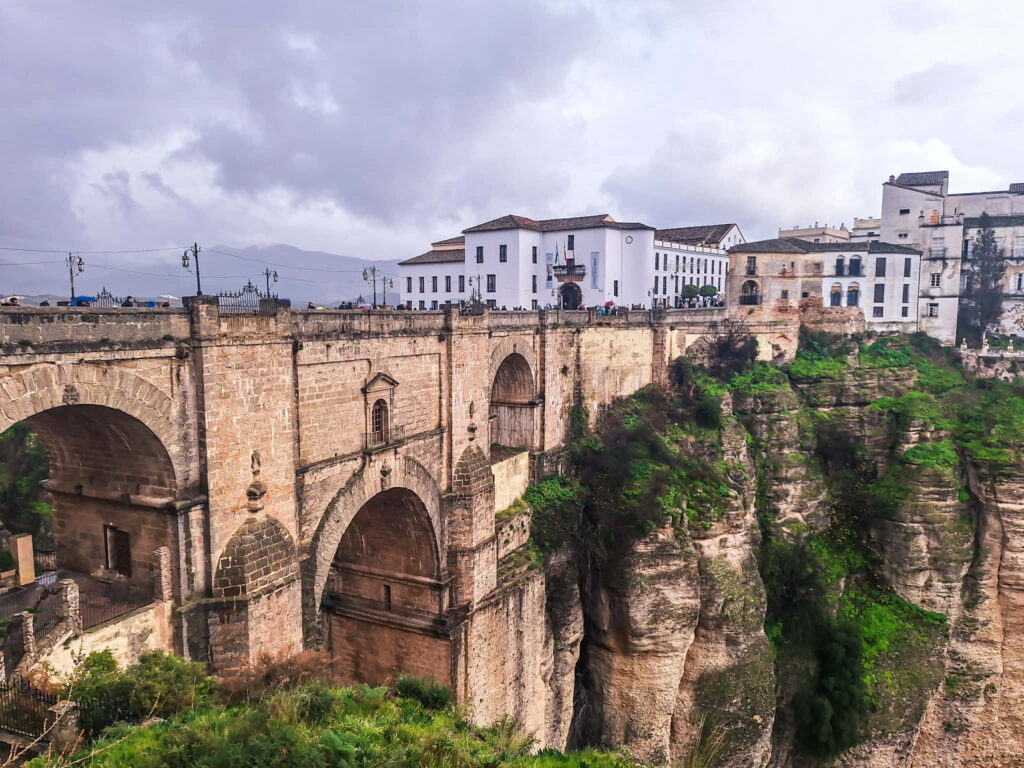
Located around a 90-minute drive from Malaga, Ronda is a captivating town perched atop the dramatic El Tajo gorge. It is most famous for the Puente Nuevo, an impressive 18th-century bridge that spans the gorge, offering stunning vistas of the surrounding countryside. And the Plaza de Toros, one of Spain’s oldest bullrings.
The famous bridge, completed in 1793, connects the old and new parts of the town. And it took 42 years to build (there was another bridge here, but it collapsed in 1741, killing several people). The most iconic part of the bridge is its central arch that rises 98 meters (about 322 feet) above the canyon floor.
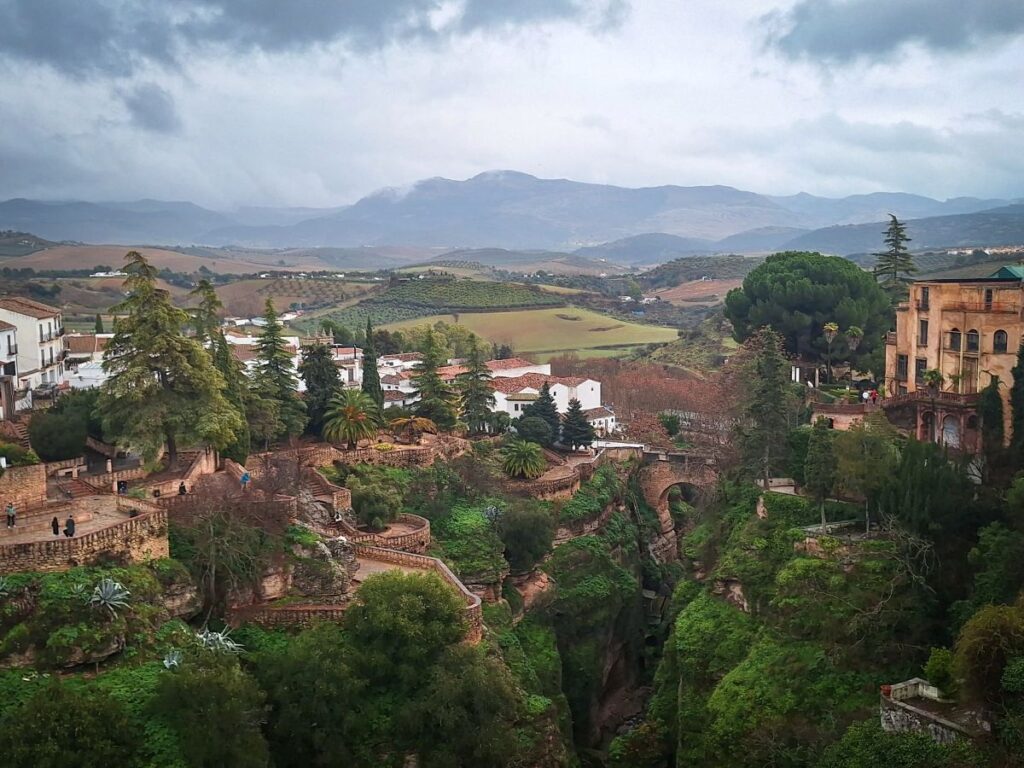
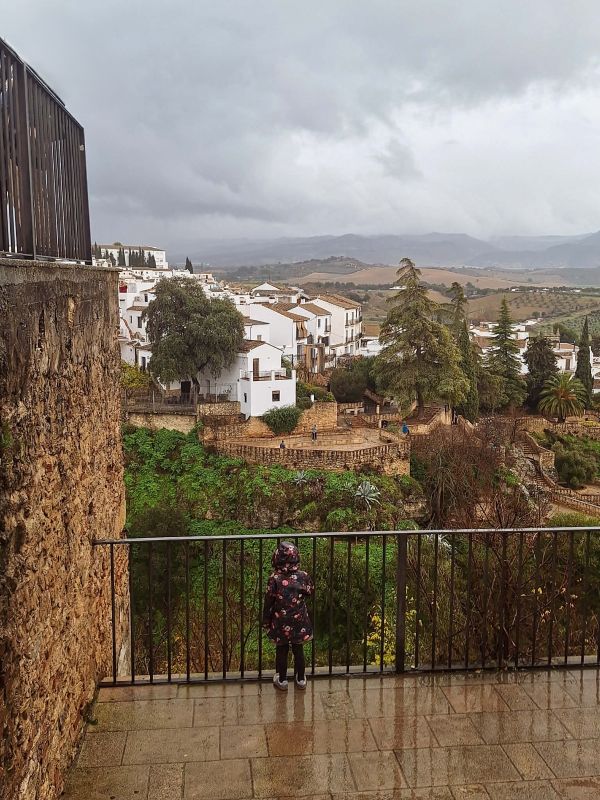
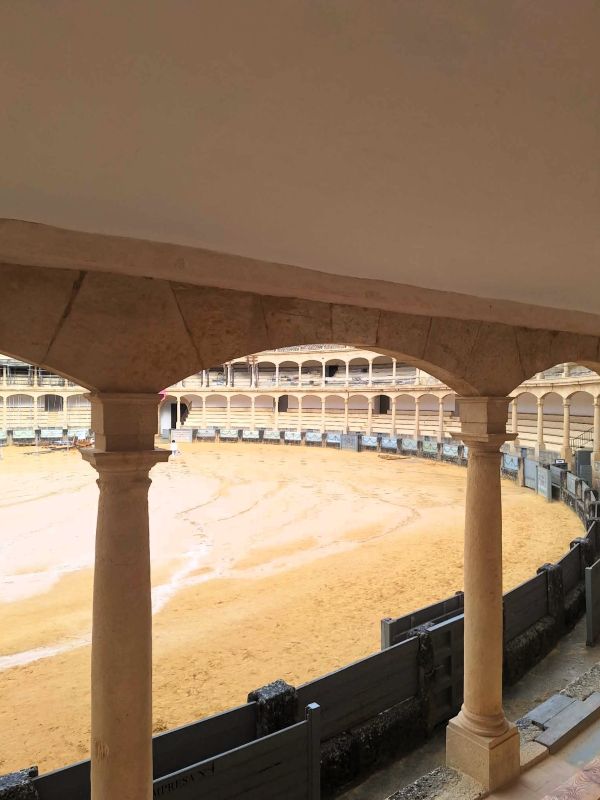
Some other popular things to do in Ronda include the ancient Arab Baths and the Mondragón Palace, which houses the municipal museum. The Museo Lara is another excellent museum here – it’s home to fascinating exhibits, including vintage cameras and scientific instruments.
6. Valencia


I first visited Valencia on a tour of Spain with a friend back in 2012, which took in Andalusia and Barcelona with Valencia sandwiched in the middle. I was captivated by its beauty, but as the fifth stop on a long trip, I felt we didn’t do it justice. Fast forward to 2022, and this time I dedicated a week to Valencia with my family. And I was absolutely hooked!
Despite being Spain’s third-largest city, Valencia often gets overlooked. Living in the shadow of Madrid and Barcelona, many travellers haven’t yet set foot in this incredible Spanish destination. With fewer tourists but just as much to discover, Valencia feels like a hidden gem and is definitely Spain’s most underrated city.

One of Valencia’s most unique attractions is the City of Arts and Sciences. Voted one of Spain’s 12 treasures, I remember being gobsmacked the first time I saw it. The entire complex looks like something from another world and is unlike anything else in Spain.
The complex is home to Europe’s largest aquarium, a science museum, an IMAX, a planetarium, and an opera house, and it can take a full day to explore.
Valencia Cathedral is another must-see here and it’s located at the heart of the city and is a must-see. This stunning building has a couple of unexpected surprises. The first is the Holy Grail – yes, the one allegedly used at the Last Supper! Whether you believe it or not, it’s fascinating to see and decide for yourself.
The second surprise is the mummified hand of Saint Vincent, patron saint of Valencia. Quite why they have his mummified hand, I’m not sure, but it’s definitely interesting to see.
🛏️ Where to stay in Valencia: We stayed at the Hotel NH Valencia Centre, this 4-star hotel is centrally located (on Ricardo Micó) and boasts a rooftop (covered) swimming pool, fitness center, and a terrace with lovely city views. It’s a large hotel (192 rooms) and is within walking distance of the city centre.
7. Murcia

Murcia is another one of the most underrated cities in Spain. And I’ve visited this small, pretty university city numerous times as my family has a holiday home in nearby Alicante.
One of the best things about Murcia is that it gets an exceptional 330 days of sunshine a year. So, it really is the perfect option for a sunny getaway. It’s aptly nicknamed the Costa Calida or “warm coast,” and the region boasts over 330 km of coastline. Making it an ideal base for beach lovers.
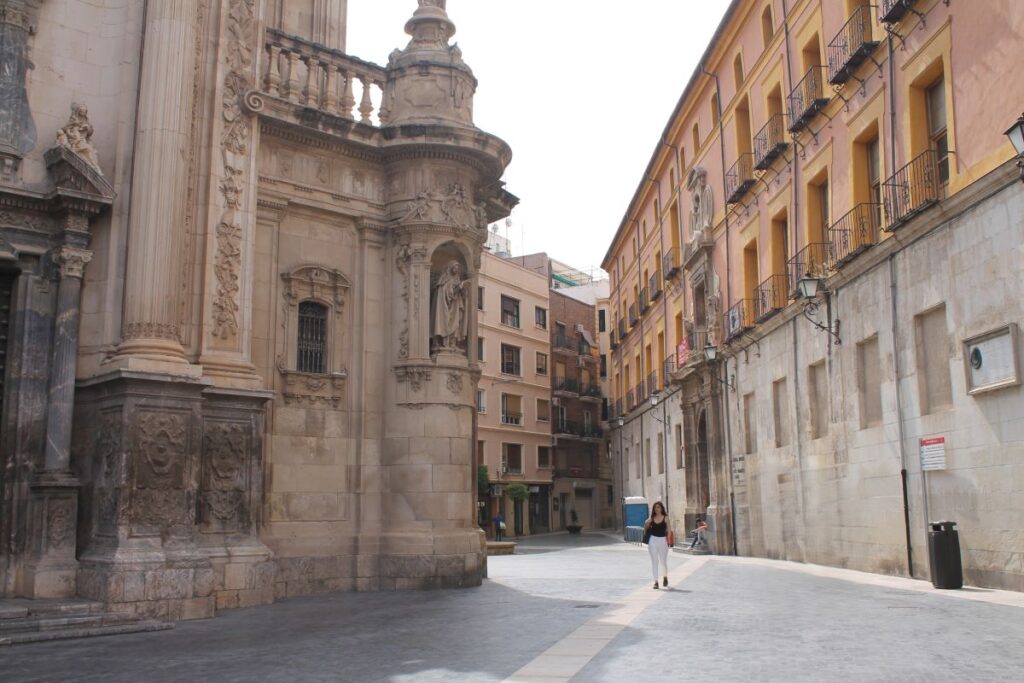
The beautifully artistic and baroque-style Cathedral de Santa Maria in the center of Murcia City is truly a sight to behold and it’s one of my favorite places to see when I;m in the city. Its interior is Gothic in style and is in contrast to the exterior. The attached bell tower stands 90 meters tall and is the tallest of its kind in all of Spain.

Another gem in Murcia is hidden away on Traperia Street, the Real Casino de Murcia is an eclectic but grand building. In fact, it was one of our favorite buildings to explore in the region. Many of the casino’s walls are covered with the most beautiful mosaics, and the whole building has a very Moorish vibe.
🛏️ Where to stay in Murcia: We stayed at Hotel Cetina Murcia – this 3-star, stylish hotel is located in the downtown area and set back on a quiet street. Our room had a nice city view.
8. Cartagena, Murcia
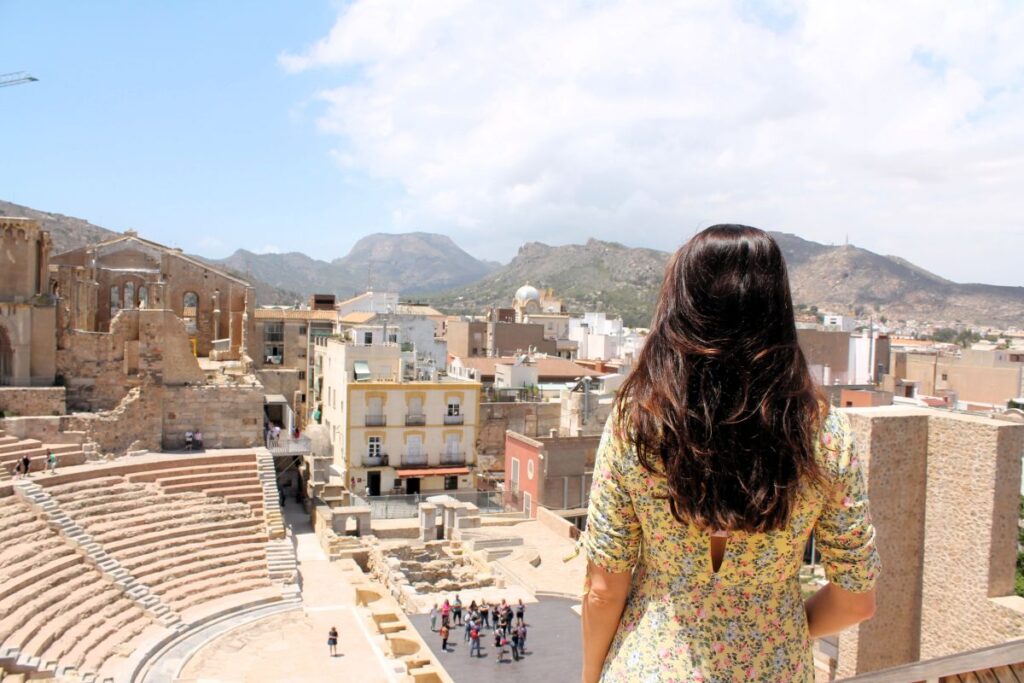
Cartagena is a port city with a large naval influence. And it’s located only a 35-minute drive from Murcia listed above.
Cartagena is a very easy city to navigate. Everything is within walking distance. And even at the height of the summer school holidays, when we visited, we found its streets to be relatively crowd-free. There are lots of activities in Cartagena that keep you busy for a couple of hours!
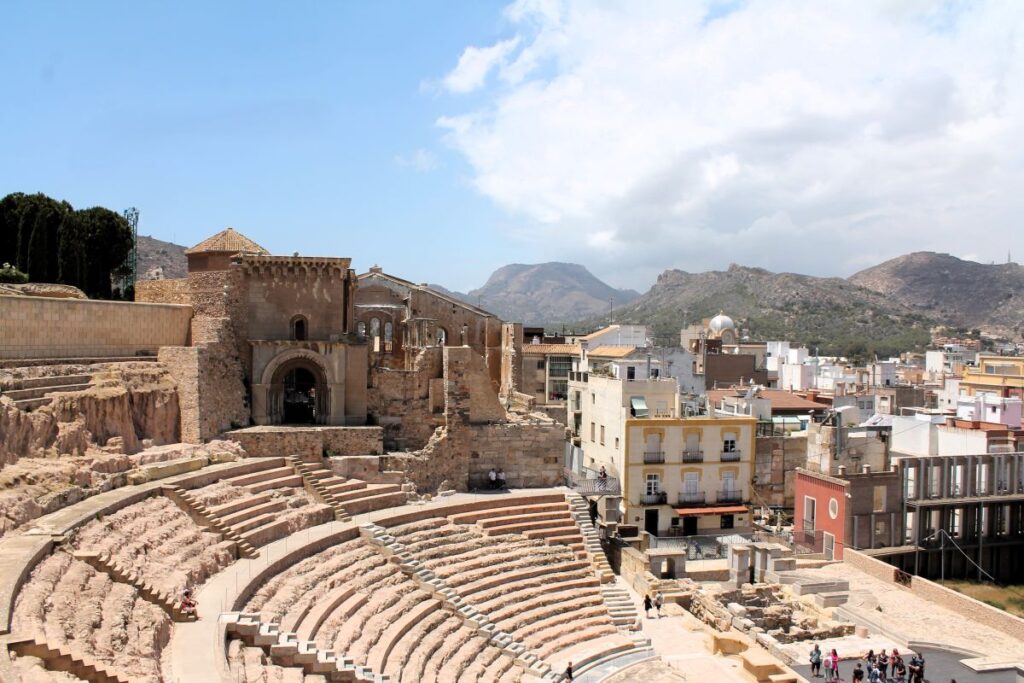
Checking out the Roman Theatre in Cartagena is the top thing to do here. It was built between 5 and 1 BC and was actually only uncovered in 1988 by local construction workers. Just recently, in 2008, they opened the museum. And today, you can pay for an audio guide and stroll around the ruins.
Another must-visit here is the Palacio Consistorial. It’s certainly one of the most beautiful buildings in Cartagena. The Palacio Consistorial is influenced by French design. Built between 1900 and 1907, it is located within the main town hall square. The interior is more modern than the early 20th-century styled exterior.
🛏️ Where to stay in Cartagena: We really like the AC Hotel by Marriott Cartagena. It’s stylish and has a great location close to the Roman Theatre, museums, etc.
9. Nerja, Andalusia
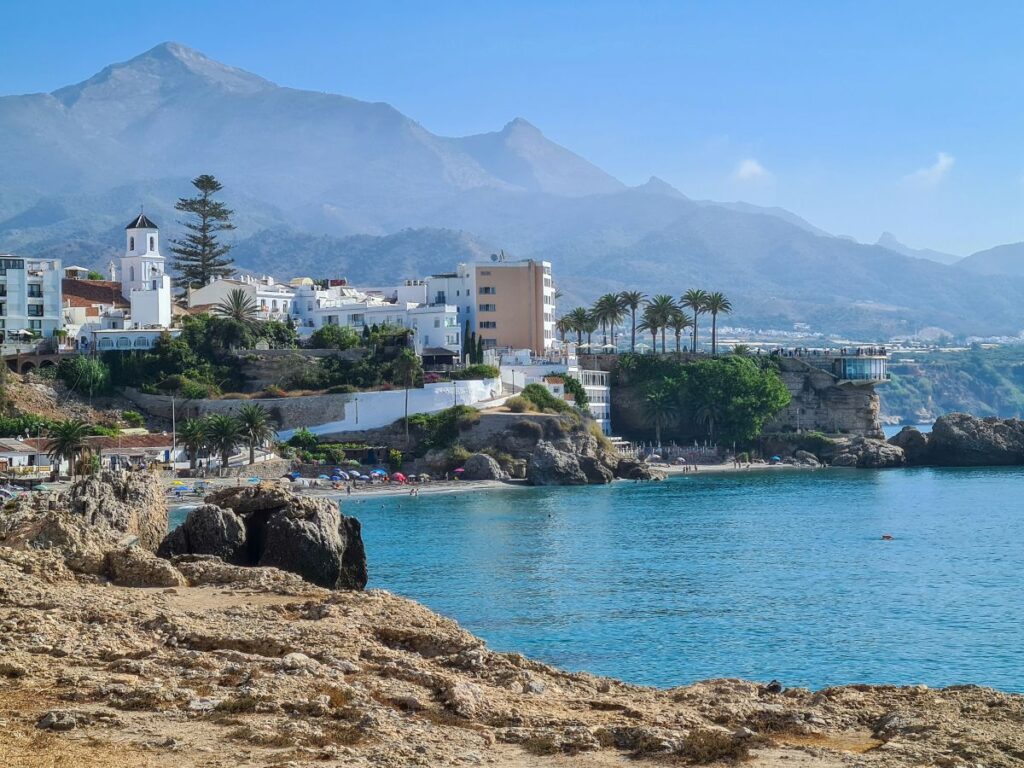
Nerja is a gorgeous whitewashed coastal town just a 50-minute drive from Málaga. And this charming destination is one of the top day trip options from Malaga. Yep, laid-back Nerja certainly captivated us with its picturesque allure.
Among its highlights is the Balcony of Europe, a magnificent clifftop platform that extends over the Mediterranean coast, offering breathtaking vistas of the sea and surrounding mountains. And the famed Nerja Cave, which boasts expansive underground chambers adorned with impressive formations of stalactites and stalagmites.
🛏️ Where to stay in Nerja: Built into the Balcón de Europa rock face, the Hotel Balcon de Europa has direct access to Caletilla Beach. It features an outdoor infinity swimming pool, a sauna and a restaurant with sea views.
10. Granada
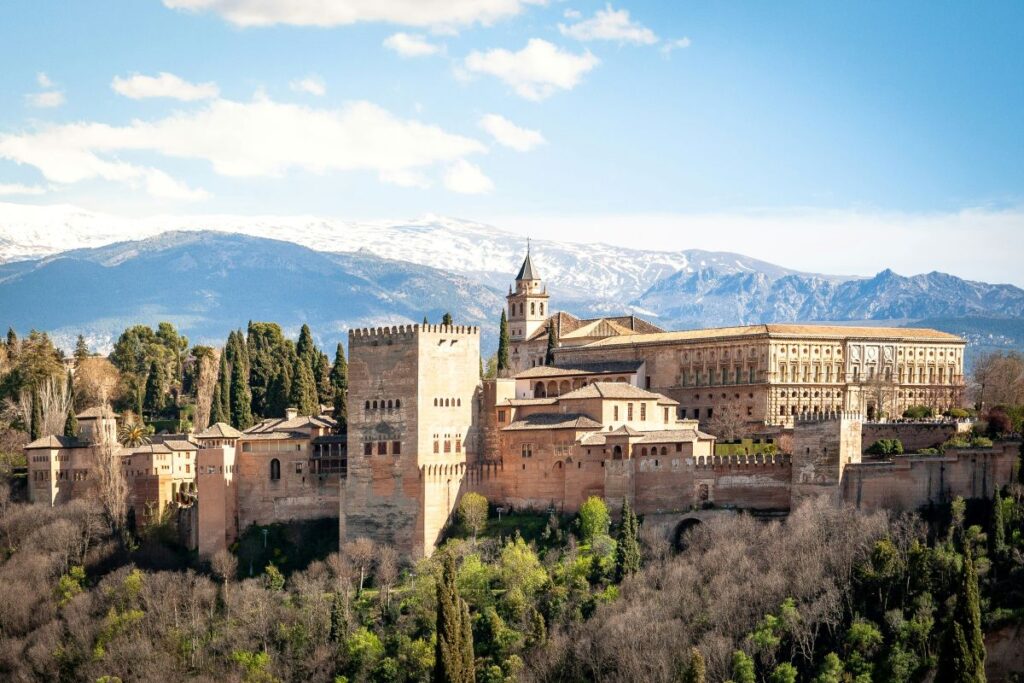
Granada, just 1.5 hours from Malaga, is a city brimming with history, culture, and stunning architecture!
While you’re here – a visit to the Alhambra is a must!
The Alhambra is perhaps the most renowned tourist destination in Granada, Andalusia, and quite possibly all of Spain. This majestic fortress sits atop a hill in Granada, nestled at the base of the Sierra Nevada mountains, making it a must-visit spot in Andalusia. Within its walls, the citadel houses numerous palaces and royal residences, along with extensive gardens and other facilities that allowed the Alhambra to function as a self-sufficient city. It’s one of those essential bucket list destinations that you simply cannot miss!
We also recommend strolling through the Albayzín, the old Arab quarter, where narrow winding streets transport you back in time.
🛏️ Where to stay in Granada: Corral del Carbón GG Luxury Hotel Boutique is a great option – it’s located in the city centre and each room features a balcony with city or mountain views.
Renting a Car in Spain:
We always use Discover Cars when we want to rent a car because you can search by ‘cheapest car rental rates’ and ‘most popular car rental deals’ – it’s so easy to use!
The most important thing you will need if renting a vehicle in Spain is a valid driver’s license. No company will allow you to do so without one.
And if you are traveling from a country outside the European Union, you might want to get an international driver’s license to make the rental process easier. However, many rental companies accept foreign driver’s licenses without it.
Drivers typically need to be at least 21 years old to rent a car in Spain, though some companies might require a minimum age of 25. Young drivers under 25 may incur a surcharge.
Each company has different terms and conditions, so you should be fully aware of them. Additionally, you will also need a valid credit card in your name. Rental companies will want to keep a credit card on file as a holding deposit.
If you have a debit card, you will be charged a holding fee. Please note that some companies do not accept a debit card.
Also, because renting a car in Spain is incredibly popular, you WILL NEED to book your rental car in advance. Our rental car company told us they sell out over the busy tourist season (which is from June to September).
BOOK your Spain rental car here!
Travel Insurance for Spain/ Europe:
At first glance, skipping travel insurance may seem like a great way to save some money. However, if you end up losing your luggage, having your flights cancelled, or getting sick – it is a decision you’ll probably regret. Thinking nothing will happen is definitely a mistake, and without travel insurance, it’s one that will end up costing you – big time.
✅ Our fix: Shop around for budget-friendly travel insurance based on your trip length and destination while paying attention to what it covers. We like to use Auras Travel Insurance for our trips! And you can get 10% off their plans with this code: WRTY100489
Thanks for Reading!

I hope you enjoyed reading my review of what I believe to be the prettiest places in Southern Spain. These are all places I’ve personally visited and of course there are a lot more stunning spots in Southern Spain than what I’ve listed above – for example, I’ve yet to visit gorgeous Seville – but it’s on my bucket list!
Booking Your Trip Soon? These are my go-to booking sites!
Below you will find a list of the sites we always use when booking our trips. By booking via the below links you can support my writing at no additional cost to you. Thanks so much!
1. Flights
I use Skyscanner to find the best flights. It allows you to compare and book flights on over 500 airlines from across the globe.
2. Hotels
I use Booking.com for all of our hotel stays. And if we’re traveling on a budget, I like to use Hostelworld to book a hostel.
3. Renting a Car
We tend to always book our rental car through Discover Cars. This is a search engine for rental cars and allows you to filter by price if you’re on a budget or by vehicle type if there’s a specific car you’re after.
4. Tours
I use Viator or Get Your Guide to book any guided tours we plan on doing. I find Viator particularly good for the USA, Canada & New Zealand, and Get Your Guide is great for Europe.
5. Travel Sim Card
An eSIM is a great idea if you’re coming to a place for more than a week. As that way, you won’t need to change your number or remove the physical SIM from your phone. They are so handy and cheap, too. Obviously make sure your phone is compatible with an eSIM first. We always use Saily or Lotso Travel for our eSIM’s.
6. Airport Pick-Ups
Instead of cabs, we book with welcome pickup to get from the airport to our hotel. Why did we do that? The drivers from Welcome Pickups are English speaking and you’ll pay a flat rate. So, you know exactly how much you’re
7. Travel Insurance
At first glance, skipping travel insurance may seem like a great way to save some money. However, if you end up losing your luggage, have your flights cancelled, or get sick – it is a decision you’ll probably regret. Thinking nothing will happen is definitely a mistake, and without travel insurance, it’s one that will end up costing you – big time.
Last Updated on September 18, 2026 by snaphappytravel