

Madeira is one of the top trending travel destinations for 2026 and for good reason! We spent just under two weeks here this past April – and let me tell you it’s now one of my favorite places I’ve ever visited.
Yep, this previously under-the-radar island in the middle of the Atlantic Ocean (in between Portugal and Africa) is home to black-sand beaches, lush mountains, and moody laurel forests. But it won’t remain undiscovered for long – so if you’re planning to visit, get there pronto!
Now, let’s take a look at my favorite places and activities from my two weeks in Madeira…
1. Check out moody Fanal Forest


This enchanting laurel forest, part of the Laurisilva of Madeira UNESCO World Heritage Site, is renowned for its ancient trees (most are over 600 years old) shrouded in ethereal mists. Fanal forest offers a unique atmosphere that feels almost otherworldly, with twisted trunks and lush greenery.
I felt like I’d stepped into a Grimms Fairytale book. We spent around 2-3 hours here, and we even hiked up to the highest point as a family. Our daughters, aged 4 and 3 years, managed it (although at a slow pace), so it’s not too difficult a hike, although it is steep.
Funnily, a local guide told us that TikTok was to thank (Or to blame) for Fanal Forest’s recent boom in popularity!
As you walk around here, keep an eye out for cows and cow poop. We also found it to be much colder here than elsewhere on the island, so definitely bring a cardigan or jacket.
The only way to get to Fanal Forest is by driving or booking a guided tour, as there’s no public transport to here. I will also say that parking here can be a bit of a nightmare! There are two small-ish public car parks, but you will likely need to park along the side of the road as these fill up pretty quickly.
2. See the palheiros in Santana


Santana is one of the most popular tourist destinations in Madeira as it’s here that you can see the triangular-shaped, brightly-painted thatched-roof houses also known as “palheiros.” I’m sure you’ve seen these on your Instagram feed; they are a symbol of Madeira’s heritage. And today, there are stores within the houses selling all different items, for example, we bought homemade ice lollies in one and some magnets and trinkets in another.
3. Feel on top of the world at Cabo Girão Skywalk


Sitting 580 meters above the sea, the Cabo Girao skywalk is built on top of the highest cape in Europe. The suspended glass platform (skywalk) gives you a one-of-a-kind spot to soak in the amazing cliffs and the huge stretch of the Atlantic Ocean.
You’ll feel like you’re walking on air while across it (and I did have my heart in my mouth a few times!) From here you can see as far as Funchal.
It’s one of the most photographed spots on the island and entry costs from €2 per adult (children under 12 are free).
There’s a lovely Cafe (with fabulous views) and a gift store on-site, too.
4. Swim in a volcanic rock pool in Porto Moniz

This super chill coastal town is well known for its natural volcanic rock pools. The pools were formed over millennia by the cooling of lava – the natural layout of these pools allows the constant entry of seawater.
There are two pools in Porto Moniz, one more natural (and free-to-enter) pool near the fort, and the other is pay-to-enter and has more of a resort feel. These are the ones we went to, as they are large, with plenty of room to spread out.
The sunbathing area is around 3,210 m², and the swimming area is 3,800 m² (the deepest point of the pool is around two meters). It also has a children’s pool, playground, changing rooms, bar, first aid post, car park, and access for people with disability. It costs €3 per person to enter.
5. Get the cable car in Funchal

The cable car (which departs from the old town of Funchal) goes up to the gorgeous Monte Palace Tropical Gardens, which is an activity in itself, as the views are epic. We opted for the return cable car ride, which cost us €18 per adult.
6. Walk among nature at Monte Palace Tropical Gardens


This was one of our favorite stops in Madeira – the Monte Palace Tropical Gardens are situated high above Funchal. And the best way to get here is to hop on the cable car, which I mentioned above.
The entrance fee to the gardens costs around €12.50 per adult and we easily spent 3 hours here wandering around the 17-acre gardens. There are all sorts of plants on display here from native Madeiran varieties to plants from farther-flung places like the fern (native to New Zealand) and sequoias, magnolias, and more.
We took our time walking along the winding paths here that took us through meticulously curated landscapes, past tranquil lakes and waterfalls, and under the shade of towering trees. The gardens are also home to a fascinating collection of African sculptures and we really enjoyed the small museum on-site that features huge mineral displays.
Our daughters’ favorite section was probably the pink flamingoes and the pond with huge Koi fish – we also spotted several peacocks roaming the grounds.
7. See all the roses at Roseiral Quinta do Arco


The Rose Garden in Quinta do Arco is amazing, albeit a little rustic! It’s one of the most famous rose gardens in Europe and also one of the biggest in the world – boasting over 1,500 species of roses!
Walking around the designated stone pathway, you can see ancient and contemporary, climbing and non-climbing rose bushes. The most important and rare types of roses have a placard telling you what they are. However, we found many of these to be faded.
Roseiral Quinta do Arco is listed as a ‘Garden of Excellence’ by the World Federation of Rose Societies. Entry costs from €12.50 per person, which includes a drink – but, entry for us was free as we stayed at the hotel connected to this – Pestana Hotel Quinta do Arco, which we highly recommend.
8. Visit the Whaling Museum of Madeira


The Whaling Museum of Madeira (Museu da Baleia), in Caniçal, gives you a cool peek into the island’s whaling past. This modern museum is all about keeping the story of Madeira’s whaling industry alive. It was one of the island’s major industries (but it was stopped in the early ’80s due to ethical and ecological concerns).
Inside, you’ll find all sorts of interesting stuff like old tools, whaling boats, and detailed models that show how whalers caught these giant creatures. Plus, the museum talks about the environmental side of whaling, encouraging people to think about conservation.
We learned loads here, including how it was mostly sperm whales that were caught and how they used every part of the whale after they caught it. The blubber was melted down into an oil that was used for lubrication and in soap and the ambergris, a waxy substance in its intestines, was used to make perfume.
And my daughters loved the life-size models of whales hanging from the ceiling (they thought they were real).
9. Wander around Funchal Old Town


We spent one full morning wandering the quaint Old Town of Funchal which is home to cobblestoned streets, historic buildings, and local shops, selling authentic Madeiran cuisine and crafts.
One of our highlights of the Old Town was the Rua de Santa Maria, a street renowned for its colorful painted doors. We also stopped outside the Gothic-style Sé Cathedral to snap a few photos.
Before lunch, we spend around half an hour wandering the stalls in the bustling Mercado dos Lavradores – there are a lot of fruit stalls here. And also stalls selling Madeiran crafts and clothing.
Downstairs, there’s a fish market (the strong smell will show you the way) – there are also types of fish on display here to be sold. We saw one local cutting up a massive tuna fish, but there are also lots of black scabbard fish on display. These are native to the waters around Madeira and are scary-looking, to say the least. My 4-year-old daughter exclaimed, “WHAT are those things?” when she saw them first.
And if you’re here in the evening – a really unique thing to do is to watch the Funchal Guitar Quartet in the Presbyterian Church of Funchal. The group is made up of 4 talented musicians who are passionate about guitar, and they put on a top-notch performance every Tuesday and Thursday at 9 pm here at the church. They’ll even share some cool insights about the music they’re playing, giving you a deeper understanding of the pieces.
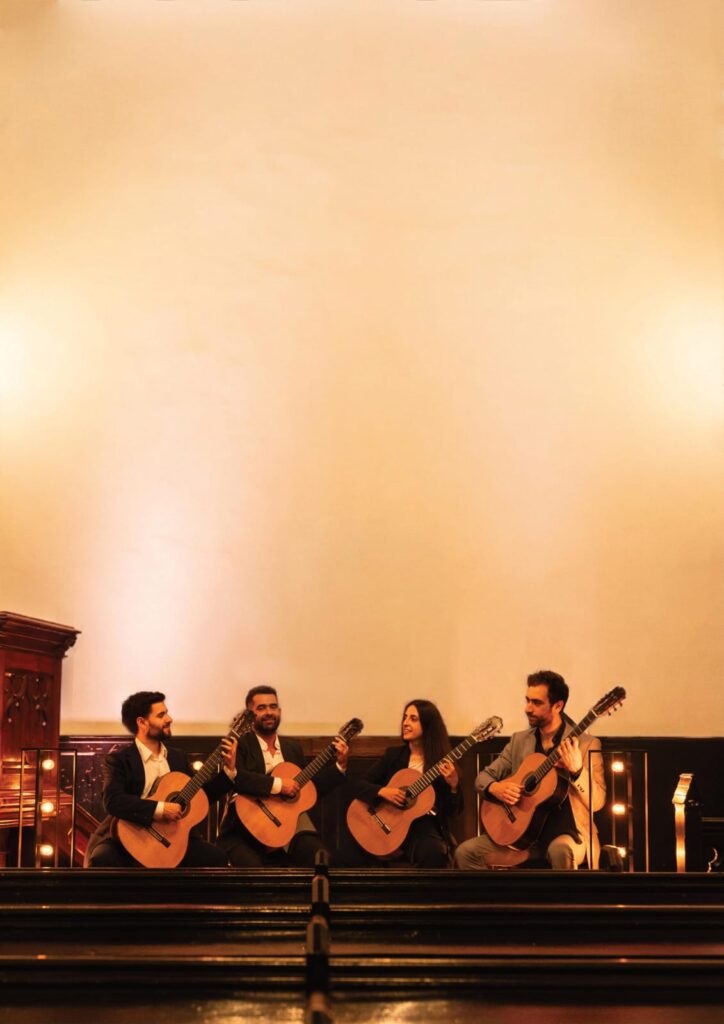
What makes it a little different is that there’s no company or management behind it – it’s the musicians themselves who do everything, from the music to welcoming each guest at the door. We think that’s part of what people feel in the room: it’s genuinely personal. Tickets cost from 25 euros per person.
10. Check out the CR7 Museum (Cristiano Ronaldo Museum)


Yes, you’ve probably already guessed – this small museum in Funchal is dedicated to the life and career of Cristiano Ronaldo. It was opened in 2013 and displays over 100 individual and collective trophies won by Ronaldo throughout his career. It is located near the Port of Funchal. Entry costs around €5 per adult.
11. Go on a Wicker Basket Ride
Say, what? A wicker basket ride down a steep and lengthy hill with only two men standing at the back to steer it! I’m sure you’ve heard of the famed wicker basket rides in Funchal – it’s one of the best things to do here. And the baskets gain speeds of up to 24 mph. And go a distance of 2 km.
The wicker basket rides started way back in the 1800s when enterprising locals invented them as a way to get home from church.
The basket rides start at Monte Church (your best to get a cab here from Funchal) and run Monday to Saturday, 9 am to 6 pm. Prices are around €27.50 for one person, €35 for two people, etc.
12. Go Whale watching

The waters surrounding Madeira are home to over 20 different marine species, including the majestic sperm whales and playful bottlenose dolphins. So, why not embark on a catamaran boat trip to see a variety of marine life, including whales and dolphins, in their natural habitat? Tours are conducted by knowledgeable guides who provide insightful commentary on the behavior and ecology of these incredible creatures.
As for the best time of year to go whale watching in Madeira, we recommend between April and October. As this is when a large number of whales and dolphins pass through the waters around the island.
The tours typically leave from the main marina in Funchal.
13. Hike the Vereda da Ponta de São Lourenço
Madeira is quite literally heaven for hikers, with many tourists coming here specifically to hike.
One of the great hikes on the island is the Vereda da Ponta de São Lourenço, which showcases Madeira’s volcanic origins with its stark, rugged cliffs and sweeping ocean vistas. It starts in the far east of the island, near the town of Caniçal. You’ll need to allow at least half a day for this one, as the trail is approximately 7 kilometers round trip.


14. Hike the Pico do Arieiro (one of the highest peaks in Madeira)
This popular but fairly difficult trail connects Pico do Arieiro to Pico Ruivo, the highest point on the island, and is renowned for its dramatic landscapes, including rugged mountains, lush valleys, and stunning vistas above the clouds.
As I said, this hike can be challenging, with steep ascents and descents, but the well-maintained path and occasional tunnels make it that bit easier. However, I do only recommend it for experienced hikers.
Along the way, you’ll encounter diverse flora and fauna, unique to this subtropical region. Remember to wear sturdy footwear, bring plenty of water, and check the weather conditions before setting off.
15. Chill out in Canico


We spent the first chunk of our Madeira vacation in Canico and a relaxing stay in Caniço was exactly what the doctor ordered after a busy year of moving houses. But, if you’re keen to see the sights here – we recommend checking out the Christo Rei statue, which boasts killer views over the Atlantic, and visiting the Quinta Splendida Wellness & Botanical Garden, which is home to thousands of different plant species, many of which are native to Madeira.
If you’re into nature, head over to the Garajau Nature Reserve. It’s a top spot for snorkeling and scuba diving with tons of marine life (like manta rays and groupers) and super clear water.
And the Garajau Cable Car is another must-do here, it gives you awesome views of the Atlantic Ocean and the rugged Madeira coastline as it glides down from the Garajau cliffs to a stunning beach.
16. Taste some wine in Sao Vicente

The small village of São Vicente is where we spent a lovely afternoon about midway through our vacation. And we loved wandering around this quaint Madeiran village with its cute little houses and narrow streets.
One of the coolest things to do here is the Grutas de São Vicente; these caves were formed by volcanic activity approximately 890,000 years ago. On a visit here, you can explore the intricate network of tunnels and chambers, which stretch for nearly a kilometer. The grotto is illuminated to highlight the stunning formations and the vivid colors of the volcanic rock.
Alongside the grotto, the Volcanism Center is well-worth checking out to learn more about the volcanic processes that shaped Madeira.
You can also discover the island’s famous fortified wine by visiting local wineries here and tasting the distinct flavors of Madeira wine. We really like the sound of this 4×4 tour that stops in 3 different wineries but also visits other sights like the skywalk.
Where to Stay in Madeira

In Canico (near the airport) –
We stayed at the Views Oasis, a 4-star hotel that’s right on the waterfront. It’s a really modern hotel with lots of amenities – an outdoor swimming pool, indoor pool, spa, and two on-site restaurants (one is buffet, the other is a-la-carte). We opted to book a bed & breakfast rate and the breakfast was great each morning.
In North Madeira (Santana area) –
We stayed at Pestana Quinta do Arco. This unique property is set within a rose garden and the rooms are like standalone bungalows nestled among the gardens. There are not only roses growing along the pathways between the rooms – but banana trees and all different types of flowers. It was one of the most unique places we’ve ever stayed.
In Funchal –
We decided not to stay in Funchal Center. Instead, we stayed at the Pestana Ocean Bay Resort on the Ponta da Cruz cliff, around a 10-minute drive from downtown. There was a rugged, black-sand beach out front and we could walk into Funchal along the coastal promenade – there’s a cool sea tunnel that’s part of this walk and it happened to be right next to our hotel.

What to know before visiting Madeira
Getting to Madeira:
Madeira Airport (the Cristiano Ronaldo International Airport) is well-served by flights from Lisbon and elsewhere in Portugal, as well as several European destinations. The airport is a 20-minute drive from Funchal.
FYI, for booking our flights, we always use Skyscanner.
P.S. We strongly advise you rent a car to see Madeira’s hard-to-reach spots like Fanal Forest and Quinta do Arco, but, keep in mind that driving here can be challenging due to the mountainous terrain.
Best month to visit Madeira:
Madeira’s weather is nicknamed the “eternal spring.” Yep, thanks to its spot in the subtropics and the Gulf Stream’s help, Madeira keeps things pretty chill throughout the year, with temps hanging around 16°C (61°F) in winter and 25°C (77°F) in summer. You might find more rain in the mountains, especially from October to April, but the coastal spots usually stay drier.
Thus, I would say that as a general rule of thumb, late April through September are the best months to visit Madeira. But, keep in mind it will be much busier in the peak months of July and August.
How long should I spend in Madeira?
I’d say a minimum of a week and two weeks is ideal.
Thanks for Reading!

So, to conclude, if you’re the type of traveler who loves breathtaking scenery and is keen to travel off-the-beaten-path, then Madeira is the place for you. And I know that all of the above activities will give you a taste of what this amazing island offers.
Last Updated on September 17, 2026 by snaphappytravel