
Iceland has been right at the top of our travel wishlist for years. It was the trip we kept promising ourselves for “next year,” and boy, were we really glad when we finally got to visit last year! And as you can probably guess, because we were dreaming about this trip for so long, we’ve done about as much research on it as you can do.
You see, planning your first Iceland trip is genuinely hard. The country is HUGE for a population of just 380,000 (the places can be really spread out), the weather is unpredictable, the prices are high, and there are roughly a thousand waterfalls competing for your attention.
We’ve spent months pulling together a shortlist from our own experience of the island, from travel friends who’ve also been, from hours of YouTube research, and (let’s be honest) a slightly worrying amount of late-night Instagram saving. Below are the 20 places that keep showing up on every serious Iceland list we trust, organised roughly clockwise around the country, starting from the Golden Circle.
And at the end of the post, you’ll find the practical bit: how to actually plan the trip, what vehicle to rent, when to go, and how long you’ll need. Because Iceland is bigger than it looks.
Iceland in Numbers
Before the list, a few baseline facts we wished we’d known earlier in our planning:
- The Ring Road (Route 1) is 1,332 km (828 miles) and circles the entire country on a paved road. It passes 16 of the places listed here, so it’s a road trip we highly recommend taking.
- Iceland has 32 active volcanic systems and averages one eruption every five years. Remember the 2010 eruption that grounded millions of passengers?
- Vatnajökull, the largest glacier in Europe, covers 8% of the country.
- Wild camping in vehicles has been illegal in Iceland since 2015. There are 170+ registered campsites instead.
- Daylight in June lasts close to 24 hours. In December, the sun rises around 11 am and sets by 3:30 pm.
- The Highlands are accessible only between mid-June and mid-September, and only by 4×4.
- Campervan rental ranges from around $80 – $130 (10,000 – 16,000 ISK) per day for a 2WD to $180 – $280 (22,000 – 35,000 ISK) for a 4×4 with rooftop tent.
❤️ Top Iceland Tours:
Search for available campervan rentals in Iceland here –
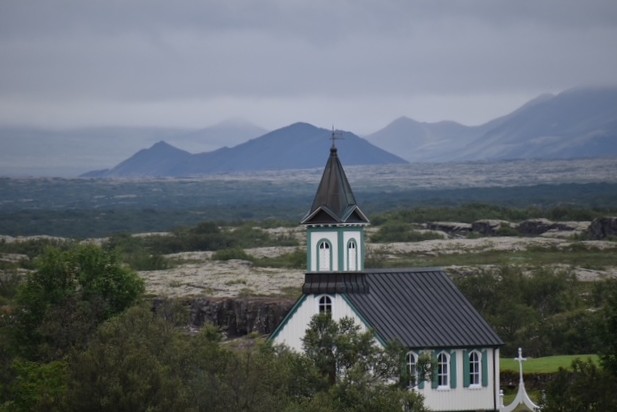
1. Thingvellir National Park
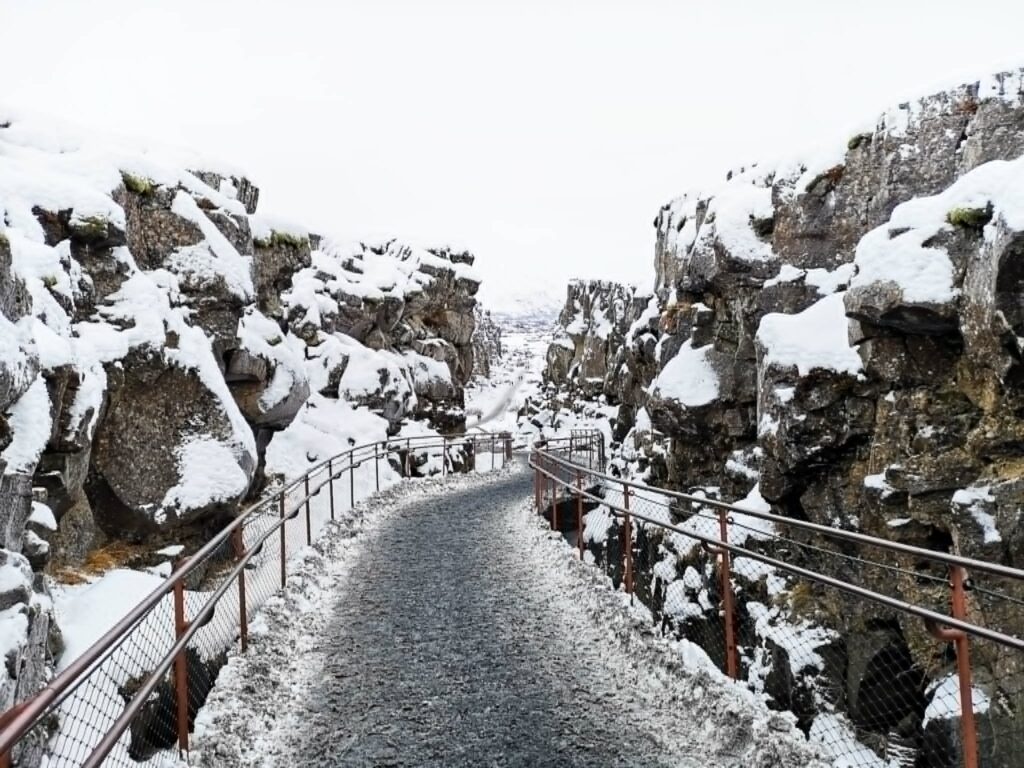
Thingvellir (or Þingvellir) is honestly one of the most extraordinary places in Iceland. It’s the only spot in the world where you can walk between two tectonic plates above sea level – the North American and Eurasian plates are pulling apart here at about 2 cm a year. It’s also where Iceland’s parliament met from the year 930 onwards, which is why it’s a UNESCO World Heritage Site on both geological AND cultural grounds.
The Almannagjá rift gorge is the main walk. If you’re brave (and don’t mind cold!), the Silfra fissure right next door is where you can actually snorkel between the plates in glacial water clear enough to see 100 metres ahead. About 45 minutes from Reykjavík and included on every Golden Circle tour like this guided tour which is 6.5 hours long and crazy popular. Plan for at least two hours.
2. Geysir and Strokkur
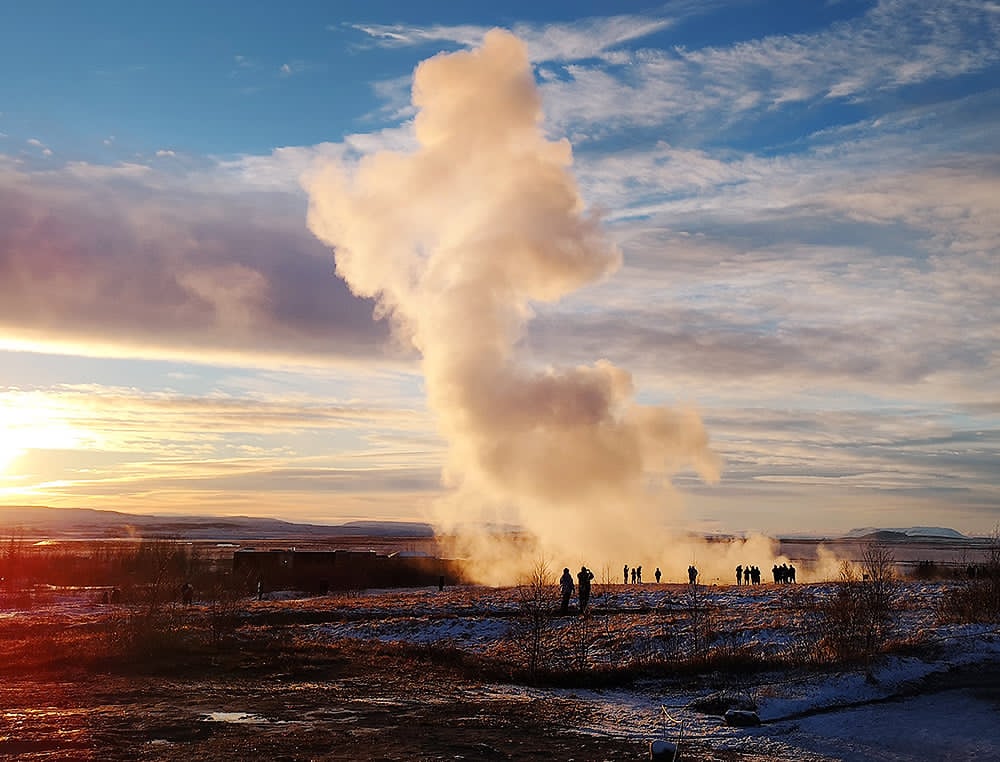
The original geyser! The English word “geyser” actually comes from this exact spot – Geysir, which has erupted intermittently for at least 800 years. Geysir itself is mostly dormant now, but Strokkur next door erupts every 6–10 minutes, sending water 20–30 metres into the air. We’ve heard from friends that no matter how many videos you’ve watched on YouTube, the first time you see it in person still makes you jump.
The whole geothermal area is small and walkable, and entry is free. Combined with Þingvellir and Gullfoss, it forms the Golden Circle route most first-time visitors do as a day trip from Reykjavík.
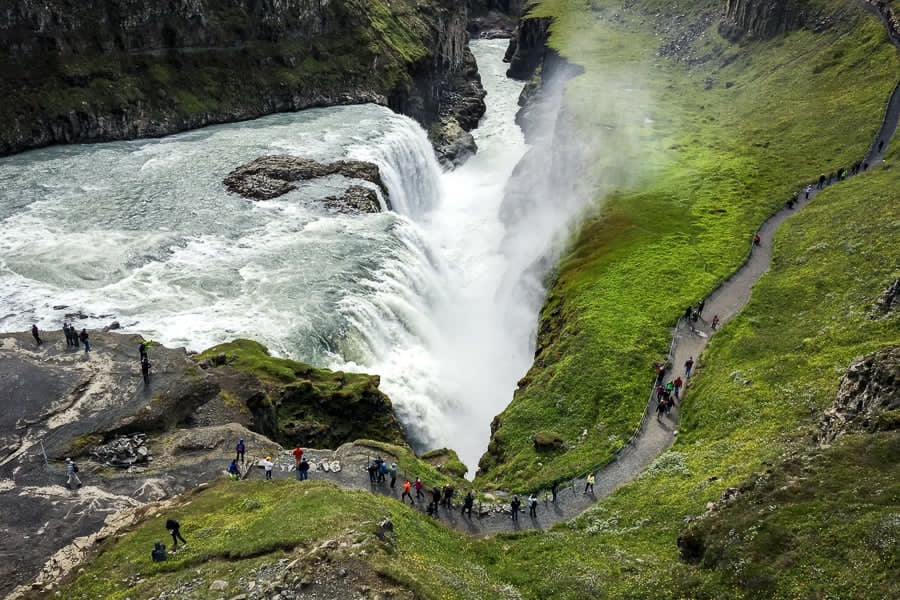
3. Gullfoss
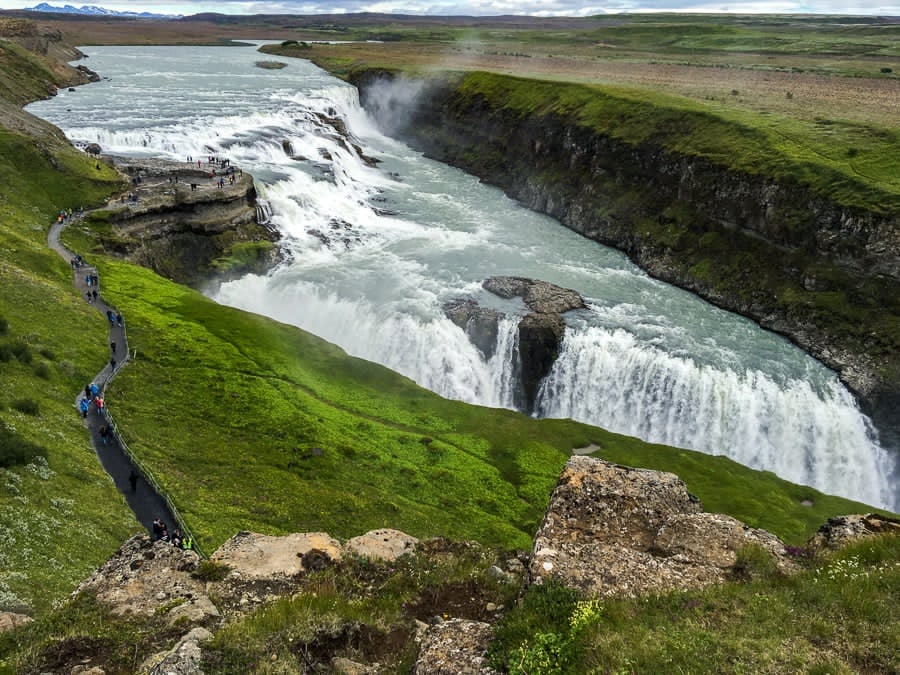
Iceland’s most famous waterfall, dropping 32 metres in two stages along the Hvítá river canyon. The backstory is one of our favourites: Gullfoss almost became a hydroelectric dam in the early 20th century, until Sigríður Tómasdóttir – the daughter of the landowner – walked from Gullfoss to Reykjavík to protest. Barefoot, in places. She eventually got the dam stopped, and there’s now a memorial to her at the viewpoint.
The waterfall is at its most dramatic in winter, when ice frames the canyon, and the spray freezes mid-air. In summer, the rainbows over the spray are pretty unbeatable, too.
4. Seljalandsfoss
This is the one you can actually walk behind! Seljalandsfoss drops 60 metres off a cliff that has a recess at its base big enough for a path to lead all the way around to the back. Be prepared to get drenched – wear waterproof EVERYTHING – and avoid winter when the path freezes and is closed.
Tip: just past Seljalandsfoss along the cliff, the smaller Gljúfrabúi waterfall hides inside a cleft in the rock. Half the visitors miss it because it’s not well signposted from the main parking lot, but it’s worth the five-minute walk.
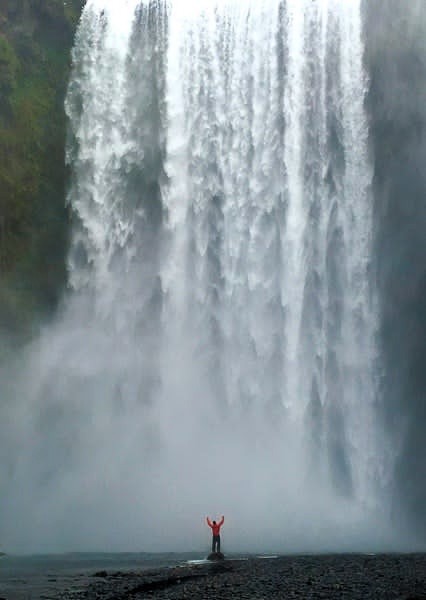
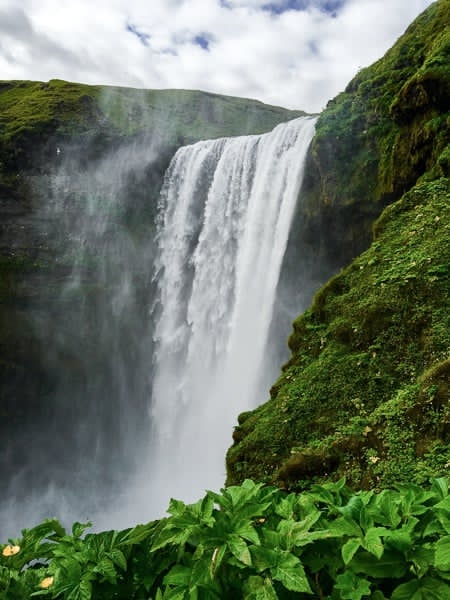
5. Skógafoss
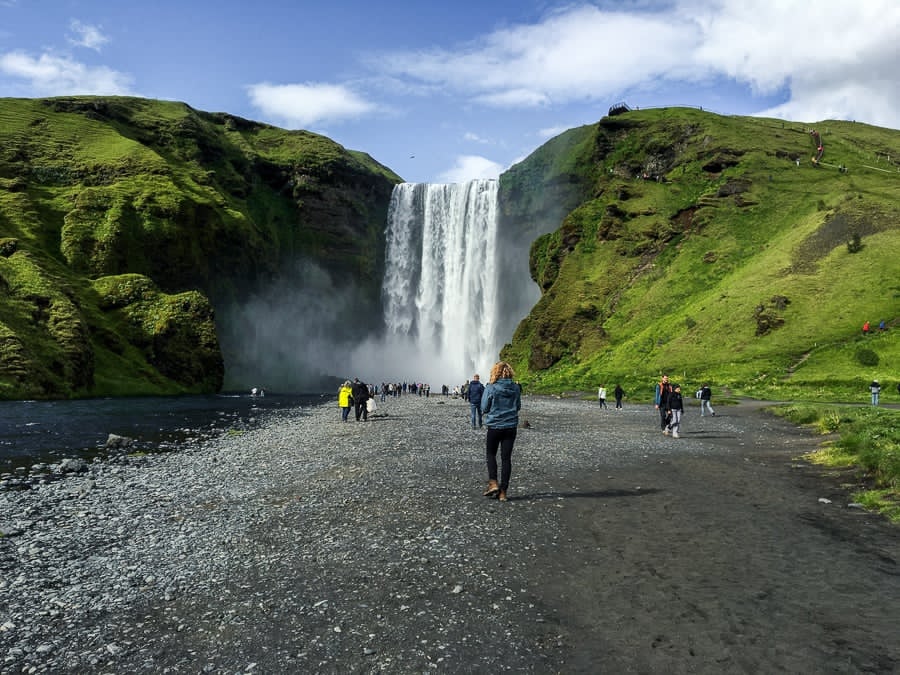
A 25-metre-wide, 60-metre-tall waterfall on Iceland’s south coast – possibly the most dramatically-shaped waterfall in the country. There’s a steep staircase up the side leading to a viewpoint over the top of the falls, and the Fimmvörðuháls trail beyond it leads to roughly 20 more waterfalls before eventually crossing a mountain pass between two glaciers down to Þórsmörk in the Highlands.
The town of Skogar, just beneath the falls, has a small folk museum that’s worth an hour if the Icelandic weather turns on you (and trust us, it will).
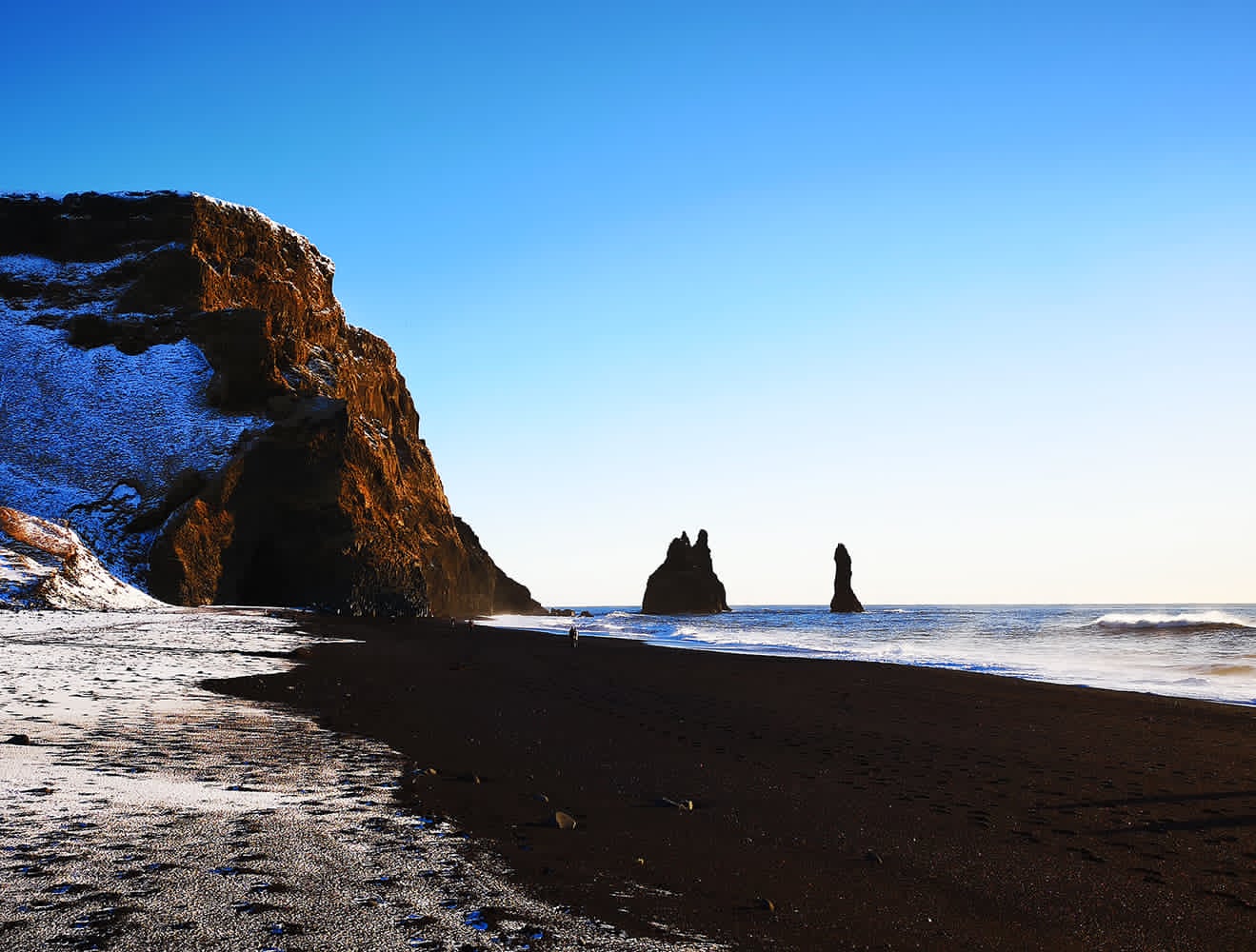
6. Reynisfjara Black Sand Beach
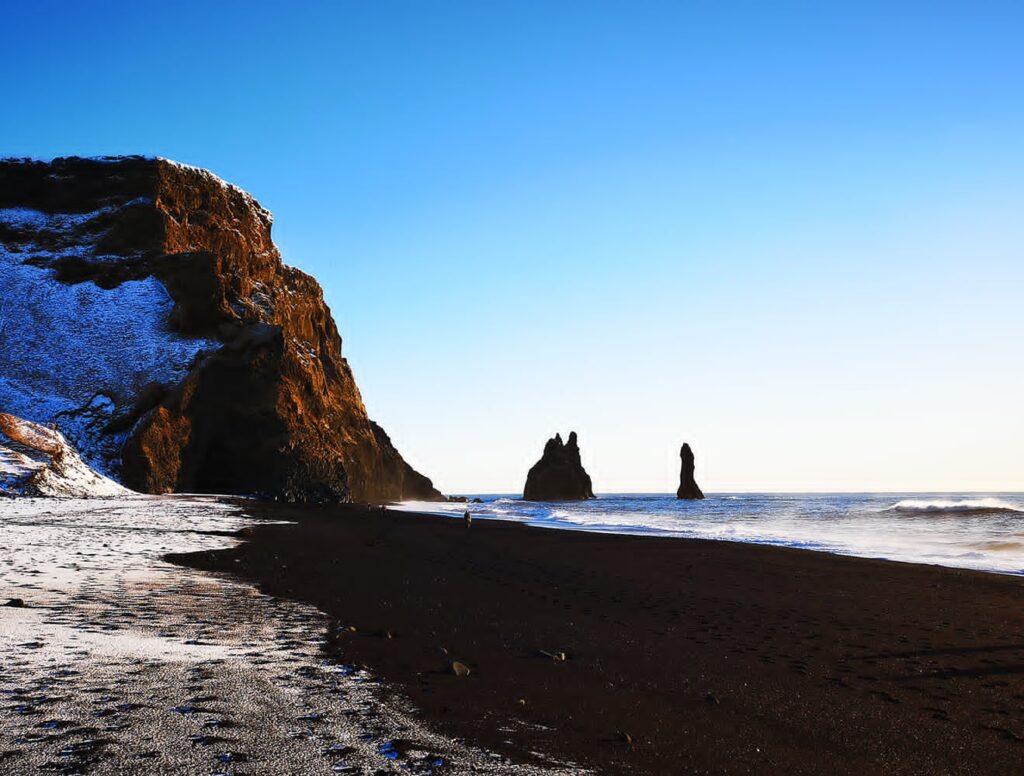
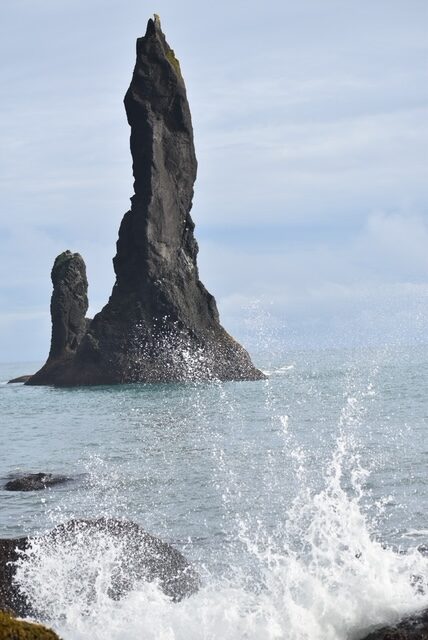
Volcanic sand, basalt sea stacks, and – important warning here – the most dangerous beach in Iceland for “sneaker” waves that come further up the shore than they look like they will. People die at Reynisfjara every single year because they get too close to the water.
That said, it’s also one of the most photogenic places in the country. The Reynisdrangar basalt columns rise straight out of the surf just offshore, and the hexagonal columns along the cliff (called Garðar) look like they were built by hand. Stay well back from the waves, and you’ll be fine.
7. Dyrhólaey
A 120-metre-high promontory near Vík with a sea arch large enough that small boats can sail through it in calm weather. We’ve been told sunset here is special – wow-worthy views down the south coast and across to Reynisfjara.
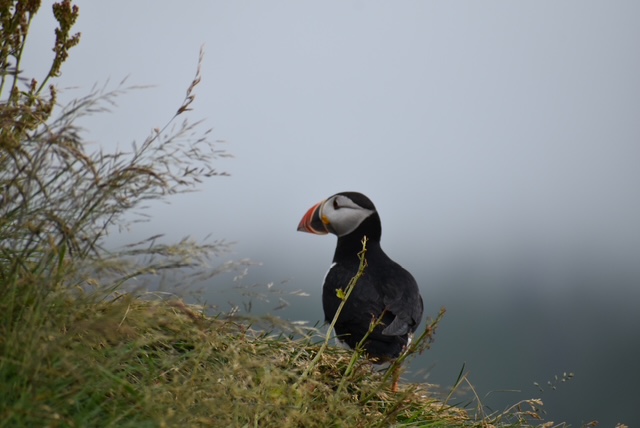
Bonus for animal lovers: In summer, Dyrhólaey is one of the easiest places to see puffins from a viewing platform without taking a boat cruise like this one. Access can be restricted during nesting season (typically May through mid-June) to protect the birds, so check before you go.
8. Vatnajökull National Park
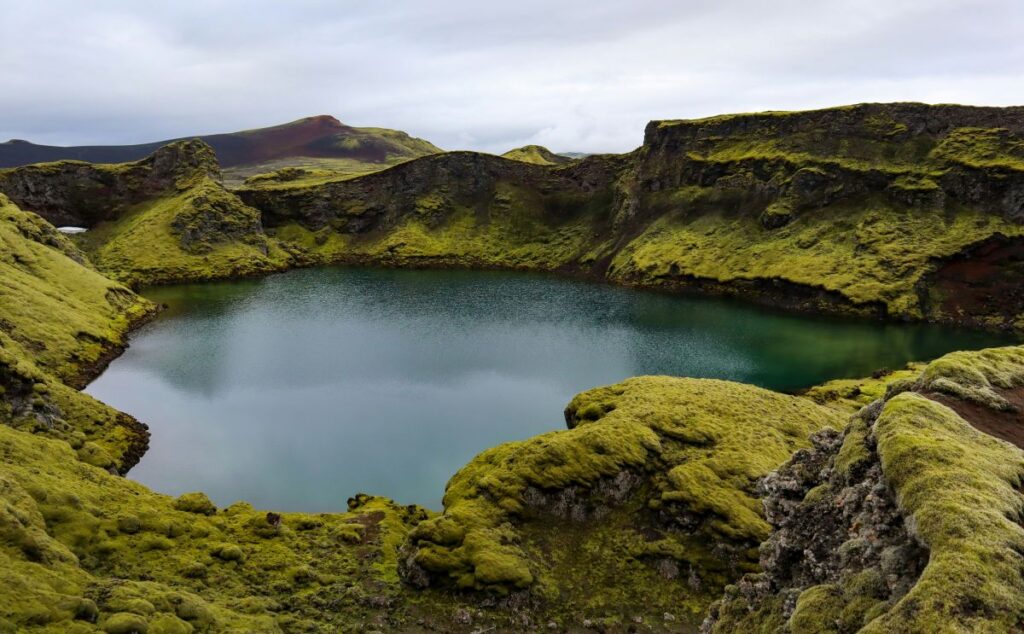
This is Europe’s largest glacier, covering 8% of Iceland – roughly the size of Corsica! And it’s not even a single ice cap, it’s a system of 30+ outlet glaciers all crawling slowly toward the coast.
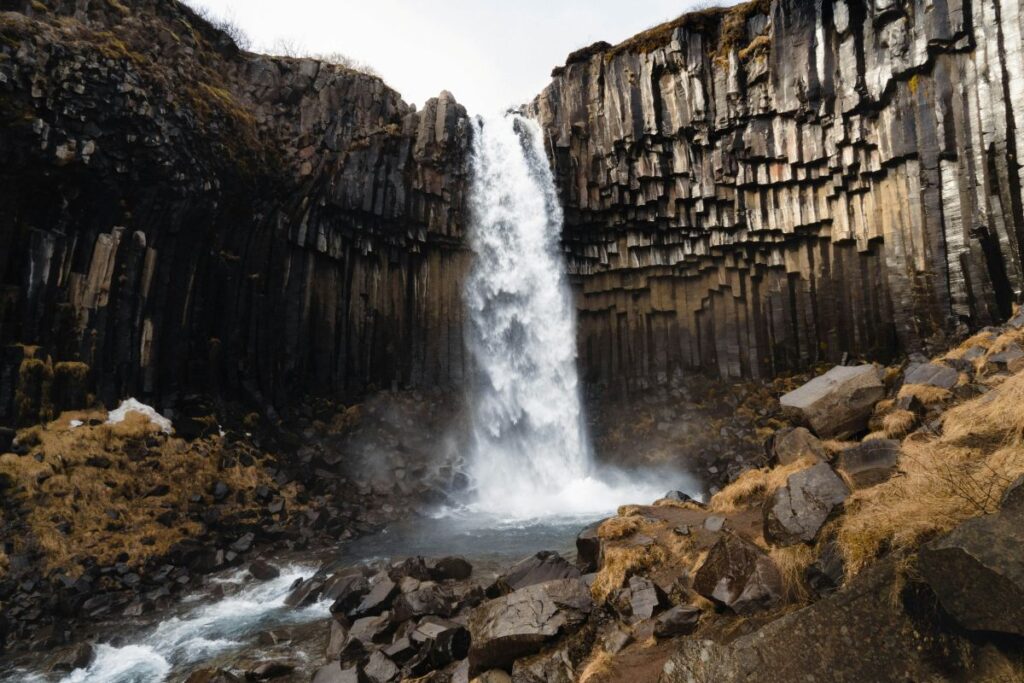
The national park around it contains some of Iceland’s most surreal landscapes: blue ice caves (accessible in winter only with a guide), the Svartifoss black basalt waterfall in Skaftafell, and the moraine lagoons fed by glacier melt. The Skaftafell visitor centre is the practical base for exploring this side of the park.
9. Jökulsárlón Glacier Lagoon
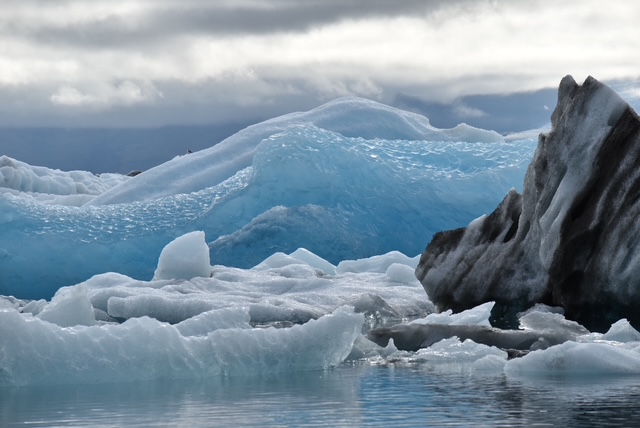
This is the one we want to see the most, honestly. A glacial lagoon where icebergs calve from Breiðamerkurjökull glacier and drift toward the sea – sometimes with seals riding along on them. Boat tours run all summer, taking you between the icebergs themselves.
The lagoon only formed in the early 20th century as the glacier retreated, and it’s growing larger every year. Jökulsárlón has appeared in Batman Begins, A View to a Kill, and Tomb Raider. It’s a five-hour drive from Reykjavík, but every friend we know who’s been says it’s worth every minute.
10. Diamond Beach
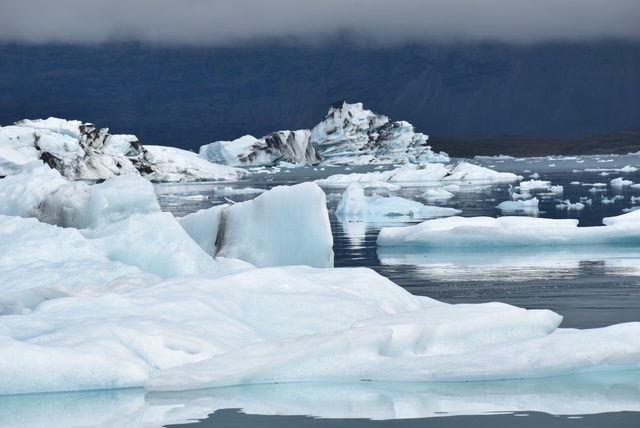
Where the icebergs from Jökulsárlón wash up on the black sand beach across the road – chunks of glacial ice ranging from football-sized to as big as a small car. The “diamonds” change daily, sometimes hourly, depending on the tides.
Early morning is supposed to be the best light. It’s right beside Jökulsárlón, free to visit, and possibly the most photographed beach in Iceland after Reynisfjara. Pair them as a single half-day stop – they’re a 200-metre walk apart across the bridge.
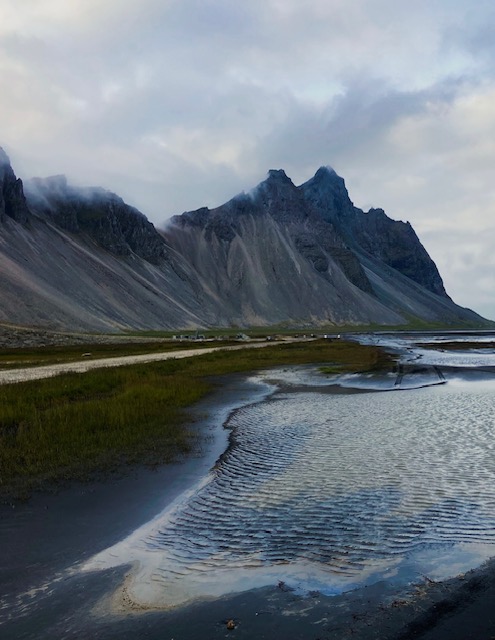
11. Stokksnes and Vestrahorn
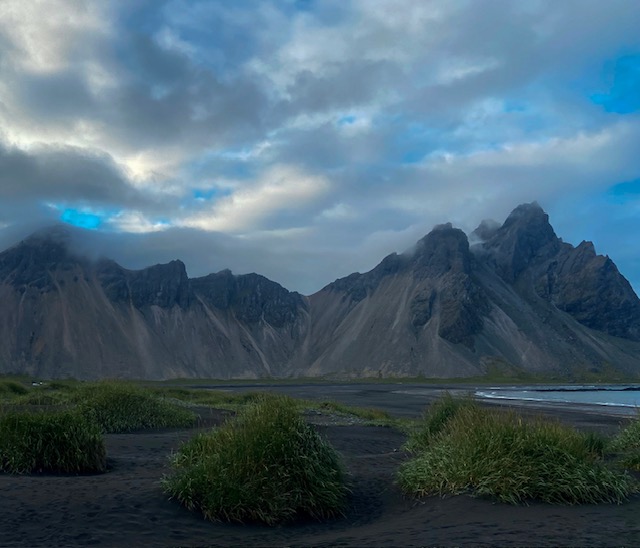
A black sand peninsula with a Game of Thrones-shaped mountain rising 454 metres straight out of it. Stokksnes is on private land, so you pay a small entrance fee (around $13 / 1,600 ISK) at the Viking Cafe – and weirdly, that gate keeps the place mercifully free of tour buses, which is a win.
The Vestrahorn range catches incredible light at sunrise and sunset, and the black dunes between the beach and the mountain form perfect leading lines for photography. A Viking village set, built for a film that was never made, sits nearby and is included in the entry. Genuinely one of the most cinematic-looking places on this list.
12. Seyðisfjörður
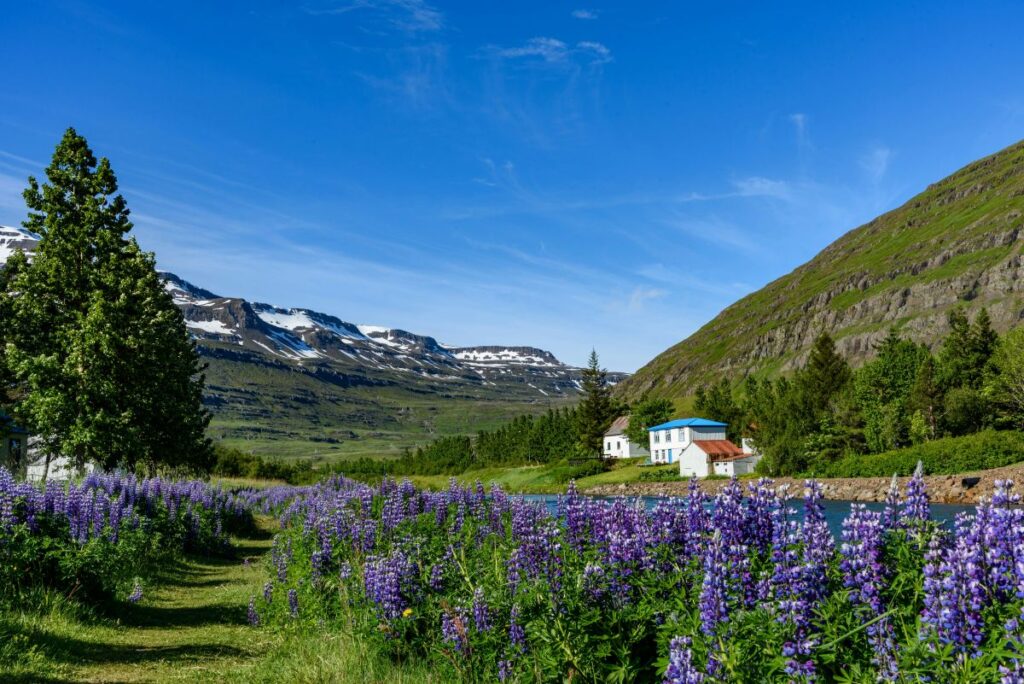
A small fishing town at the end of a 16-kilometre fjord on Iceland’s east coast, with a rainbow-painted street leading up to a blue church (yes, we’ve saved approximately 200 photos of it on Instagram).
Population around 700, mountains on three sides, hot springs on the hike up to a viewpoint above town. Fun fact: it’s the arrival port for the weekly ferry from Denmark via the Faroes, so many international road trippers actually start their Iceland adventure here rather than at Keflavík. The drive in over the Fjarðarheiði pass is supposedly one of the most scenic in the country, snaking down switchbacks toward the fjord.
13. Lake Mývatn
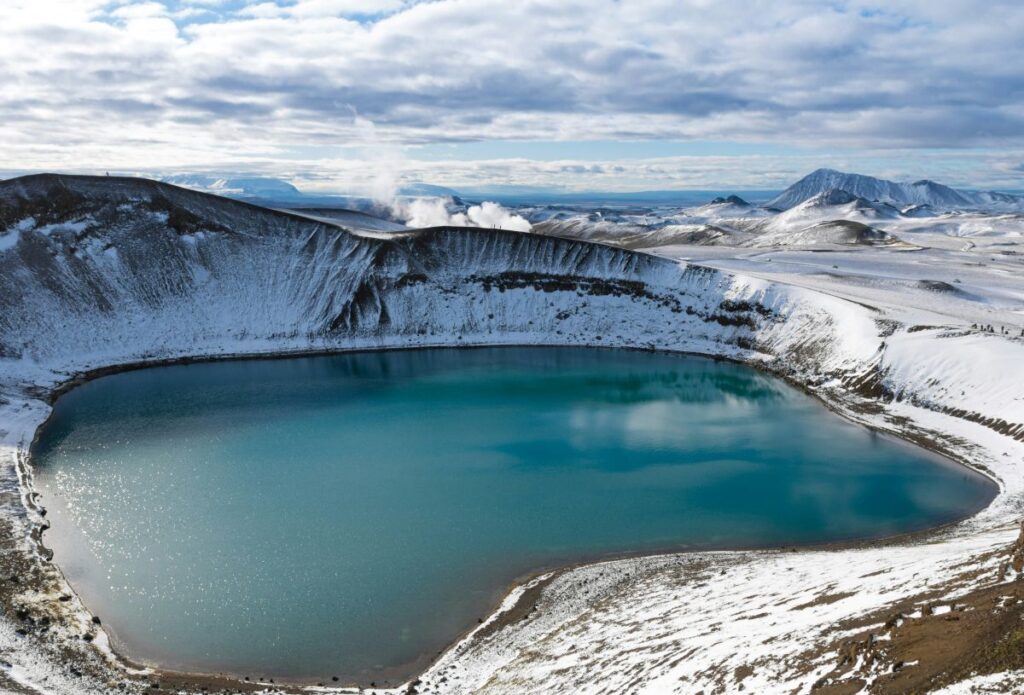
A shallow volcanic lake in north Iceland, surrounded by lava fields, geothermal pools, and pseudo-craters formed when lava flowed over wetlands thousands of years ago.
The Mývatn region is basically a sampler of all Iceland’s landscapes packed into 30 km: the Dimmuborgir lava castles (used as Mance Rayder’s wildling camp in Game of Thrones!), the Krafla geothermal area, the Hverir mud pots (which apparently smell exactly like rotten eggs – be warned), and the Mývatn Nature Baths. The last one is a less touristy and significantly cheaper alternative to the Blue Lagoon. Worth at least two full days if you make it this far north.
14. Dettifoss
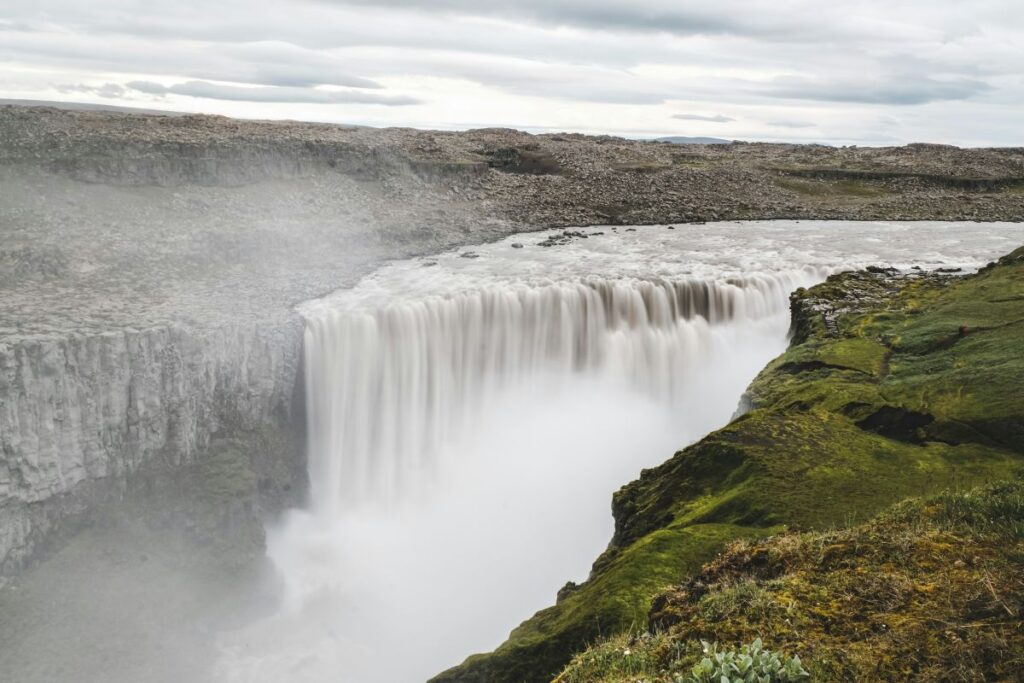
The most powerful waterfall in Europe. Dettifoss drops 44 metres into a basalt canyon that drains the largest glacier in the country, and it thunders rather than falls – the volume of water (around 500 cubic metres per SECOND in summer) creates spray you can feel from 200 metres away.
You can approach it from either side of the canyon: the east bank gets you closest, the west has the postcard view. The opening scenes of Ridley Scott’s Prometheus were filmed here, which gives you a pretty good idea of the otherworldly scale of the place.
15. Goðafoss
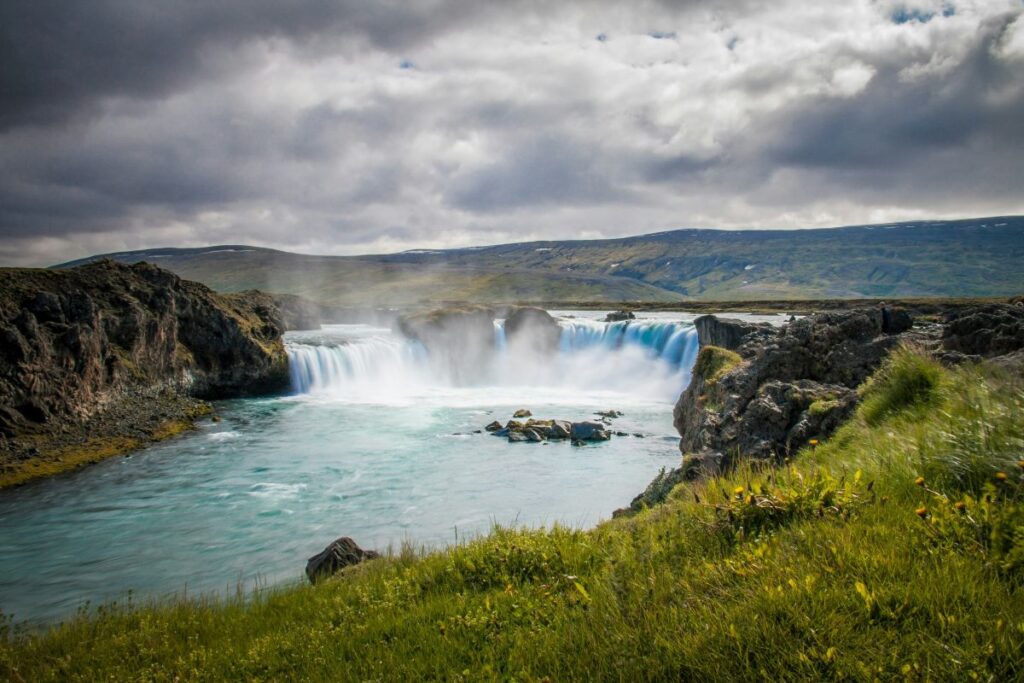
A horseshoe-shaped waterfall on the Skjálfandafljót river – and the backstory here is one we love. In the year 1000, Iceland’s lawspeaker threw his Norse pagan idols into the waterfall after declaring the country Christian. “Goðafoss” literally means “waterfall of the gods”.
The viewpoints are easy to reach from a small parking area just off Route 1, and the falls are spectacular in any season. About 45 minutes from Akureyri, and a natural stop on any north-coast itinerary between Mývatn and the Tröllaskagi peninsula.
16. Húsavík
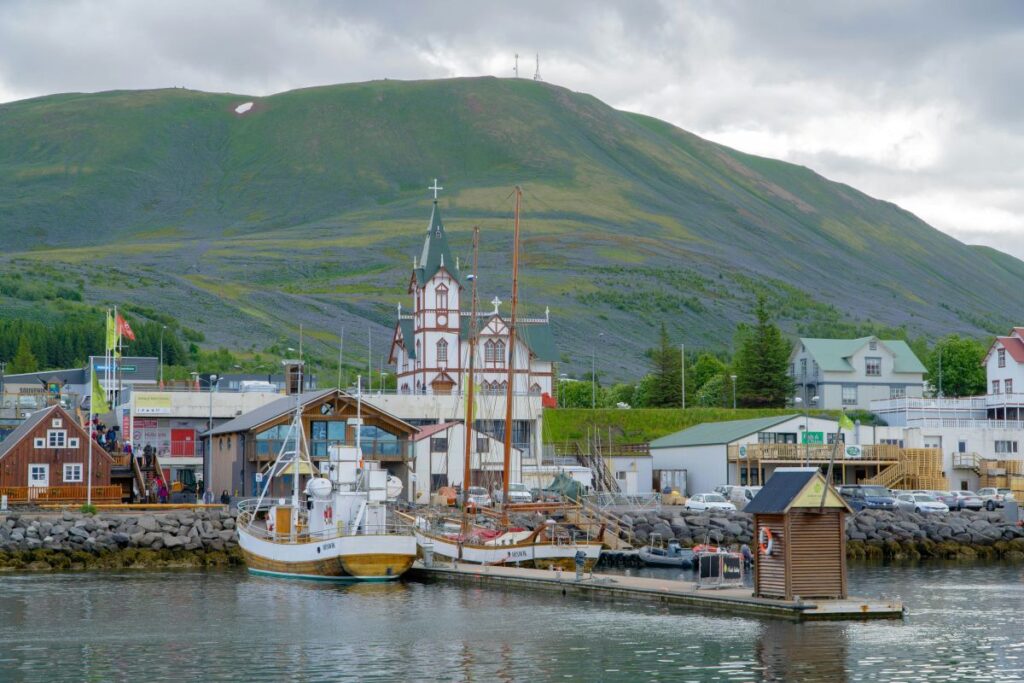
Iceland’s whale-watching capital is on Skjálfandi Bay, where roughly 23 different species of whale have been recorded. Tours run from May to October with humpback sightings near-guaranteed; orcas, blue whales, and minkes are regular too.
The town also has – and we are not making this up – the world’s first Phallological Museum, in case your itinerary needs a curveball. More conventionally, there’s a beautiful wooden church right on the harbour and the GeoSea geothermal pool with cliff-edge views over the bay. We’d love to do one of the sunset whale-watching tours someday.
17. Kirkjufell
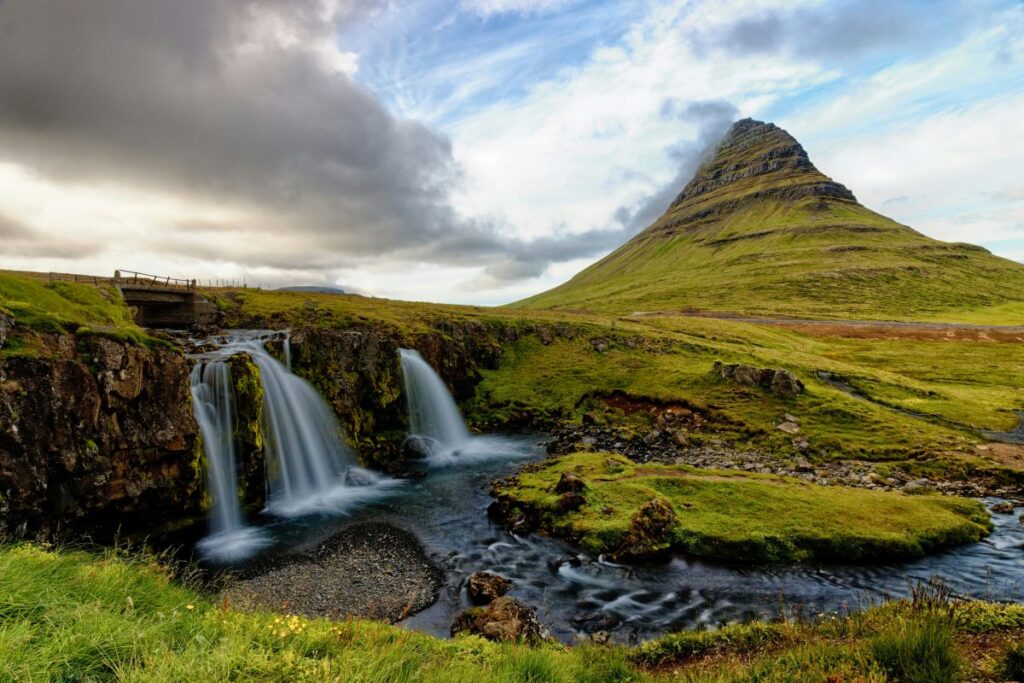
The most photographed mountain in Iceland. Kirkjufell is 463 metres of layered basalt and sandstone shaped like an inverted boat hull, sitting right next to a small waterfall called Kirkjufellsfoss. You’ve seen it before, trust us – it featured in Game of Thrones as the “arrowhead mountain” north of the Wall.
The viewpoint is from a small parking lot just off the road; you can frame the mountain through the foreground of the waterfall in a single shot. Best with northern lights overhead in winter, or with summer wildflowers in front. About two hours from Reykjavík on the Snæfellsnes Peninsula. FYI, if you don’t have a car this guided full day tour of the peninsula is a great choice!
18. Snæfellsjökull
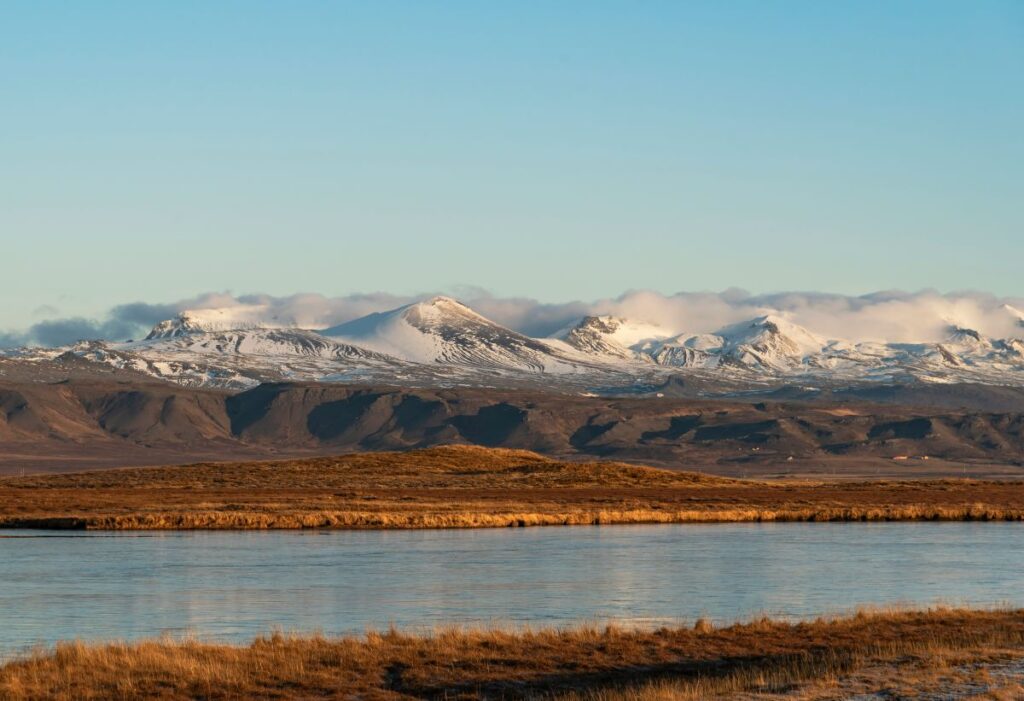
A glacier-capped stratovolcano at the western tip of the Snæfellsnes Peninsula. Fun literary fact: Jules Verne used Snæfellsjökull as the entrance to the underworld in Journey to the Center of the Earth back in 1864.
The volcano hasn’t erupted in around 1,800 years, but the national park around it concentrates everything that makes Iceland Iceland in a small area: black beaches (Djúpalónssandur), lava fields (Búðir), basalt sea cliffs and arches (Lóndrangar), and the picture-perfect fishing village of Arnarstapi. You can drive the loop in a day from Reykjavík, or – if you’ve got an extra night – stay near Hellnar for the sunset light off the glacier.
19. Landmannalaugar
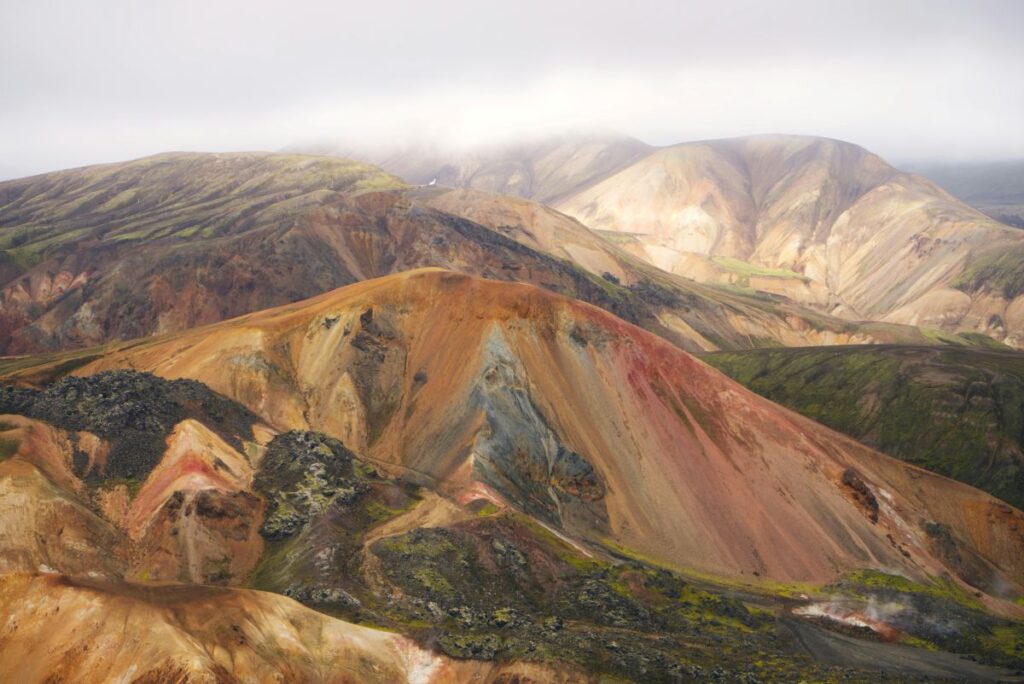
Now we’re getting into Highlands territory. Landmannalaugar is the rhyolite mountain range in the Icelandic interior – peaks streaked with red, yellow, green, and blue minerals – and it’s accessible only by F-road in summer.
This is the starting point of the famous Laugavegur trek, a four-day hike through the Highlands to Þórsmörk that’s consistently rated one of the best long-distance treks in the world. Even if you don’t hike it, the area is spectacular for a day visit: hot springs at the base of the multicoloured ridges, surreal landscapes that look genuinely Martian, and almost no infrastructure beyond a campsite and a mountain hut. Open mid-June to mid-September, depending on snowmelt.
20. Reykjanes Peninsula
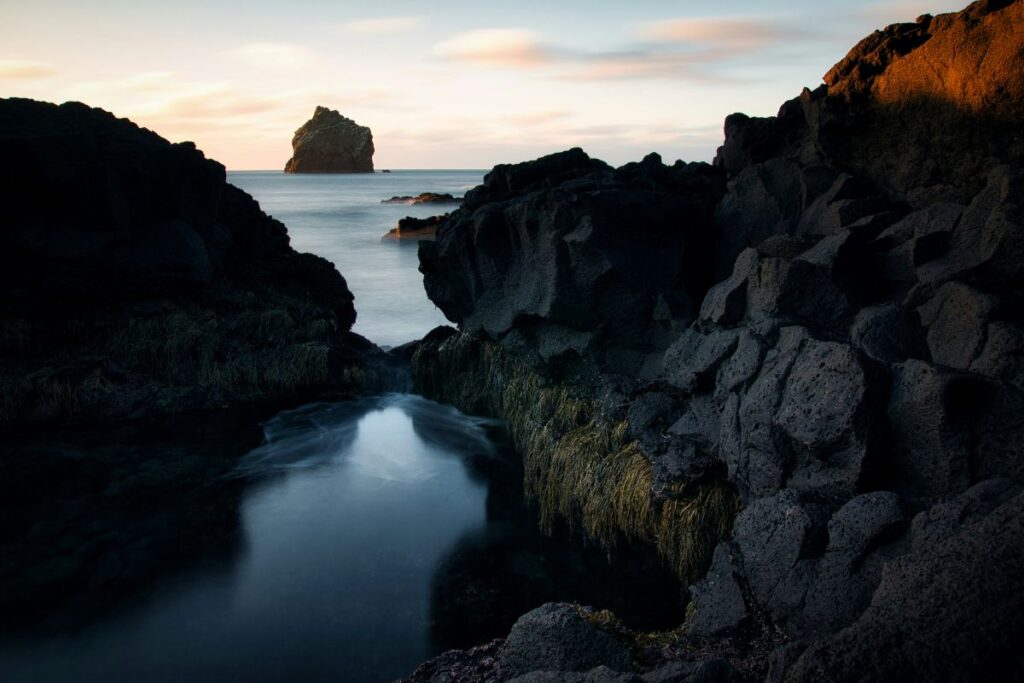
A volcanic peninsula where the Mid-Atlantic Ridge surfaces above sea level – and the most geologically active part of Iceland right now. There have been multiple eruptions here between 2021 and 2024: Fagradalsfjall, Litli-Hrútur, and the Sundhnúkur fissures near Grindavík.
You can hike to the active fissure areas when civil protection has them open. Check SafeTravel.is before you go, as access changes frequently. The peninsula also has the Bridge Between Continents (a literal footbridge across the tectonic gap), the lighthouse at Reykjanesviti perched above sea cliffs, and the Krýsuvík geothermal area. The convenient thing: all of it is within an hour of Keflavík airport, so you can start or end your trip here without going back to Reykjavík.
❤️ Top Hotel Choices in Reykjavik:
Bonus: Iceland’s Highlands (For When You’re Ready)
The 20 places above are all reachable by paved road or short detours from Route 1, which is what most first-time visitors stick to. But there’s another tier of Icelandic beauty that we’d love to get to one day: the Highlands – the interior plateau of the country, accessible only between mid-June and mid-September, and ONLY by 4×4.
Three Highland destinations stand out for travellers ready to step up:
- Þórsmörk — the valley between three glaciers, named after the god Thor. Multiple unbridged river crossings on the way in.
- Askja — a remote caldera in central Iceland with its own crater lake. A full day’s drive from anywhere paved.
- Laugavegur trail — the four-day Landmannalaugar-to-Þórsmörk hike. Bucket-list stuff.
What makes any of this possible is the right vehicle. F-roads void rental insurance on 2WD vans, and the river crossings legally require four-wheel drive. The standard setup for the Highlands is a 4×4 camper van with rooftop tent – ground clearance for the F-roads, plus the ability to camp legally on designated sites where regular vans can’t reach the trailhead.
Local Icelandic operators like Campervan Iceland keep both 2WD and 4×4 categories under one booking platform, which makes comparison easier if you’re undecided between a Ring Road trip and a Highland one. If the Highlands are on your bucket list (they’re on ours), plan for the 4×4 category from the start.
How to See All of This: Planning Your Iceland Trip
⏱️ How long to allow: OK, the practical part. The 20 places above span the whole country, so to see them all properly, you’re looking at 10 to 14 days. For any single region – south coast, north, Snæfellsnes – 3 to 4 days will do it. Iceland rewards a longer trip than most people give it, and from what we’ve heard from friends, the country’s most underrated experience is the slow road in between the headline stops.
🚙 Getting around: Iceland is built for road trips. The Ring Road is paved, 1,332 kilometres long, and circles the entire country, passing through or close to 16 of the 20 places on this list. Public transport between scenic spots barely exists, and tour buses (let’s be honest) show you what they want when they want.
🏨 Where to stay: You’re really choosing between two setups: hotel-plus-rental-car, or campervan. The hotel route works for the south coast in summer, but gets expensive fast – accommodation in remote regions runs $200 – $350 (25,000 – 43,000 ISK) per night and books out months ahead. The campervan route solves both problems at once: you sleep where you stop, and your kitchen comes with you. Which matters in a country where a sit-down dinner outside Reykjavík can cost you $40 – $60 (5,000 – 7,500 ISK) per person.
✅ My pick for bucket-list-worthy hotel in Iceland: Fosshotel Glacier Lagoon in Hnappavellir offers luxury amidst stunning glacial landscapes. The views are unbelievable (like being on another planet) and the rooms are so cool and stylish.
Tips for Exploring Iceland in a Campervan:
When we plan our next Iceland trip, we’ll be booking through Campervan Iceland, which is the local Icelandic option our most-travelled friends keep recommending. They’ve been arranging campervan rentals in Iceland since 2013, pickup is right at Keflavík International Airport (no shuttle nonsense after a tired flight), the fleet covers both 2WD vans for the Ring Road and 4×4 setups with rooftop tents for the Highlands, and the bookings include unlimited mileage and base insurance.
Customer service is available in English and Spanish, which we’ve heard makes the back-and-forth before booking much easier than dealing with international resellers.
When to go campervanning:
June through early September is the full window – full Ring Road access, midnight sun, and open Highlands. May and late September are quieter and cheaper but with shorter days. Winter (November through March) is a different trip entirely: northern lights, blue ice caves, restricted Highlands access. Beautiful, but a campervan in winter requires extra preparation and a more capable vehicle.
How long for a campervan road trip:
5–7 days minimum for the south coast and Golden Circle. 10 days for a comfortable Ring Road loop. 14 days lets you add the Westfjords or the Highlands properly. As we said earlier, Iceland is bigger than it looks.
Where to camp:
Wild camping in a vehicle has been illegal since 2015 under the Nature Conservation Act, so book ahead. The good news: the campsite network is excellent – 170+ registered sites at $15 – $25 (1,800 – 3,000 ISK) per person per night, almost all with hot showers, listed on the Tjalda app. Book the popular ones in the south well in advance for July and August.
💡 Quick Reference: Iceland Travel FAQs
Where is the most beautiful place in Iceland? Honestly, it’s subjective – but the three names that keep coming up for us are Jökulsárlón glacier lagoon (the icebergs in a lagoon next to Diamond Beach), Vestrahorn at Stokksnes (that 454-metre mountain rising straight out of a black dune peninsula), and Kirkjufell on Snæfellsnes (the most photographed mountain in the country).
How many days do you need in Iceland to see the best places? For the south coast and Golden Circle: 5–7 days minimum. For a comfortable Ring Road covering the whole country: 10 days. While for the Ring Road plus Westfjords or Highlands: 14 days. Anything less than 5 days and you’re really just visiting the southwest.
Can you drive around Iceland in summer? Yes! The Ring Road is fully paved, and 2WD vehicles handle it without issue from May through October. The interior Highlands require a 4×4 and are only open mid-June through mid-September, depending on snowmelt that year.
What is the best month to visit Iceland? Late June through August for full Ring Road access, the longest daylight (close to 24 hours in June!), and open Highlands. February to early March for northern lights with manageable winter conditions and lower prices.
Is Iceland expensive to travel? Yes – Northern Europe is noticeably more than continental Europe. Plan on $40 – $60 (5,000 – 7,400 ISK) per person for a sit-down meal, $200 – $350 (25,000 – 43,000 ISK) per hotel night in season, and $80 – $280 (10,000 – 35,000 ISK) per night for campervan rentals, depending on category. Our budget tip: cook from supermarkets (Bónus is the cheapest chain), and choose a campervan over a hotel-plus-car for the accommodation/transport combo.
Do you need a 4×4 to see Iceland’s most beautiful places? Of the 20 places on this list, 19 are accessible by 2WD vehicle. A 4×4 is only essential if Landmannalaugar or other Highland destinations (Þórsmörk, Askja, Laki) are on your itinerary.
Where do most campervan rentals pick up? Most are either at Keflavík International Airport directly or at depots in Reykjavík with a shuttle. Airport pickup is much faster for late or early flights and is the standard for local Icelandic rental companies.
Have You Been to Iceland? Tell Us!
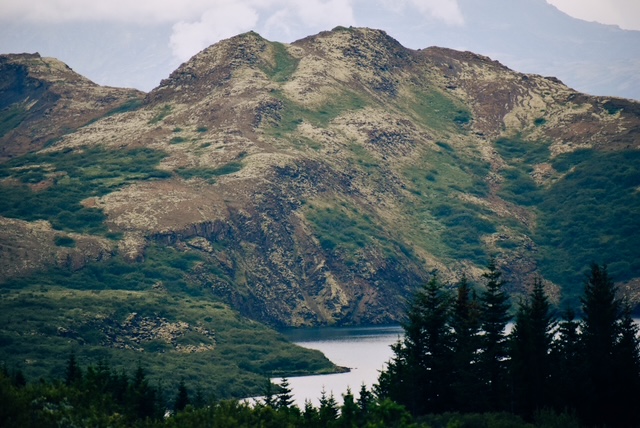
Iceland packs more landscape variety into one country than almost anywhere else on Earth. The 20 places above are the headliners, but everyone we’ve spoken to says the same thing: the joy of travelling in Iceland is that the gaps between the famous stops – the scenic drives, the unmarked pull-offs, the small fishing towns nobody mentions in the guidebooks – are often as memorable as the headliners themselves.
Our plan for next time is to build a trip around three or four anchor destinations, leave plenty of time for the spaces between, and go in shoulder season if we possibly can. Same places, half the people, and the kind of light that makes you actually want to stop and look.
But what about you? Have you been to Iceland? Did we miss your favourite spot? We’d love to hear from anyone who’s made the trip – drop your tips and recommendations in the comments below. And if you’re still in the planning stage, save this for later and let us know which place you’re heading for first!
Last Updated on August 2, 2026 by snaphappytravel