
It’s incredible to me that such a small island has so much variety in places and landscapes to discover. In just a few weeks, you can go from exploring idyllic beaches and colonial cities to getting lost among endless tea plantations, seeing wild elephants in their natural habitat, or exploring the ruins of cities that were once glorious capitals.
In this article, I’ll tell you about a stunning area known as Sri Lanka’s Cultural Triangle. This region, located in the north of the island, encompasses three of the country’s former capitals, as well as other gems you’ll discover if you keep reading.
Kandy, the former capital of Sri Lanka
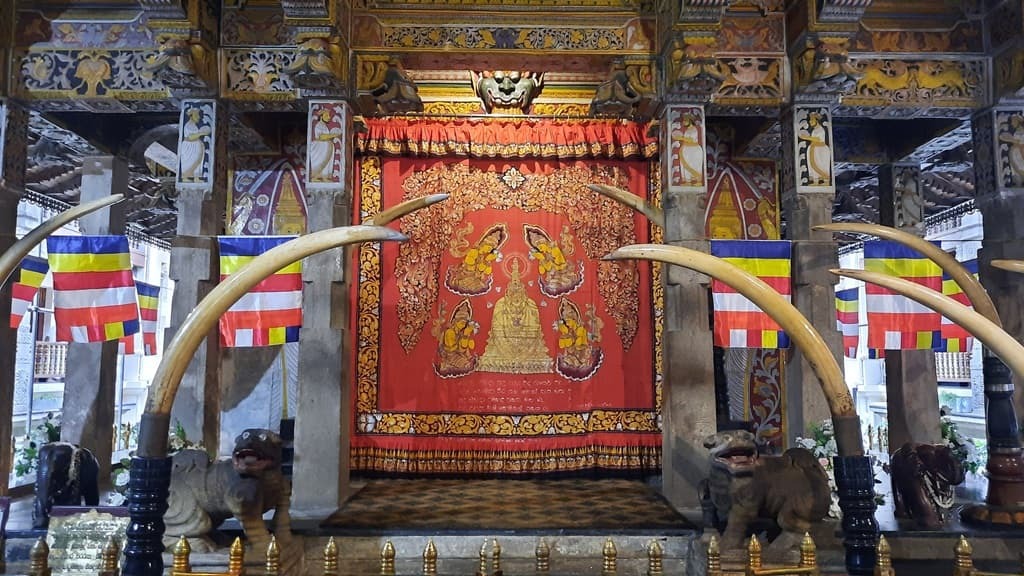
Let’s start with Kandy, the former capital (FYI, Colombo is the current capital of Sri Lanka). For centuries, Kandy was one of the island’s main political and religious centers and, in fact, was the last capital of the ancient Kingdom of Kandy before the British took control of Sri Lanka in the 19th century.
But I have to be honest, Kandy was the least interesting of the three former capitals I visited. Beyond the famous Temple of the Tooth Relic, which I do think is worth visiting to learn about its history and understand a bit more about the importance of Buddhism in Sri Lanka, I didn’t find any other attractions or ruins in the city that really caught my attention or piqued my curiosity.
But it’s very likely that Kandy will be part of your Sri Lanka itinerary. For one, it’s one of the stops on the famous train that crosses the mountains and tea plantations. And secondly, because it’s a good base for continuing your journey north and exploring the other historical capitals of Sri Lanka.
Dambulla, a strategic stop
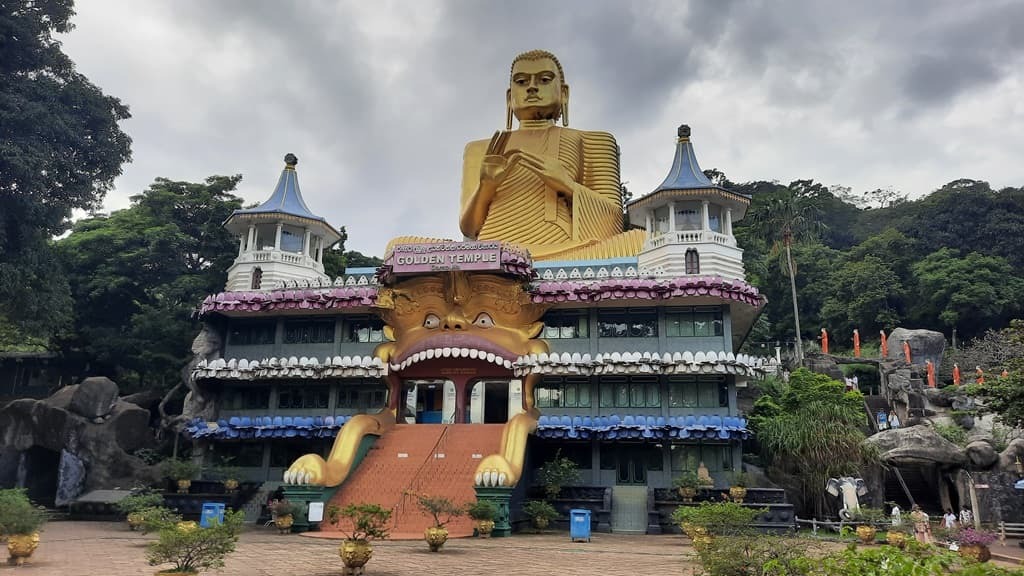
Dambulla, right in the middle of the Cultural Triangle, is a great base for exploring the other historical sites in the area. The town itself isn’t particularly beautiful (cities, to be honest, aren’t exactly Sri Lanka’s strong suit), but its location makes it very convenient.
From Dambulla, you can easily organize guided tours north to places like Anuradhapura, Sigiriya, or Polonnaruwa, without having to change accommodations every time you want to explore a new part of the Cultural Triangle.
Plus, in Dambulla itself, you can visit the Dambulla Cave Temple, which is tucked into a rock formation 160 meters high. Here, you’ll find dozens of Buddha statues accompanied by paintings that cover much of the walls and ceilings. The Dambulla Cave Temple has been a go-to spot for pilgrims for over 2,200 years.
Anuradhapura, Among Temples and Ruins
Cost: $30 USD
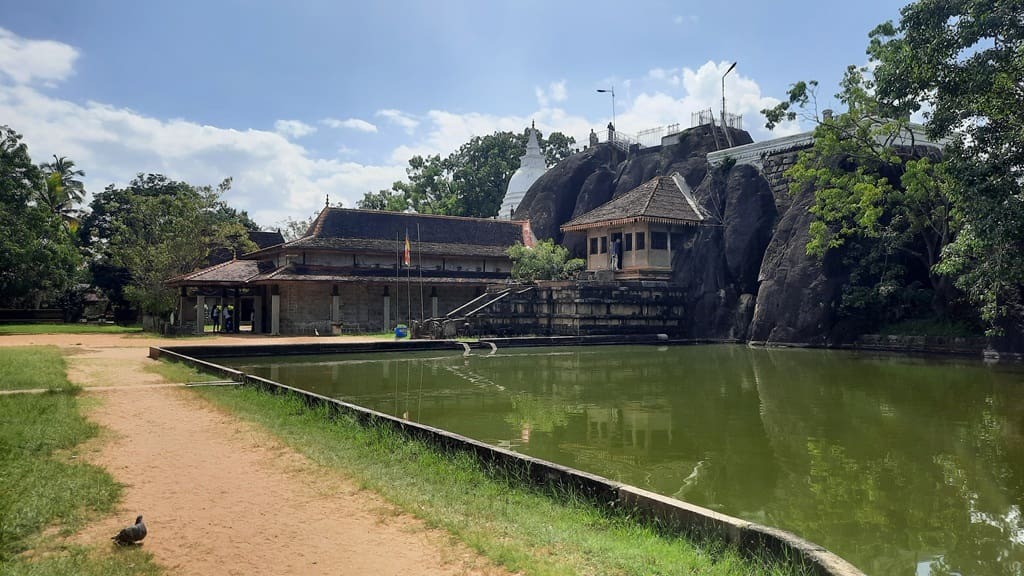
Anuradhapura was another of Sri Lanka’s ancient capitals, serving for centuries as the island’s political and religious center. The city was quite important for Buddhism and the Sinhalese kingdom until the capital was moved to Polonnaruwa.
One of the most important sites and one of the highlights of what to see in Anuradhapura is the Sri Maha Bodhi, a sacred tree that, according to tradition, grew from a cutting of the Bodhi tree under which Buddha attained enlightenment in India. It is one of the most important Buddhist pilgrimage sites in Sri Lanka, and you’re sure to encounter hundreds of devotees who come here to pay homage.
To explore Anuradhapura, the best way is by bicycle or tuk-tuk, as the ruins and stupas are quite spread out. The distances are too long to walk from one point to another. Renting a bicycle, which is very inexpensive, allows you to move at your own pace, while a tuk-tuk is recommended if you want to avoid getting tired at all.
While I found Anuradhapura more interesting than Kandy, it wasn’t my favorite of Sri Lanka’s ancient capitals. Even so, this time I did feel the country’s history becoming more palpable. Among the enormous stupas, temples, ruins, and pilgrimage sites, it’s easier to imagine just how important this city once was.
Sigiriya, the Rock that Emerges from the Jungle
Cost: $35 USD
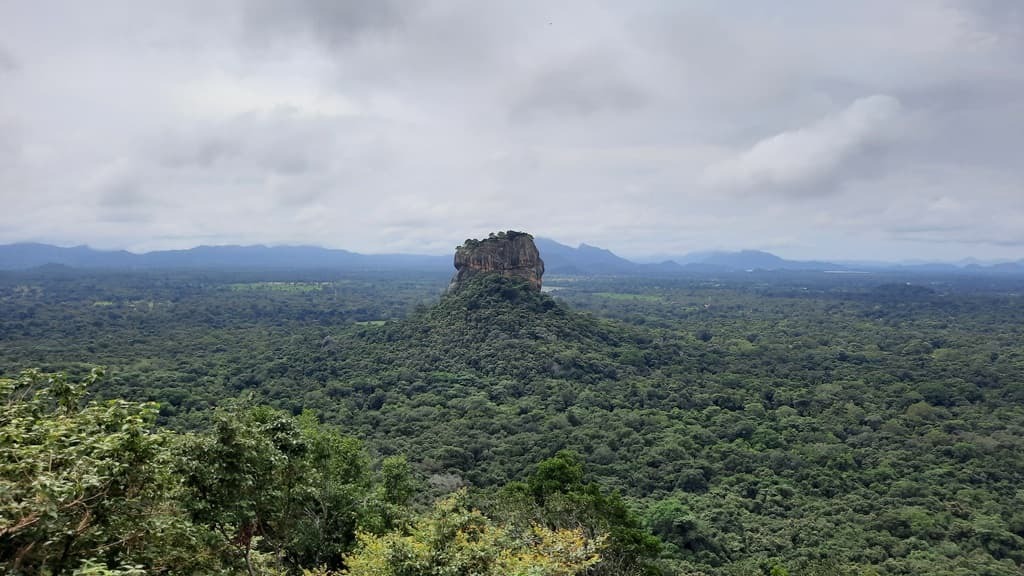
I’m sure that when you were researching Sri Lanka, you came across the iconic image of Sigiriya (where a huge rock seems to spring up out of nowhere in the middle of the jungle). It’s without a doubt one of the most famous sites on the island.
But besides being a massive rock of nearly 200 meters high, Sigiriya also has an interesting history.
At the top are the ruins of an ancient fortress and the remains of what was once a palace built during the reign of King Kashyapa in the 5th century.
To reach the summit, you first have to cross the ancient gardens and pass by the remains of what were once the paws of a huge feline, of which only a part remains today. From there, the ascent begins up a long series of steps until you finally reach the ancient fortress.
The downside of Sigiriya being so famous is that it’s usually quite crowded with tourists. If you want to climb the rock and explore the complex, you’ll likely come across many people, especially from 9 am onwards, when most tourist groups start arriving.
But there’s an alternative that I actually prefer – climbing Pidurangala Rock, a viewpoint located not far from Sigiriya where you’ll get, what I believe to be, one of the best views in Sri Lanka.
To reach the viewpoint, it’s a short trek, but the entrance is much more accessible than Sigiriya, and once you’re up there, you’ll see the enormous rock (Sigiriya) rising up from the vegetation right in front of you.
Here are some of the most popular guided tours that include Sigiriya:
Polonnaruwa, My Favorite in the Cultural Triangle
Cost: $30 USD
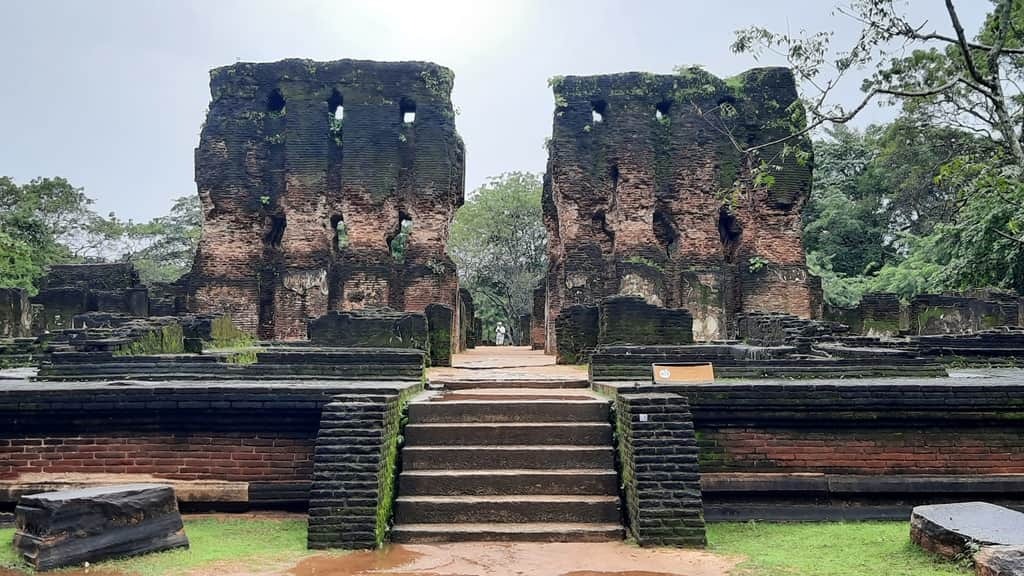
We arrived at the ancient city of Polonnaruwa, the last of the capitals on our Cultural Triangle tour and, in my opinion, the best of them all.
Like Anuradhapura, it’s a vast site where the ruins, stupas, and temples are scattered across a wide area, so walking around will take quite a while. The best way to get around, again, is by bicycle or tuk-tuk.
What captivated me most about Polonnaruwa, besides the variety of its ruins, is how well preserved most of them are. For example, among the highlights are the Quadrangle, one of the most interesting groups of buildings in the complex, the enormous walls of what was once the royal palace, and, especially, the famous Buddhas carved directly into the rock.
Another detail I appreciated was seeing some ruins partially covered by vegetation. At times it reminded me a bit of Angkor Wat, although, of course, on a much smaller scale. This combination of ruins and vegetation gave the place a special charm and ultimately made Polonnaruwa my favorite archaeological site in all of Sri Lanka.
Considering that entrance fees to these complexes aren’t exactly cheap, it seemed like the most appealing option because of the variety and excellent state of preservation of the ruins, as well as the possibility of exploring the entire site by bicycle.
Best time to visit the Cultural Triangle
To explore the Cultural Triangle, the best time is usually between January and April, when this region of Sri Lanka experiences one of its relatively drier periods.
Although the archaeological sites can be visited year-round, keep in mind that temperatures are generally high and that both Anuradhapura and Polonnaruwa are vast open spaces, so the heat can make the visit tiring.
It’s best to go during the early morning hours, both to avoid the heat and to avoid peak tourist times.
Also, consider that December – January and March – April tend to coincide with peak tourist seasons, so if you’d like to find fewer crowds and more affordable prices, you might want to avoid those months.
Getting Around the Cultural Triangle
To explore the Cultural Triangle, a good option is to use Dambulla as your base and take day trips to different sites. From Dambulla, you can travel to Sigiriya, Polonnaruwa, or Anuradhapura using buses, tuk-tuks, or by hiring a driver for the entire day.
For exploring Anuradhapura and Polonnaruwa, bicycles and tuk-tuks are probably the best options. In Sigiriya, you can also use tuk-tuks to get around between the rock formations and the Pidurangala viewpoint.
If you prefer a more relaxed trip, hiring a private driver for several days is the best option. It’s not the cheapest, but it can be practical if you have limited time and want to visit many places without depending on public transport schedules.
Our favorite hotels we stayed at in Sri Lanka’s Cultural Triangle:
Kandy:
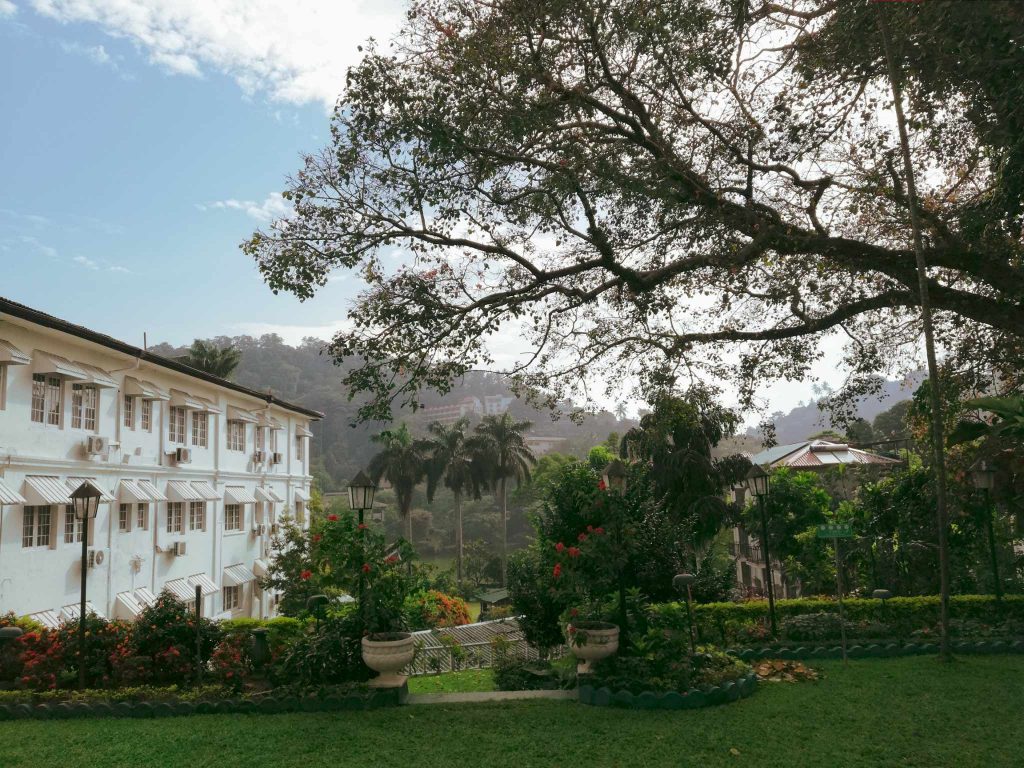
We stayed at the Hotel Suisse, a historic hotel located right on Kandy Lake. It boasts over 2.5 acres of landscaped gardens and has a gorgeous outdoor pool. Our room was spacious and very regal-looking looking, and the breakfast was exceptional.
Dambulla:
The Heritance Kandalama is an eco-friendly hotel, designed by the renowned architect Geoffrey Bawa, is nestled amidst lush greenery, overlooking the serene Kandalama Lake. The hotel seamlessly blends with its natural surroundings, providing guests with a tranquil escape. It offers luxurious rooms, exceptional dining experiences, and a range of activities such as spa treatments, nature walks, and bird watching.
Thanks for reading!
I hope you enjoyed reading my guide to Sri Lanka’s Cultural Triangle; it really is one of the most unique parts of the country. And an area I can’t wait to return to soon.
Read some of my other Sri Lanka blog posts here –
Best Things to Do in Galle, Sri Lanka (Guide for First Time Visitors)
A First-Timers Guide to the Best Things to Do in Ella, Sri Lanka
Two Weeks in Sri Lanka (The Perfect Backpacking Route)
Booking Your Trip Soon? These are my go-to booking sites!
Below you will find a list of the sites we always use when booking our trips. By booking via the below links you can support my writing at no additional cost to you. Thanks so much!
1. Flights
I use Skyscanner or Cheapoair to find the best flights. It allows you to compare and book flights on over 500 airlines from across the globe.
2. Hotels
I use Booking.com for all of our hotel stays. And if we’re traveling on a budget, I like to use Hostelworld to book a hostel.
3. Renting a Car
We tend to always book our rental car through Discover Cars. This is a search engine for rental cars and allows you to filter by price if you’re on a budget or by vehicle type if there’s a specific car you’re after.
4. Tours
I use Viator or Get Your Guide to book any guided tours we plan on doing. I find Viator particularly good for the USA, Canada & New Zealand, and Get Your Guide is great for Europe.
5. Travel Sim Card
An eSIM is a great idea if you’re coming to a place for more than a week. As that way, you won’t need to change your number or remove the physical SIM from your phone. They are so handy and cheap, too. Obviously make sure your phone is compatible with an eSIM first. We always use Saily for our eSIM’s.
6. Airport Pick-Ups
Instead of cabs, we book with welcome pickup to get from the airport to our hotel. Why did we do that? The drivers from Welcome Pickups are English speaking and you’ll pay a flat rate. So, you know exactly how much you’re paying before hopping in.
7. Compensation for Delayed or Canceled Flights
You can easily claim compensation for a canceled or delayed flight with the website – AirHelp. You just input your flight details and some personal information, and AirHelp will handle the rest.
Last Updated on August 27, 2026 by snaphappytravel