
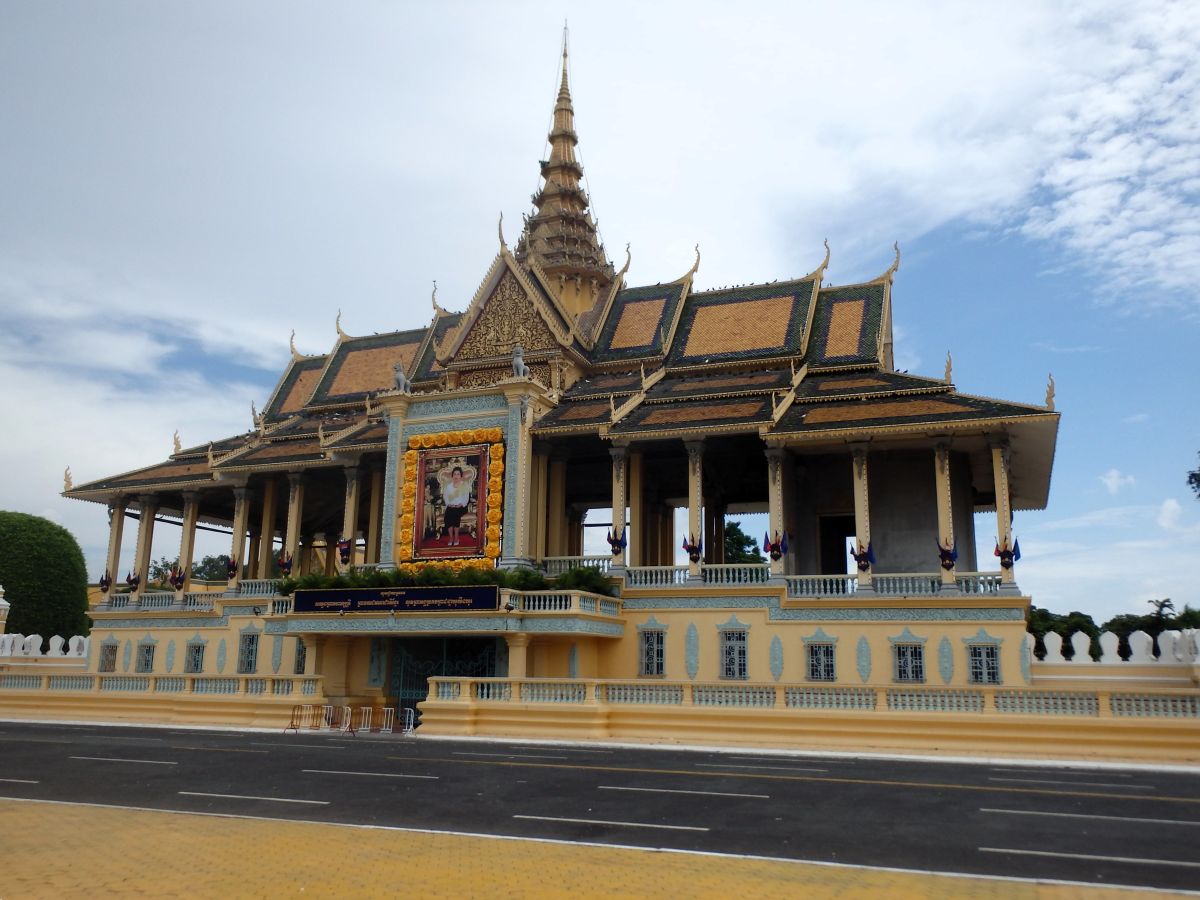
Phnom Penh is quite an interesting city! Like many cities in Southeast Asia, the Cambodian capital is a unique blend of stunning architecture and a bit of delightful chaos.
What really stood out to me is that, even though it’s not as well-known as cities like Hanoi and Bangkok, Phnom Penh is home to some equally breathtaking sights, like the royal palace. And while it’s true that Phnom Penh is often remembered for the tragic Cambodian genocide, the city has made an incredible comeback. It was a fascinating stop on our travels through this amazing country, and we think it’s definitely worth exploring!
Our first impression of Phnom Penh:
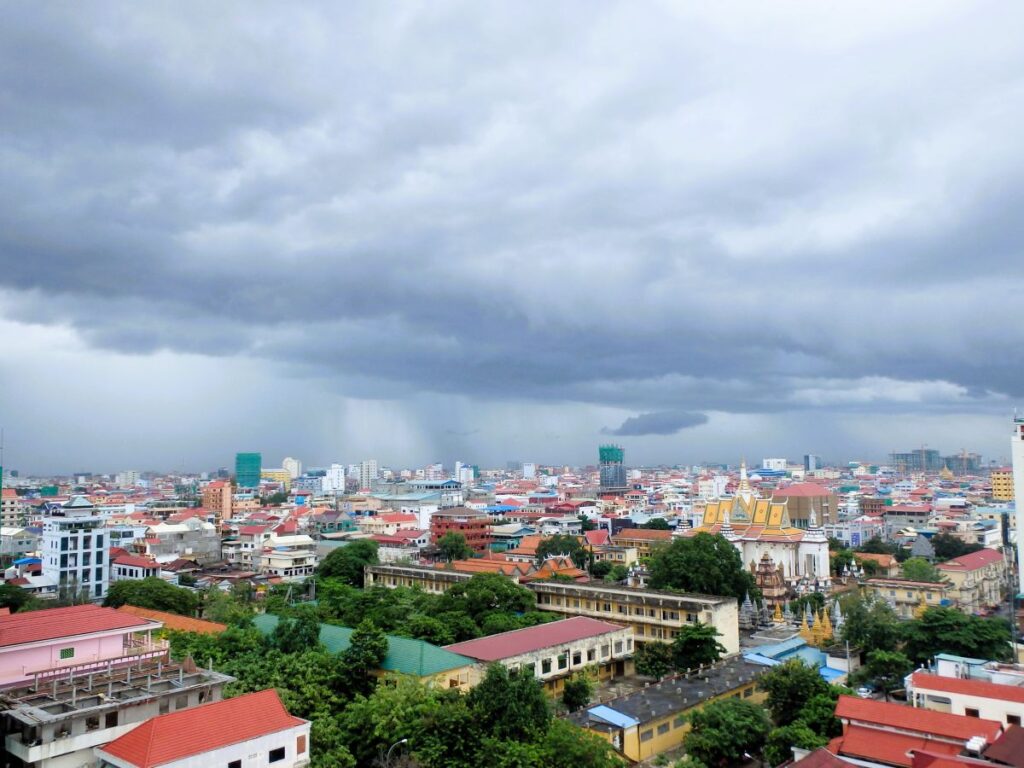
So, Cambodia was our first true taste of Southeast Asia – I had been to Bangkok briefly (on a long layover), but Cambodia was the first stop on our backpacking trip around Southeast Asia. I flew from Sydney to Siem Reap to explore the incredible Angkor Wat. And from there we made our way down to Phnom Penh.
And my first impression was that for the biggest city in the country, Phnom Penh doesn’t feel all that big at all. It has more of a big town vibe.
I also found it intriguing the contrast of the two sides of the city – the area around the Royal Palace is immaculate and mostly filled with tourists, but when you head over to the Central Market, you can see the real (messy) Phnom Penh in action. The footpaths are narrow and filled with holes, and there can be rubbish strewn on the roads. But what you’ll see clearly are locals going about their everyday business! And I just loved seeing that real side to the city.
I also have to mention Cambodia’s sad past here, as it had a profound effect on our visit (and my first impression of the city). It was honestly shocking learning about the Khmer Rouge regime in detail, walking the paths at the Killing Fields, and learning about the shocking deaths that happened there truly gave me a tug in my heart.
As for how much time to spend here, I’d say 2-3 days is enough.
Phnom Penh Royal Palace
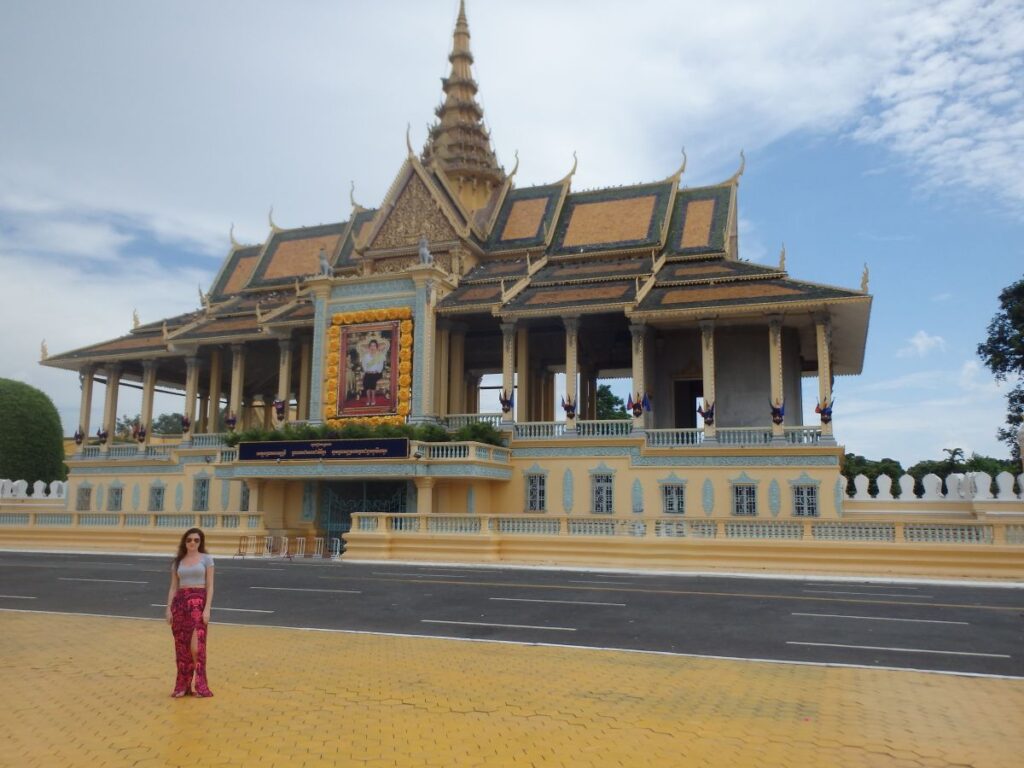
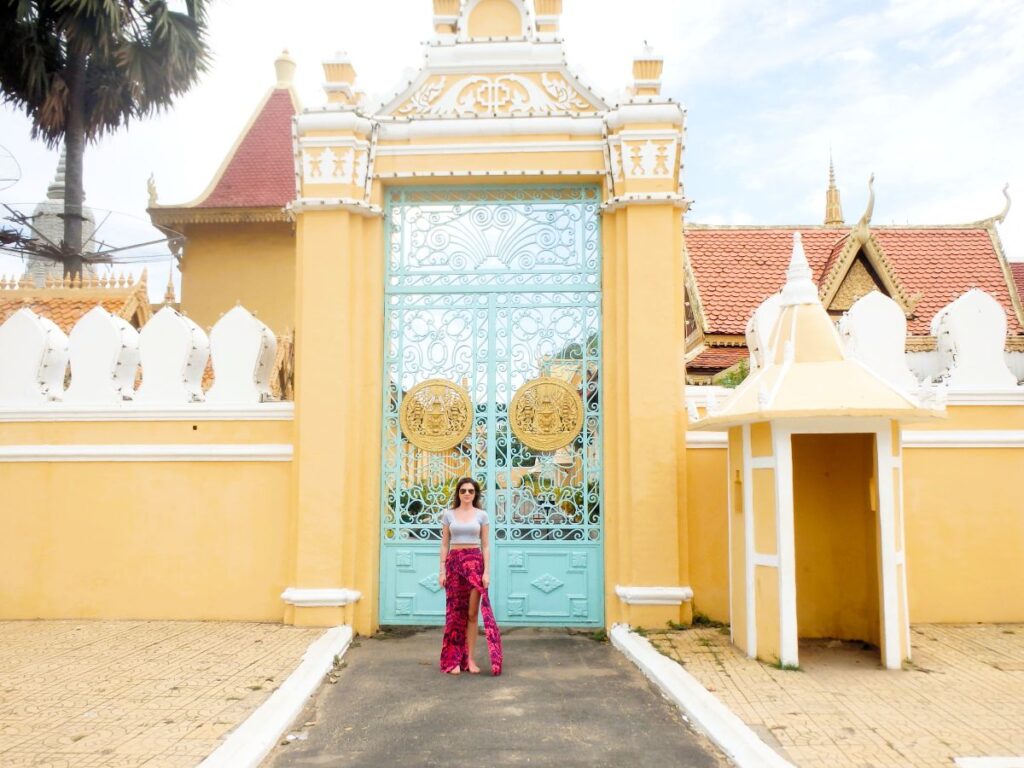
The Royal Palace was among the first sites I visited in Phnom Penh (Cambodia’s capital city). Located along the Tonle Sap River, within bright and peaceful, well-maintained gardens.
And adjacent to the Royal Palace is the Silver Pagoda, named for its floor, which is covered with over 5,000 silver tiles. Inside, you’ll find a dazzling array of Buddha statues, including the Emerald Buddha made of baccarat crystal.
Another photogenic spot is the Throne Hall, with its spires reaching toward the sky and golden details throughout. I loved walking through the open courtyards, spotting both Khmer and French influences in the manicured gardens and pavilions.
💡Important info: There is a dress code for visiting the palace. Shoulders and knees must be kept covered; cloth scarves cannot be used to cover them. Something light and breathable will suffice against the heat. I always carry a thin, long-sleeved shirt with me, particularly when visiting places of worship or those associated with royalty.
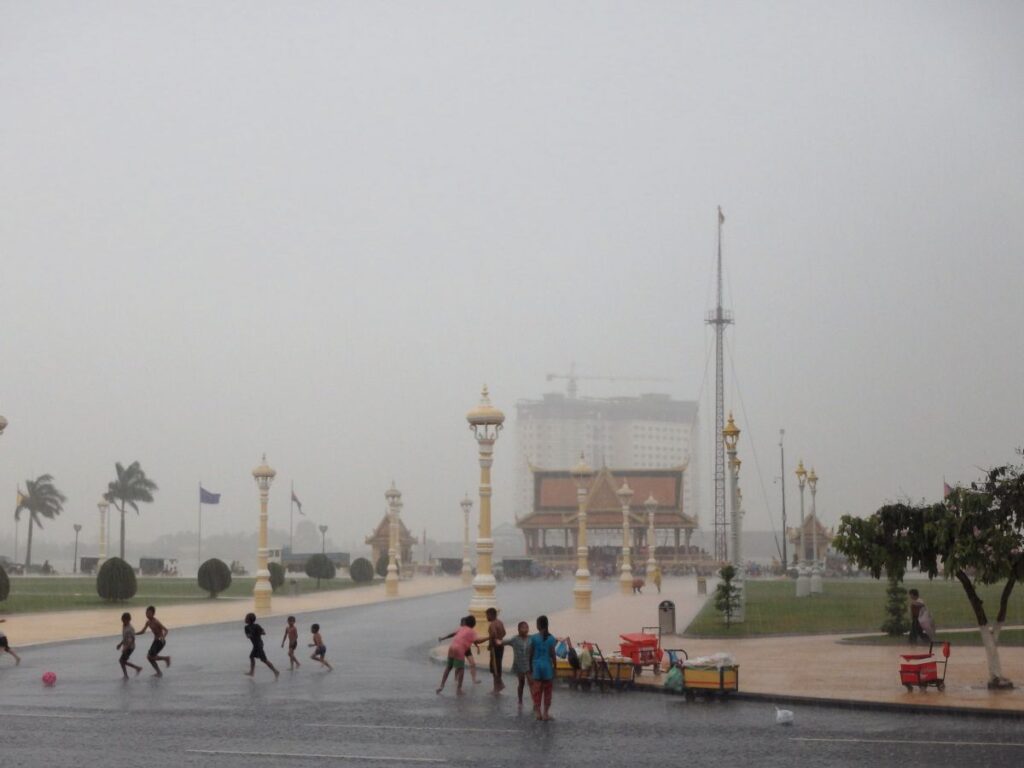
The Killing Fields of Choeung Ek
Choeung Ek (aka the Killing Fields) is a profoundly moving experience that remains with you long after you have left Phnom Penh. A quiet, reflective memorial to the thousands who lost their lives here during the Khmer Rouge rule, and its peacefulness today is in stark contrast to its horrific past.

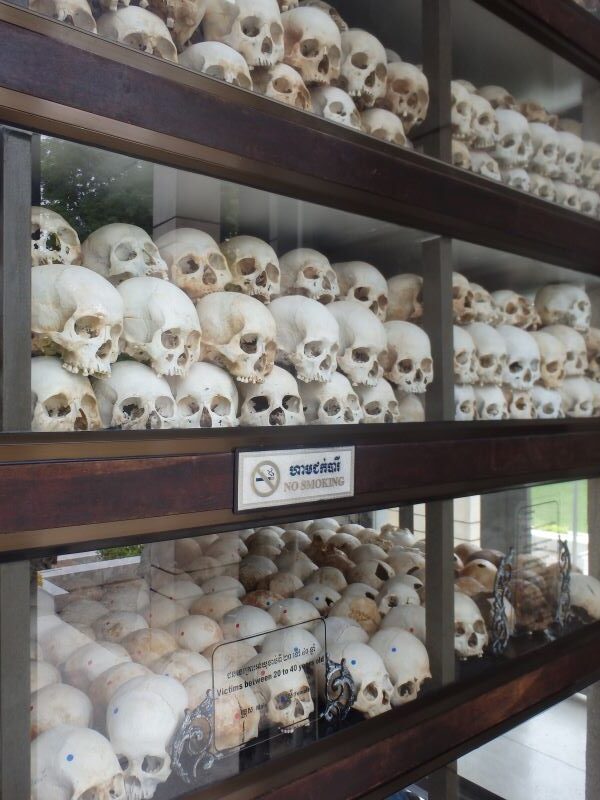
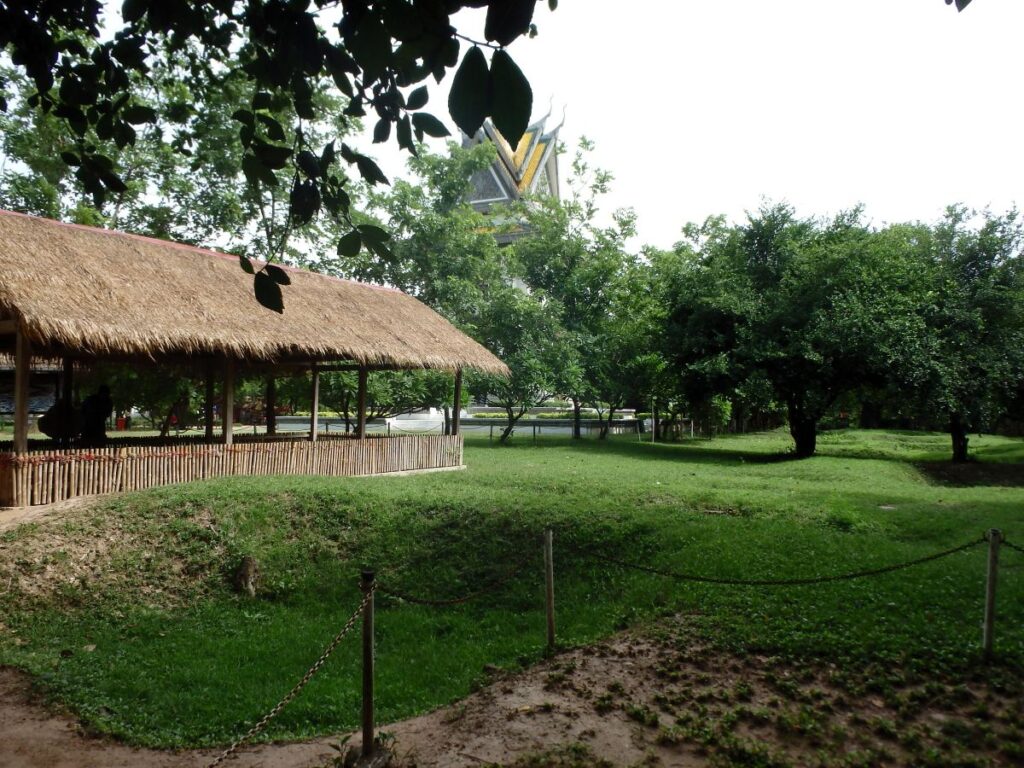
There are marked mass burial graves and a central stupa filled with recovered remains. An audio guide takes you through personal testimonies and historical context for this awful place.
I found the audio guide particularly useful in that it enabled me to gain an understanding at a lower level, through individual stories rather than just the broader facts. It is a heavy experience, but it sheds light on Cambodia’s healing process through the strength of its community.
I recommend allowing between 1.5 and 2 hours here, and try to get here early in the morning, before it becomes too hot. There is limited shade, so be sure to carry water and wear a hat.
Tuol Sleng Genocide Museum

Tuol Sleng is one of the most harrowing places I’ve ever visited. The site was once a high school, later converted into Security Prison 21 (or S-21) during the Khmer Rouge regime. Walking through its rooms gives you a deeper understanding of Cambodia’s sad past and the resilience of its people.
It is estimated that around 17,000 people were imprisoned here, and only a handful survived!
It’s one of the top dark tourism destinations in the world, and I guess, a positive side of visiting such a shocking place is that by visiting, you are contributing to the preservation of the sites, ensuring that the memories of those who suffered here are not forgotten!
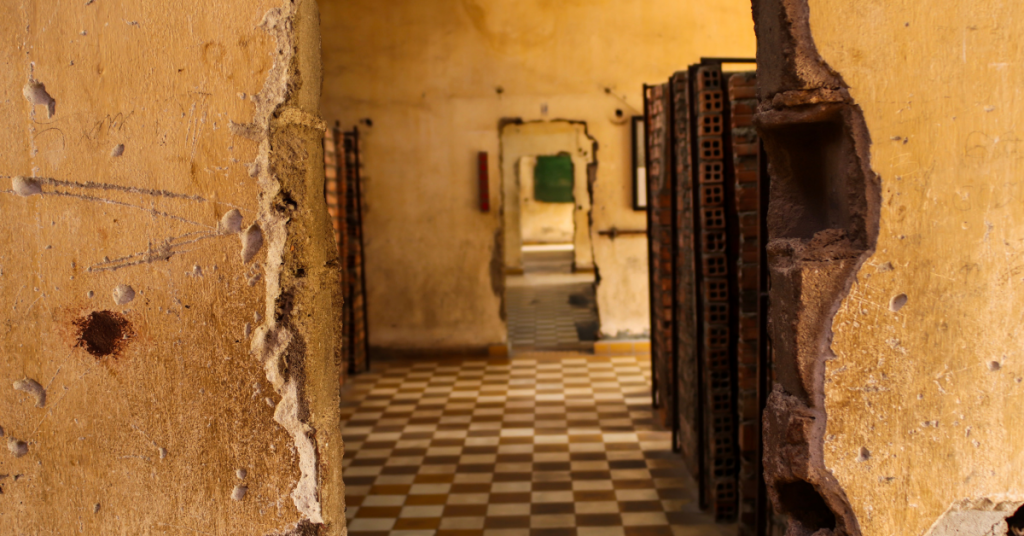
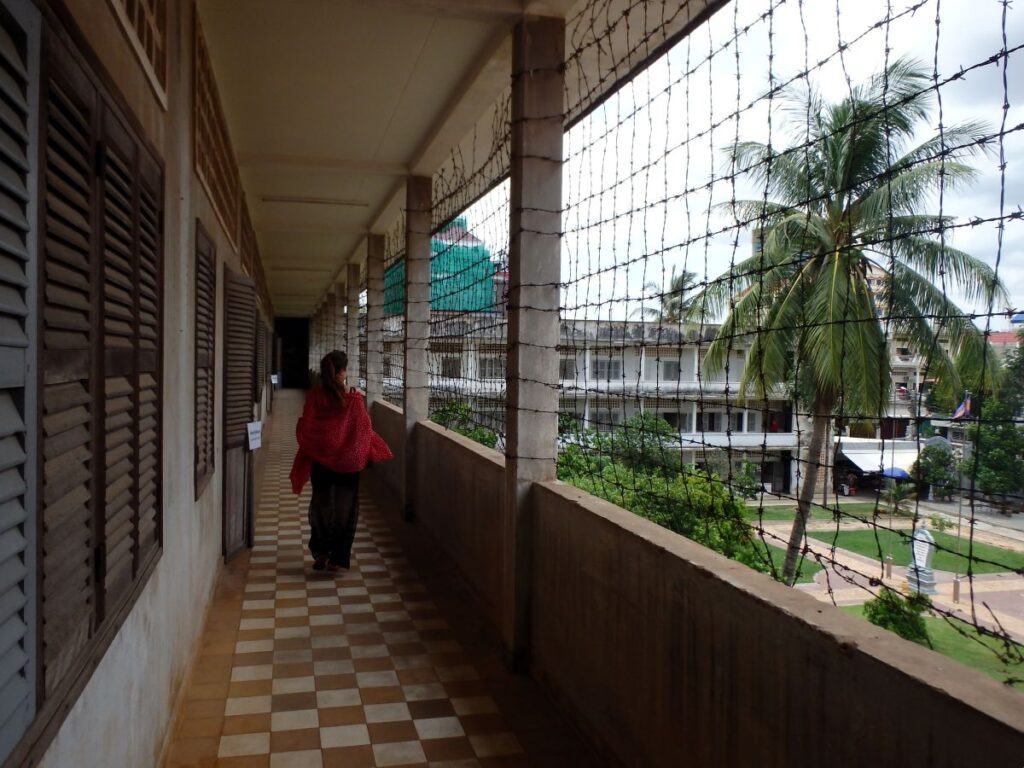
Classrooms, cells, and photographs of victims have been preserved in the museum. The atrocities committed from 1975 to 1979 are clearly displayed. Letters, recorded testimonies, and portraits present personal stories that put individual faces to a tragic period in history – this is what struck me most.
Yes, it’s a very emotional experience, but it also provides maximum context for understanding modern-day Cambodia.
Spend around 2 hours here. An audio guide is available and extremely useful because it allows you to tour the area at your own pace, explaining every significant spot along the way. Photos can be taken in most parts of the building, but remember to be respectful.
Stroll Along the Riverside Promenade
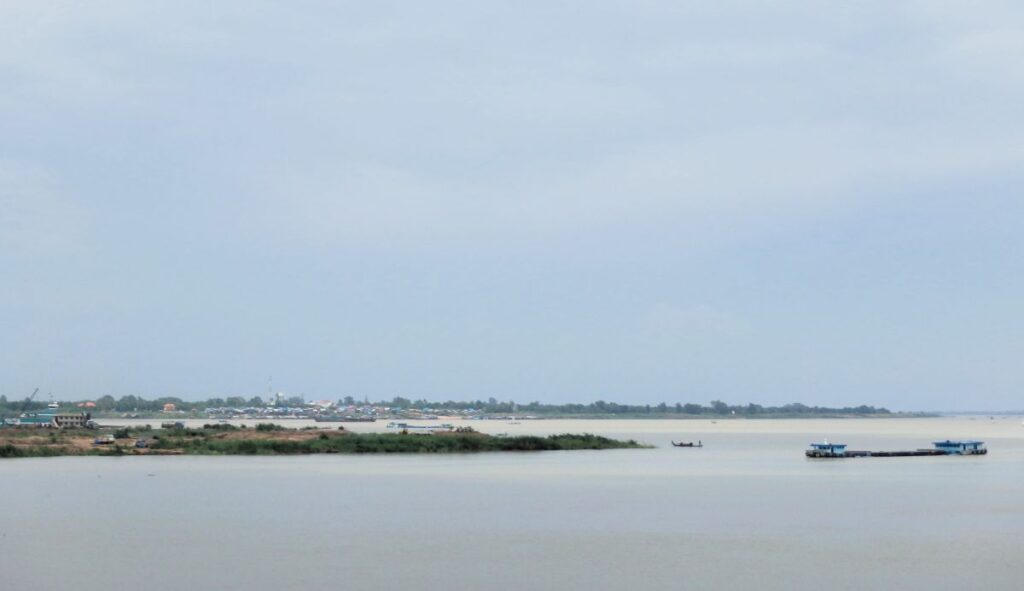
The Riverside Promenade, or Sisowath Quay, is a lively area in Phnom Penh where (mostly) locals and tourists gather.
Stretching along the banks of the Tonle Sap River, it’s the perfect place for a stroll, especially at sunset. This area is dotted with cafes, restaurants, and bars.
And street performers and street stalls add to the vibrant atmosphere. It’s the best place in the city to people watch!
National Museum
A visit to the National Museum is a must for anyone interested in Cambodian art and history. This beautiful terracotta building houses the world’s largest collection of Khmer art, with over 14,000 items on display. From ancient Angkorian artifacts to exquisite sculptures and ceramics, the museum offers a comprehensive look at Cambodia’s artistic heritage.
Central Market and Russian Market
Phnom Penh’s markets are a sensory delight, offering everything from fresh produce to handmade crafts.
The Central Market, housed in a striking Art Deco building, is a great place to shop for jewelry, clothing, and souvenirs. Meanwhile, the Russian Market (Psar Tuol Tom Pong) is a treasure trove of antiques, textiles, and unique items.
Day Trip to Silk Island
For a change of pace, escape the city with a day trip to Silk Island (Koh Dach). Just a short ferry ride from Phnom Penh, this idyllic island is known for its traditional silk weaving. So, you can visit local workshops and see artisans at work, and maybe even buy some beautiful silk products as souvenirs.
This island has a lovely rural landscape – dotted with pagodas and charming villages.
Where to eat in Phnom Penh:
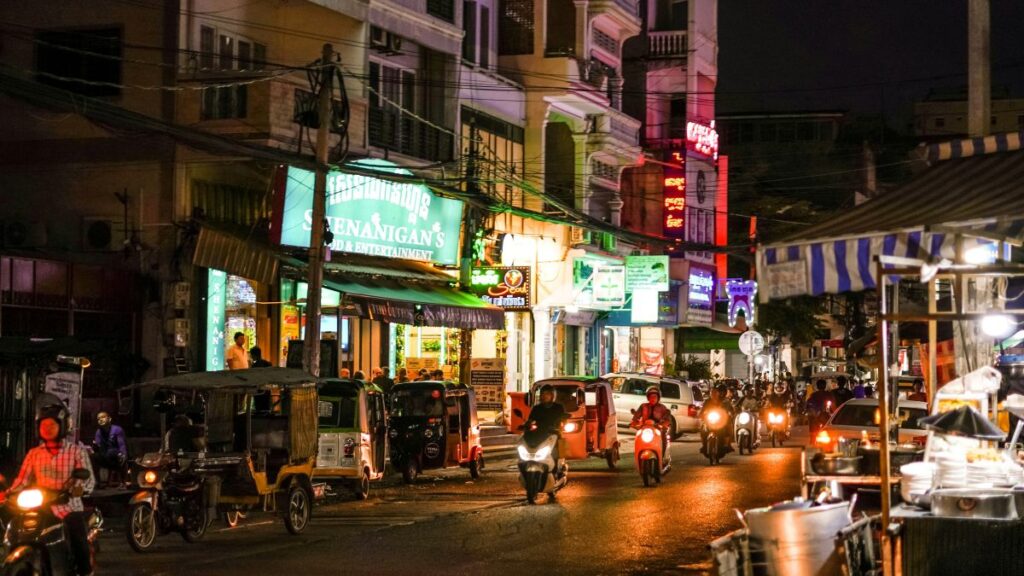
For a taste of authentic street food, Romdeng is a must-visit; it not only serves delicious local dishes but also supports a social cause by training marginalized youth in hospitality.
The Exchange is another popular eatery here; it offers a fusion of Western and Asian dishes, and the interior is quite stylish. Friends the Restaurant was probably our favorite restaurant here – it combines innovative tapas with a mission, as it supports local community projects.
And if you’re keen for a night out in the city, head to Bassac Lane or Street 308, where you’ll find an eclectic mix of bars and live music venues offering everything from jazz to contemporary beats.
Where to stay in Phnom Penh:
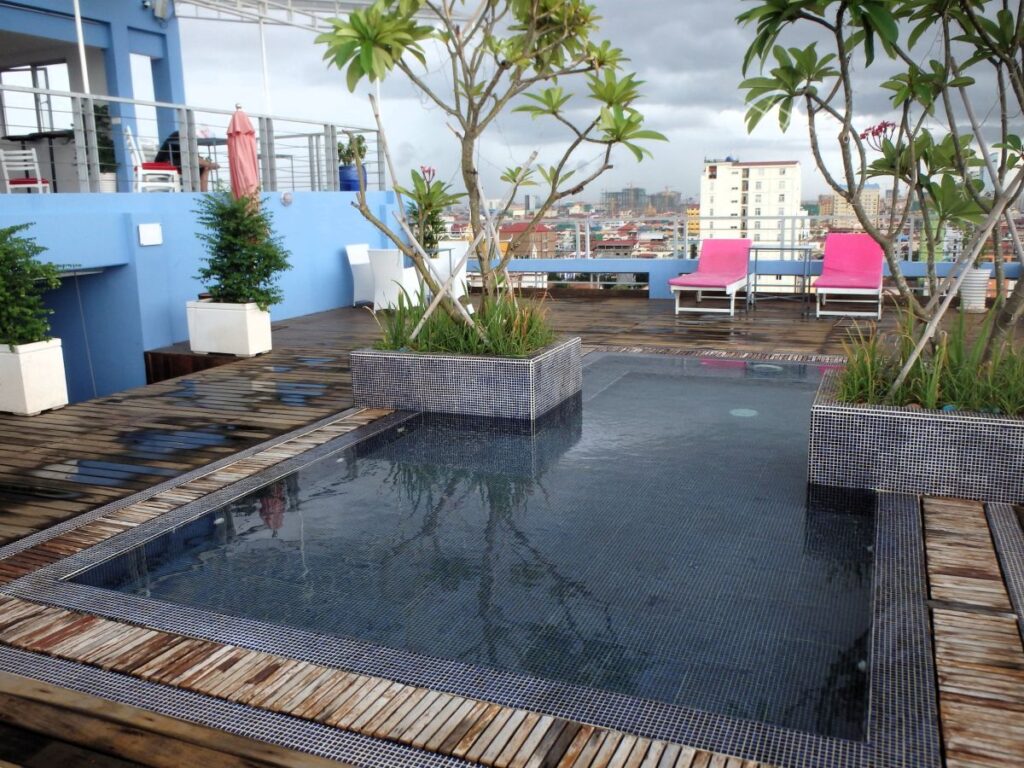
We stayed at Penh House Hotel – a 4-star boutique hotel with a fabulous rooftop pool. Our room was spacious and stylish, and we loved that the hotel was only 700 meters from the Royal Palace.
Thanks for Reading!
Phnom Penh is not only the political and economic hub of Cambodia but also a treasure trove of experiences waiting to be discovered. Whether you’re a history buff, a foodie, or simply want to explore a lovely city off the main tourist trail, Phnom Penh promises a memorable journey.
Booking Your Trip Soon? These are my go-to booking sites!
Below you will find a list of the sites we always use when booking our trips. By booking via the below links you can support my writing at no additional cost to you. Thanks so much!
1. Flights
I use Skyscanner or Cheapoair to find the best flights. It allows you to compare and book flights on over 500 airlines from across the globe.
2. Hotels
I use Booking.com for all of our hotel stays. And if we’re traveling on a budget, I like to use Hostelworld to book a hostel.
3. Renting a Car
We tend to always book our rental car through Discover Cars. This is a search engine for rental cars and allows you to filter by price if you’re on a budget or by vehicle type if there’s a specific car you’re after.
4. Tours
I use Viator or Get Your Guide to book any guided tours we plan on doing. I find Viator particularly good for the USA, Canada & New Zealand, and Get Your Guide is great for Europe.
5. Travel Sim Card
An eSIM is a great idea if you’re coming to a place for more than a week. As that way, you won’t need to change your number or remove the physical SIM from your phone. They are so handy and cheap, too. Obviously make sure your phone is compatible with an eSIM first. We always use Saily or Lotso Travel for our eSIM’s.
6. Airport Pick-Ups
Instead of cabs, we book with welcome pickup to get from the airport to our hotel. Why did we do that? The drivers from Welcome Pickups are English speaking and you’ll pay a flat rate. So, you know exactly how much you’re
7. Travel Insurance
At first glance, skipping travel insurance may seem like a great way to save some money. However, if you end up losing your luggage, have your flights cancelled, or get sick – it is a decision you’ll probably regret. Thinking nothing will happen is definitely a mistake, and without travel insurance, it’s one that will end up costing you – big time.
Last Updated on February 27, 2026 by snaphappytravel