
Italy has no shortage of beautiful towns, but some places genuinely stand out once you see them in person. These aren’t just towns with postcard views; they’re towns with working harbours, school runs, corner cafés, and history woven into everyday life.
For families and long-stay travellers, these towns also offer something practical: walkable centres, manageable transport links, and enough to explore without relying on big-city infrastructure. The five towns below aren’t hidden gems, but they offer far more than first impressions suggest when you look beyond the surface.
So, in this list, I will introduce you to five of our favorite small towns in Italy – I have personally been to them all (and I even got married in the first one!)
Cinque Terre

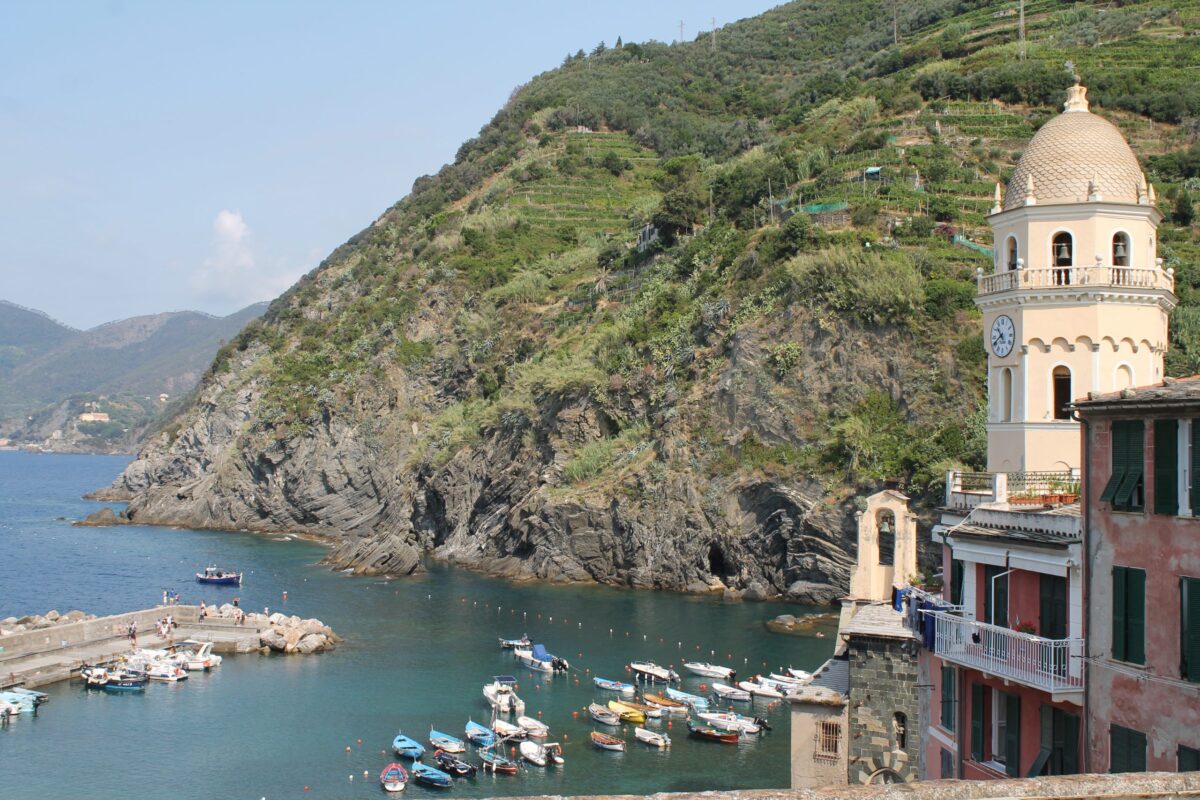
Cinque Terre is a breathtaking collection of five distinct fishing villages: Monterosso, Vernazza, Corniglia, Manarola, and Riomaggiore, clinging to the rugged Ligurian cliffs. Each village offers a unique perspective on coastal life, from the sandy shores of Monterosso to the dramatic, high-up views from Corniglia.
Getting between all these villages is super-easy, and it’s the perfect place to visit for those on an Italy walking holiday. Whether you use the train that connects all the villages or hike along the legendary Sentiero Azzurro coastal path (also called the Blue Trail), on the journey between each village, the views are spectacular.
The Blue Trail winds through ancient olive groves and terraced vineyards, offering hikers unparalleled views of the turquoise Ligurian Sea. The dry-stone walls supporting these terraces are a testament to centuries of local ingenuity.
After a day of exploring the narrow, pastel-hued lanes, you can enjoy fresh seafood in small harbours where fishing boats still bob in the water. And you could even hop on board a sunset cruise to see the best of the region from the water. It’s 3 hours long and apertifs and prosecco are served on-board and you can also do some snorkeling.
For families, the compact nature of the villages makes them surprisingly accessible, providing a genuine sense of Italian community and coastal tradition.
Where to stay in Cinque Terre:
We highly recommend Hotel Villa Adriana (one of the largest hotels in the Cinque Terre, and it has an outdoor pool). It is located in the new part of Monterosso.
Bellagio

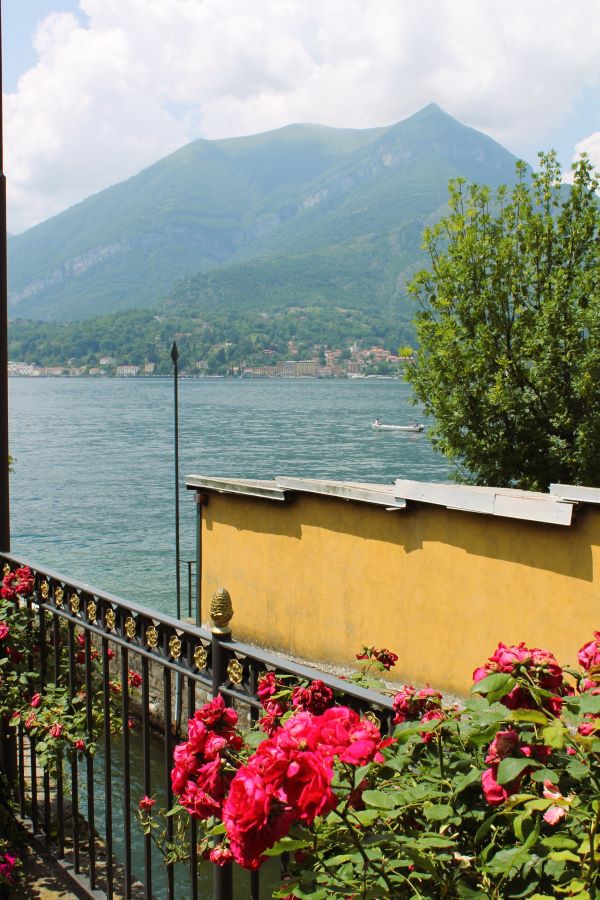
Bellagio sits at the geographic heart of Lake Como, exactly where the water branches into its distinctive “Y” shape. This central position explains the constant, graceful movement of ferries crisscrossing the lake in every direction.
While the waterfront promenade here is lined with grand hotels and bustling cafés, the true character of the town is found within its “salite” – steep stone staircases that lead away from the water. Climbing these paths reveals family-run trattorias, local silk shops, and quiet residential corners where the pace of life slows significantly.
The lush gardens of Villa Melzi provide a serene escape along the shore, featuring sculpted hedges and exotic plants that thrive in the mild lake microclimate. Further north, the path leads to Punta Spartivento, a peaceful lookout where the three branches of Lake Como meet under the shadow of the Rhaetian Alps.
Handily, the lake’s reliable ferry network makes Bellagio an ideal hub for exploring neighbouring gems like Varenna and Menaggio without the need for a car. As evening approaches, the sound of church bells echoes across the water, marking the end of the day as the last ferries pull into the harbour.
Where to stay in Bellagio:
Hotel Bellagio is a brilliant, budget-friendly choice here. This small, two-star hotel boasts views over the lake, and the rooms although small are lovely. Many rooms come with a view of the lake, too. A room here starts from €125 per night and that includes breakfast.
Taormina
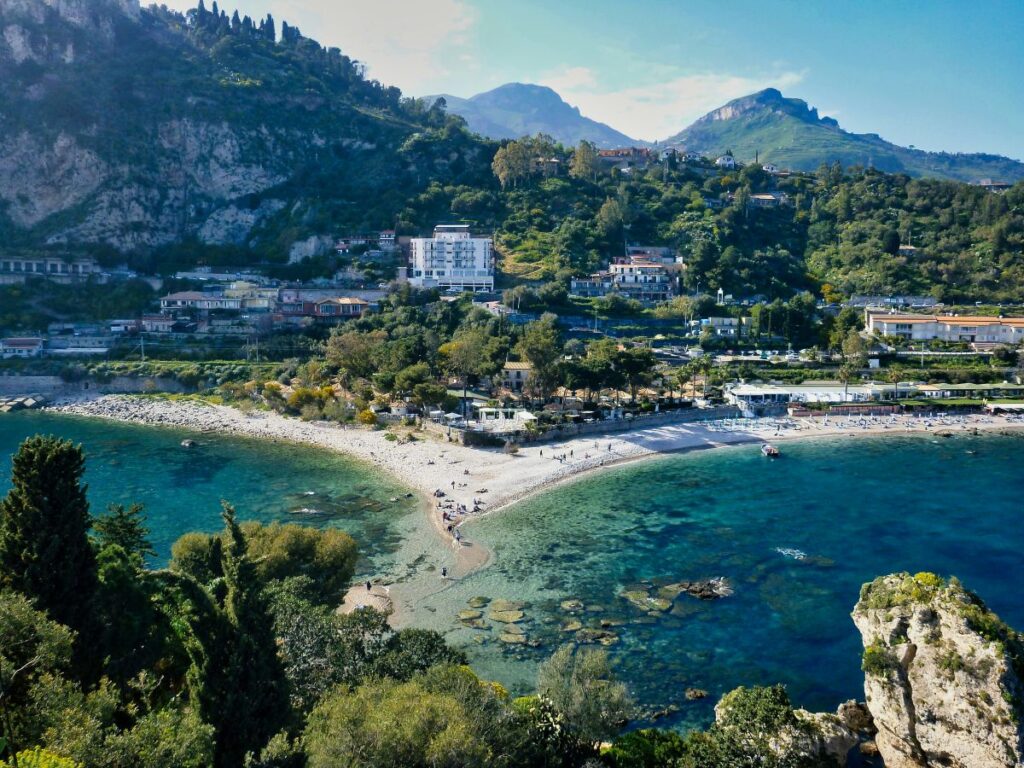
Perched high on a rocky plateau overlooking the Ionian Sea, Taormina is often called the “Pearl of the Ionian” for its dramatic setting and ancient allure.
The town is anchored by the remarkably preserved Teatro Antico, a Greek-style theatre that offers a framed view of Mount Etna’s smoking peak against the blue horizon. Below the main town, the tiny island of Isola Bella sits in a protected bay, connected to the mainland by a narrow strip of sand.
Fun fact – Taormina gained international attention as a filming location for the second season of “The White Lotus.” When this season and the first season (shot in Hawaii) aired, Expedia noticed that searches for these two destinations spiked by more than 300%! The San Domenico Palace was the hotel heavily featured in this season. It is certainly wow-worthy, but costs around 1,500 euros per night for a suite here.
From the boutique-lined streets of the historic centre to the quiet, shaded corners of the public gardens, Taormina provides a sense of refined Mediterranean life.
Where to stay in Taormina:
If you’re after a more immersive and private experience in this region, Sicily villas with panoramic sea views provide the perfect solution for families or groups, offering lots of space, seclusion, and front-row views of the Ionian at its most cinematic. These villas often feature traditional architecture, private pools, and panoramic terraces, allowing you to live like a local while being within easy reach of the town’s lively Corso Umberto.
🧳 My Packing List for Italy:
- For skincare, I always pack my Medicube Zero Pore Pads & Biodance Masks wherever I go. I bought mine when the Notino Black Friday beauty deals were happening.
- Teva Hurricane Sandals – Super-comfortable, I wore these pretty much every day.
- Sunglasses with UV protection – the sun can be very strong here.
- A portable power bank – for obvious reasons.
- Canon Powershot camera – is small, takes great photos, and looks cute.
- This Osprey daypack is ideal for everyday wear as it’s small, comfortable and fits a lot!
- For my airport/ airplane luggage – I had my Level8 Voyageur Carry-On that’s made of German-made Makrolon® polycarbonate, it has 360° quiet spinner wheels and matches the carry-on size for most airlines. As for my bigger (under the plane luggage) – I will always love my Osprey 55L backpack for this. I have used it in countless countries and it’s over 10 years old now and still in great condition.
- Reusable water bottle – to save you $$$ on bottled water. We came across many public fountains in Italy to fill up and any Cafes/ Restaurants will fill up for you.
- This Universal Travel adapter is very handy – we use it everywhere we travel!
San Marino

Technically an independent republic, San Marino sits high on Mount Titano, surrounded by Italy’s Emilia-Romagna region.
Its historic centre is compact, arranged along a narrow ridge and defined by three defensive towers: Guaita, Cesta, and Montale. Walking between them means following stone paths and steady inclines, but on clear days the views extend all the way to the Adriatic. The defensive walls remain largely intact, wrapping around the ridge and giving the town a layered medieval feel.
Shops selling local stamps, coins, and ceramics are worth a stop as you move through the centre. The Basilica di San Marino anchors the main square, while a cluster of small museums covers everything from ancient weapons to vintage cars.
If you’d prefer to stay along the coast, it makes an easy day trip from Rimini (listed below) by bus. Staying overnight changes the atmosphere completely (in the most awesome way) once the last day-trippers leave and the streets empty out.
Rimini

Rimini is often associated with long stretches of beach and rows of umbrellas, but the historic centre tells a different story. The Arch of Augustus dates back to 27 BC and marks the entrance to the old Roman road. Nearby, the Tiberius Bridge still carries traffic across the Marecchia River. These landmarks are easy to reach on foot and give context to a town that’s older than its seaside image suggests.
Piazza Cavour hosts regular markets and local events, keeping the historic centre active beyond summer. Nearby, the Tempio Malatestiano holds Renaissance artwork and intricate stone carvings. Along the coast, the beachfront stretches wide and is carefully organised into private sections with facilities suited to longer stays.
Cycle paths run parallel to the shore, linking neighbourhoods, parks, and residential areas. Bologna is just over an hour away by train, and as I said, San Marino sits inland within easy reach, making Rimini a practical base for exploring both the Adriatic coast and nearby cultural centres.
Where to stay in Rimini:
We stayed at Hotel Baltic, a small, casual 3-star hotel in the Central Marina district. Our room had a balcony, and there was a nice terrace area, too. The breakfast was great, also.
Positano

Positano’s colorful cliffside houses provide a picture-perfect backdrop. Often described as a vertical town due to its steep, narrow streets and staircases, Positano offers a charming blend of natural beauty and cultural richness. You can explore its quaint boutiques, indulge in exquisite Italian cuisine at seaside restaurants, or relax on its pebbled beaches like Spiaggia Grande.
Some of our favorite things we’ve done here include hiking the scenic Path of the Gods trail (known as one of the best hiking trails in Italy!) and doing a boat tour of the coast. The best way to see this stunning region is on the water, because that way you get to see all of its scenery without having to battle with crowds.
Where to stay in Positano:
Hotel Pupetto is a 3-star hotel located right opposite the beach, and it really is so photogenic. The rooms are what I call coastal Italian style with blue tiled floors and crisp white linens. A room here will cost you upwards of 300 euros per night, though.
Which of Italy’s small towns should you visit?
All of these towns look drop-dead-gorgeous in photographs, but their character becomes clearer once you experience how daily life unfolds. Cinque Terre’s terraced hills, Bellagio’s steep cobblestoned streets, San Marino’s castles, and Rimini’s Roman foundations all influence how visitors move through them.
The layout of each place, whether shaped by cliffs, lakes, or defensive walls, determines the pace of a stay far more than its postcard image. For families and those planning longer visits, that practical side carries weight. Access to attractions, markets, public transport, and everyday services becomes part of the experience.
In the end, choosing where to go often comes down to how you travel and the setting you prefer (coastal vs inland) rather than scenery alone.
**This was a paid collaboration with Rombald Group Ltd. All opinions remain my own.
Booking Your Trip Soon? These are my go-to booking sites!
Below you will find a list of the sites we always use when booking our trips. By booking via the below links you can support my writing at no additional cost to you. Thanks so much!
1. Flights
I use Skyscanner or Cheapoair to find the best flights. It allows you to compare and book flights on over 500 airlines from across the globe.
2. Hotels
I use Booking.com for all of our hotel stays. And if we’re traveling on a budget, I like to use Hostelworld to book a hostel.
3. Renting a Car
We tend to always book our rental car through Discover Cars. This is a search engine for rental cars and allows you to filter by price if you’re on a budget or by vehicle type if there’s a specific car you’re after.
4. Tours
I use Viator or Get Your Guide to book any guided tours we plan on doing. I find Viator particularly good for the USA, Canada & New Zealand, and Get Your Guide is great for Europe.
5. Travel Sim Card
An eSIM is a great idea if you’re coming to a place for more than a week. As that way, you won’t need to change your number or remove the physical SIM from your phone. They are so handy and cheap, too. Obviously make sure your phone is compatible with an eSIM first. We always use Saily or Lotso Travel for our eSIM’s.
6. Airport Pick-Ups
Instead of cabs, we book with welcome pickup to get from the airport to our hotel. Why did we do that? The drivers from Welcome Pickups are English speaking and you’ll pay a flat rate. So, you know exactly how much you’re
7. Travel Insurance
At first glance, skipping travel insurance may seem like a great way to save some money. However, if you end up losing your luggage, have your flights cancelled, or get sick – it is a decision you’ll probably regret. Thinking nothing will happen is definitely a mistake, and without travel insurance, it’s one that will end up costing you – big time.
Last Updated on August 17, 2026 by snaphappytravel